
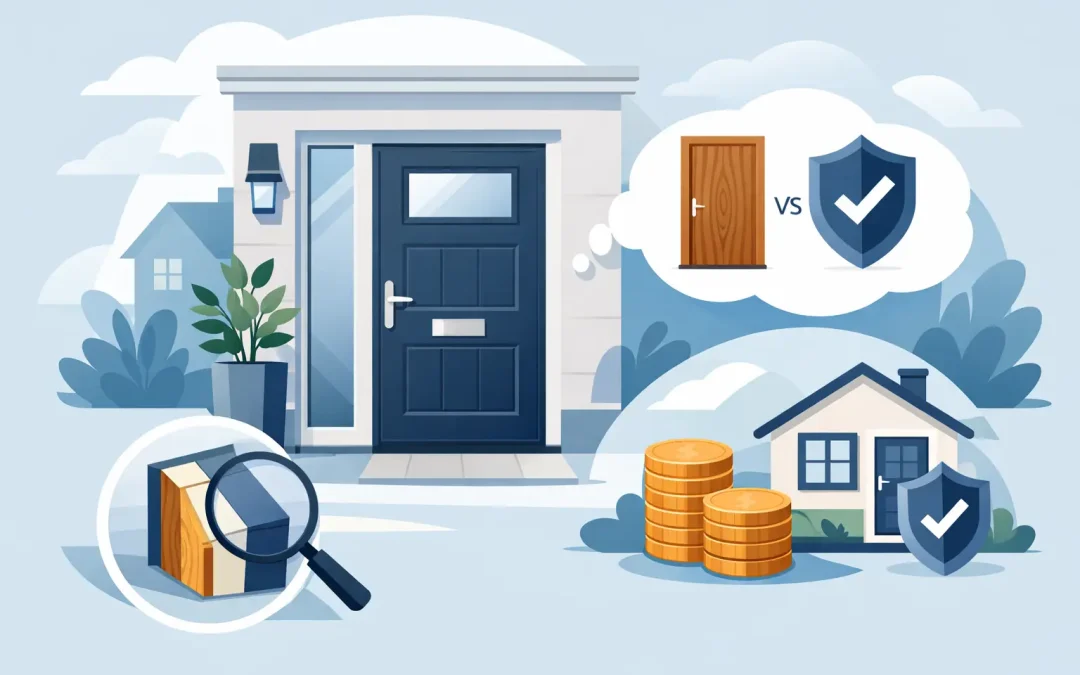
If your front door is draughty, swollen, faded or simply past its best, the question usually comes down to value. Are composite doors worth it when they cost more than a basic uPVC door? For many homeowners, the answer is yes – but only if you want a door that gives you stronger security, better insulation, lower maintenance and a smarter finish for the long term.
A front door is not just there to open and close. It protects your home, affects how warm the hallway feels in winter, changes the look of the whole property and gives you confidence every time you lock up and go out. That is why price alone rarely tells the full story.
Are composite doors worth it compared with other doors?
Composite doors are built from a mix of materials rather than a single slab of timber or one layer of plastic. That combination is the main reason they have become such a popular choice across Leicestershire and beyond. They are designed to give you the appearance of a traditional solid door with the practical benefits modern homeowners usually want.
Compared with a standard uPVC door, a composite door tends to feel sturdier, look more premium and perform better over time. Compared with a timber door, it usually asks much less of you in terms of upkeep. You are not dealing with regular sanding, painting or the same risk of warping in poor weather.
That said, the higher upfront price is real. If you are replacing a rear utility door on a tight budget, a simpler option may still do the job perfectly well. But if you are investing in your main entrance, where security, kerb appeal and day-to-day performance matter most, composite often makes more sense.
What are you paying extra for?
The biggest difference is build quality. A good composite door is made to be strong, stable and weather resistant. It is usually thicker and heavier than a cheap alternative, and you notice that straight away in how it closes and seals.
You are also paying for a more tailored finish. Composite doors come in a wide choice of colours, glazing styles, handles and decorative details, so it is much easier to match the age and style of your property. Whether your home is a newer build in a modern estate or an older house with more character, there is usually a design that looks right rather than just acceptable.
Then there is longevity. A door that keeps its shape, colour and performance over the years can offer better value than a cheaper door that needs attention or replacement sooner than expected.
Security is one of the strongest reasons to choose composite
For most households, security is where a composite door really earns its keep. The construction is usually more solid than a basic uPVC alternative, which can make forced entry more difficult. Add quality hinges, a reliable locking system and proper installation, and you end up with a front door that feels reassuringly secure.
Of course, not every composite door on the market is equal. The quality of the frame, the hardware and the installation all matter. Even the best door can underperform if it is poorly fitted. That is why it pays to choose an experienced local installer who measures properly, explains your options clearly and stands behind the work.
If peace of mind is high on your list, particularly for a family home or a property left empty during the day, the upgrade is often worth every penny.
Are composite doors worth it for energy efficiency?
They can be. A well-made composite door with the right glazing and a good fit can help reduce draughts and heat loss around your entrance. That does not mean your heating bill will suddenly drop overnight, but it can make a noticeable difference to comfort.
Many older doors let in cold air around the edges or through worn seals. You feel it most in the hallway, porch or sitting room nearest the front of the house. Replacing that with a better-insulated door can make the entrance area feel less exposed, especially during a cold Leicestershire winter.
Again, installation is key. Even a high-quality door needs to be fitted correctly to perform as it should. A made-to-measure door installed by a team that understands the importance of sealing and alignment will always give better results than a one-size-fits-all approach.
Low maintenance is a genuine benefit
One of the biggest selling points of composite doors is how little they ask from you. A wipe down now and then and some light care for the hardware is usually enough to keep them looking good. For busy households, that matters.
Timber doors can look beautiful, but they often need more ongoing attention. Paint can crack, surfaces can weather and moisture can cause movement over time. Composite doors are designed to avoid most of those common issues, which is a big advantage if you want a smart entrance without another regular job on your list.
That makes them especially appealing for long-term owner-occupiers who want to fit it once and get on with life.
Appearance matters more than people think
A front door changes the feel of the whole property. It is one of the first things visitors notice and one of the last things you see when you leave for work, school runs or a trip to the shops. If your existing door is tired, discoloured or out of keeping with the rest of the house, replacing it can sharpen the look of the entire frontage.
Composite doors tend to offer a more substantial, high-end appearance than many budget doors. The finish is often cleaner, the detailing is better and the whole entrance can look more inviting. If you are improving windows, roofline or other exterior features at the same time, a quality front door helps tie everything together.
For homeowners thinking about future resale value, presentation matters too. Buyers may not know every technical detail, but they do notice a secure, modern and well-finished entrance.
When composite doors might not be worth it
There are cases where a composite door is not the best-value choice. If your main concern is spending as little as possible right now, a standard uPVC door may be the more practical option. It can still offer decent performance at a lower cost.
It also depends on where the door is going. For a side entrance, garage access door or utility area that is rarely seen and lightly used, you may decide the premium finish of a composite door is not essential. The extra spend tends to be easiest to justify on the front door, where appearance, insulation and security all carry more weight.
Quality also varies. A poorly made composite door or a bad installation can cancel out many of the expected benefits. That is why the product and the fitter matter just as much as the material itself.
How long do composite doors last?
A well-made composite door should give you many years of reliable service. Exact lifespan depends on product quality, exposure to weather and how well it is fitted, but they are generally chosen as a long-term upgrade rather than a short-term fix.
That long service life is part of the value argument. Paying more upfront can make sense if you are avoiding repeated repairs, repainting or an earlier replacement. For many households, that is where the numbers begin to stack up.
This is also where working with an established local company makes a difference. If there is ever an adjustment needed or a question after fitting, you want to know who you are dealing with and that they will still be there to help.
So, are composite doors worth it for most homes?
If you want a front door that looks smarter, feels more secure, helps keep out draughts and does not create extra maintenance, composite doors are usually worth it. They are not the cheapest option, but they are often one of the best-value options over time.
For many homeowners, the real question is not whether composite doors cost more. It is whether the extra spend gives you enough back in day-to-day use, reliability and appearance. In most cases, it does.
At Supreme Home Improvements, we see this most often with customers who are tired of patching up an old door and want a proper upgrade that suits the house, the budget and the way they live. A well-chosen composite door can do exactly that.
If you are weighing up the cost, think beyond the price tag on the day of fitting. Think about how the door will look through the seasons, how it will feel on a cold morning, and whether you will still be happy with your choice years from now. That is usually where the value becomes clear.