A leaking flat roof rarely gets better on its own. What starts as a damp patch on the ceiling can quickly turn into rotten decking, damaged insulation and a repair bill that is far higher than expected. That is why Firestone rubber roofing installation has become such a popular choice for homeowners who want a flat roof that is built to last, not just patched up for another winter.
Why homeowners choose Firestone rubber roofing
Flat roofs need to do one job properly – keep water out year after year. The problem is that not all flat roofing materials age well. Some crack in strong sun, some become brittle in colder weather, and some develop weak points around seams and joints.
Firestone rubber roofing, often fitted as an EPDM membrane, is known for its long life, flexibility and weather resistance. It suits garages, extensions, porches, dormers, garden rooms and other flat or low-pitched roofs where reliability matters more than gimmicks. For many homeowners, the biggest appeal is simple: once it is installed correctly, it is a low-maintenance system that does not need constant attention.
That said, the material is only part of the job. A good product fitted badly can still fail. Proper preparation, clean detailing and careful fitting are what separate a roof that lasts from one that causes trouble later on.
Firestone rubber roofing installation – what the job involves
A professional Firestone rubber roofing installation is usually more straightforward than people expect, but it still needs experience. The process starts with checking the roof structure underneath. If the decking is unsound, damp or uneven, the membrane will not perform as it should. Any rotten sections need replacing before the new covering goes down.
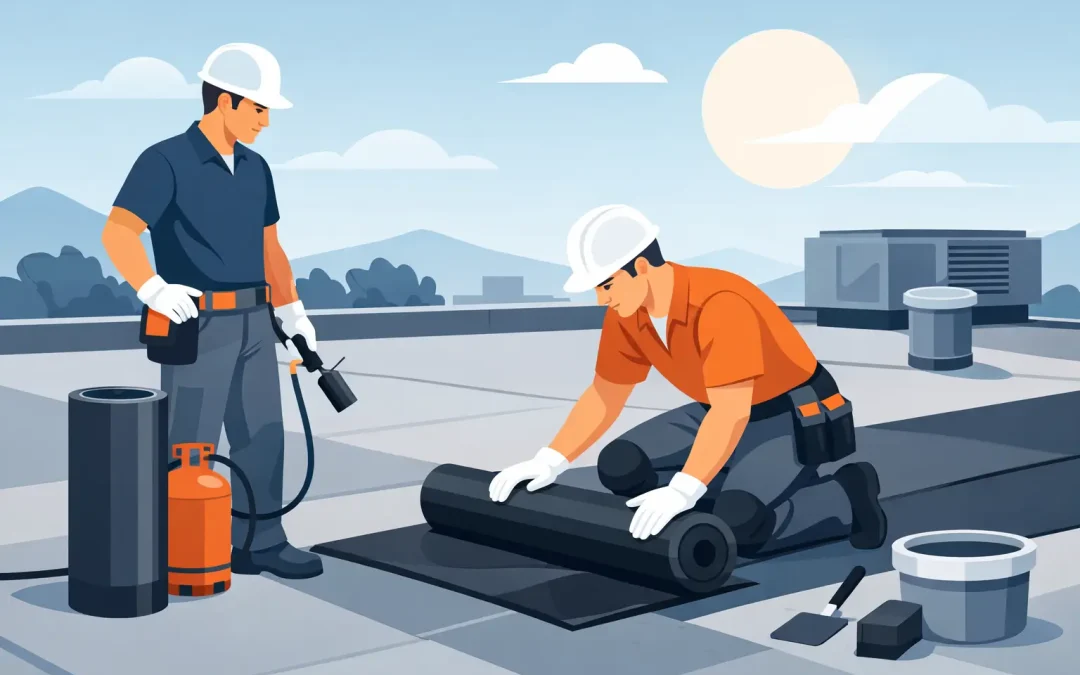
Once the roof base is ready, the surface is cleaned and prepared so the membrane can sit flat and bond properly. The Firestone rubber sheet is then measured and laid out carefully. One of the big advantages of this system is that large areas can often be covered with very few seams, which reduces the number of possible weak spots.
Adhesives are applied in stages, and the membrane is rolled into place without stretching or trapping air underneath. The edges, corners, outlets and upstands are then finished properly, because these are the areas where poor workmanship usually shows first. If trims, drip edges or flashings are not fixed neatly, water can find its way in even when the main field of the roof looks fine.
A tidy installation should look smooth, secure and properly detailed rather than rushed. Homeowners often focus on the membrane itself, but the quality of the perimeter finish is just as important.
The roof beneath matters just as much
If an existing flat roof has been leaking for some time, there can be hidden damage below the surface. Soft decking, saturated insulation or failing timber supports need dealing with first. In some cases, a straightforward overlay is possible. In others, a full strip and replacement is the better long-term option.
This is where honest advice matters. A cheaper repair can look appealing at first, but if the structure underneath is already compromised, it can end up being money wasted. The right approach depends on the age of the roof, the condition of the deck and whether previous coverings are still sound.
Where this roofing system works best
Firestone rubber roofing is especially well suited to domestic flat roofs where homeowners want durability without constant maintenance. It performs well on home extensions, bay tops, garages and replacement conservatory roofs. It is also a sensible option where roofline details need to tie in neatly with fascias, soffits and guttering.
For households upgrading more than one part of the exterior, it often makes sense to look at the roofline as a whole. If guttering is poor, fascias are ageing and the flat roof covering is nearing the end of its life, dealing with everything together can save disruption and help the finished job perform better overall.
It is not always the answer for every roof
There is no single roofing material that suits every property. If a roof has unusual detailing, heavy foot traffic or structural issues, another system might be considered. Firestone rubber is strong and dependable, but the success of the job still comes down to design, drainage and correct fitting.
That is why site assessment matters. A roof with standing water, awkward outlets or poor falls may need adjustment before any new covering is fitted. The best result usually comes from sorting the underlying issue rather than covering it up.
The benefits homeowners notice most
The first benefit is peace of mind. A well-installed rubber roof gives homeowners confidence in heavy rain, frost and summer heat alike. The membrane remains flexible and handles normal movement in the building far better than some older felt systems.
The second is low maintenance. Once fitted, there is usually very little to do apart from keeping outlets clear and checking that leaves or debris are not building up. For busy homeowners, that matters.
The third is appearance. While a flat roof is not always the first feature people notice, a neat and professionally finished one makes the whole property look better cared for. On extensions and garages especially, a tired roof can drag down the look of the rest of the home.
There is also value in longevity. Paying for a proper installation now can be far more cost-effective than arranging repeated patch repairs every couple of years. Cheap fixes often become expensive habits.
Common mistakes with flat roof replacement
One of the biggest mistakes is assuming every leak can be solved with a small repair. Sometimes that is true. Sometimes the visible leak is only the symptom of a wider failure across the roof.
Another mistake is choosing on price alone. Most homeowners want fair pricing, and rightly so, but the cheapest quote is not always the best value. If corners are cut on preparation, edge details or materials, problems can show up much sooner than expected.
Poor drainage is another common issue. Even a quality membrane will struggle if water sits on the roof because the falls are wrong or the outlets are blocked. A good installer looks at the full performance of the roof, not just the covering.
Then there is the temptation to use a general handyman for a specialist flat roofing job. For minor maintenance, that may be enough. For a full replacement, experience with the system matters. Rubber roofing is forgiving in some ways, but detailing still needs to be right.
What to ask before booking Firestone rubber roofing installation
Before going ahead, it is worth asking how the existing roof will be assessed, whether damaged decking will be replaced if needed, and what finish will be used around edges and abutments. Homeowners should also ask what guarantee is provided on workmanship as well as the material itself.
A reliable contractor will explain the job in plain terms. You should know whether the roof is being overlaid or stripped back, what condition the base is in, how long the work is expected to take and what the finished result will look like. Clear answers at the start usually mean fewer surprises later.
For local homeowners, there is also reassurance in using a company that understands the types of properties in the area and has a track record with domestic exterior improvements. A family-run business with hands-on experience is often a better fit than a call centre style national firm where the sales process and the installation team feel disconnected.
Choosing a local installer you can trust
When you are comparing firms, look beyond the headline price. Experience, consistency and aftercare all count. Flat roofing is one of those jobs where workmanship shows over time, not just on the day the van pulls away.
A dependable local company should be willing to assess the roof properly, explain the options clearly and recommend what suits your property rather than pushing a one-size-fits-all answer. If they also handle roofline work, windows, doors or conservatory roof upgrades, that can be useful when several parts of the exterior need attention.
Supreme Home Improvements works with homeowners across Leicestershire who want practical advice, fair pricing and work carried out properly. That matters when the roof over your extension or garage is something you need to trust for the long term, not just until the next spell of bad weather.
When is the right time to replace a flat roof?
Many people wait until a leak appears, but there is a better time to act – when the roof is clearly ageing but before water has started causing internal damage. Signs include recurring leaks, bubbling or lifting in older coverings, visible cracks, loose edge trims and damp smells in the room below.
If the roof has already had several repairs, replacement is often the more sensible route. Continually patching an old flat roof can feel cheaper in the short term, but it often leads to repeat call-outs and growing frustration.
A good flat roof should not be something you have to worry about every time it rains. If yours is starting to become exactly that, it may be time to stop patching and fit something built for the long haul.