When fascias and soffits start to fail, the signs are usually hard to miss. Peeling paint, damp patches, flaking boards and sagging guttering all point to the same question – what is the best material for fascias and soffits if you want a proper long-term fix rather than another short-term repair?
For most homeowners, the answer comes down to balancing three things: durability, maintenance and price. The right choice should protect your roofline from water damage, improve the look of your home and save you from repeated upkeep. There is no single perfect option for every property, but there is usually a clear best fit once you look at the age of the house, your budget and how much maintenance you are willing to take on.
What fascias and soffits actually do
Before comparing materials, it helps to know what these parts of your roofline are there for. The fascia board runs along the lower edge of the roof and supports the guttering. It takes a lot of weather exposure and needs to stay strong enough to carry the weight of rainwater, debris and brackets over time.
The soffit sits underneath the fascia and closes the gap between the outside wall and the roof edge. It helps with ventilation and keeps birds, insects and moisture out of the roof space. If either part starts to rot, crack or pull away, it can lead to bigger issues around the roofline.
That is why material matters. A fascia board is not just a finishing trim. It is a working part of the property that needs to cope with British weather year after year.
Best material for fascias and soffits: the main options
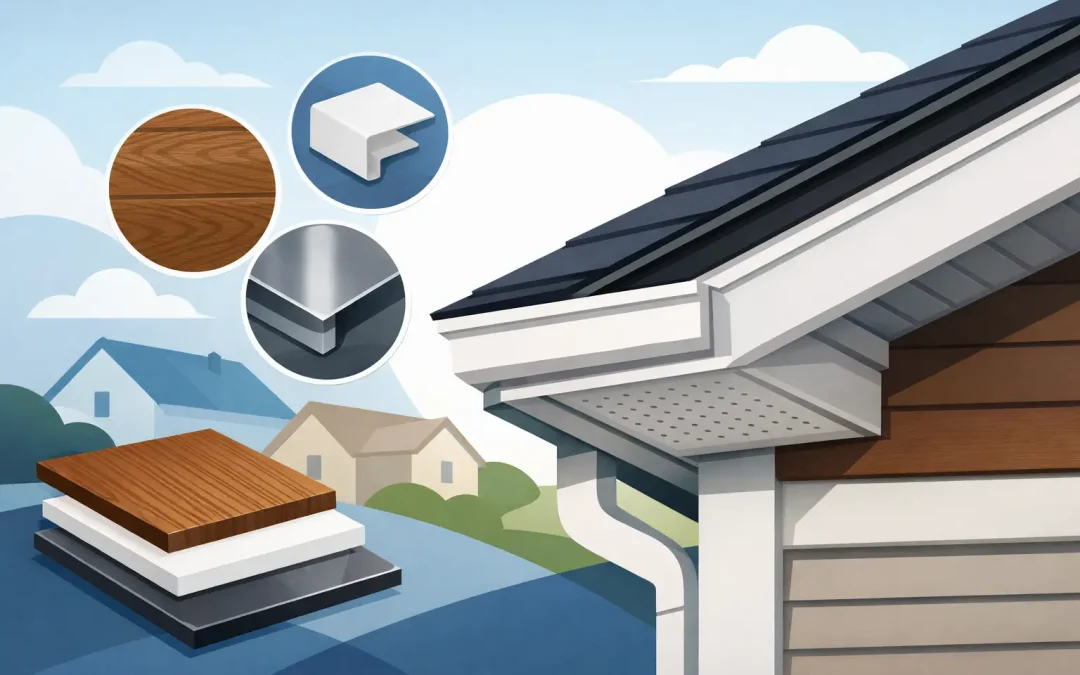
In most cases, homeowners are choosing between uPVC, timber and aluminium. Each has strengths, and each comes with trade-offs.
uPVC fascias and soffits
uPVC is the most popular choice for modern roofline replacements, and for good reason. It is affordable, weather-resistant and very low maintenance. Once fitted properly, it does not need sanding, staining or repainting. A simple clean now and then is usually enough to keep it looking tidy.
For many homes across Leicestershire, uPVC is the practical option. It handles rain well, does not rot, and gives a clean, smart finish that suits both newer and older properties. It is also available in different styles and colours, so homeowners are not limited to plain white if they want something that better matches their windows, doors or guttering.
The main advantage of uPVC is value. You get good durability without the higher price of metal, and you avoid the ongoing maintenance that comes with timber. For busy households and cost-conscious homeowners, that makes a real difference.
That said, not all uPVC is equal. Lower-grade boards can discolour, warp or become brittle over time, especially if they have been fitted over old timber rather than installed as a full replacement. This is why workmanship matters just as much as the material itself.
Timber fascias and soffits
Timber has a traditional look that some period property owners still prefer. On cottages, older houses and character homes, it can look more natural than plastic alternatives. If preserving the original appearance of a property is the main priority, timber may still be the right route.
The issue is maintenance. Timber needs regular care to stay in good condition. Paint can peel, moisture can get in, and once rot starts, repairs can quickly become more frequent and more expensive. In the British climate, that is a real concern. Even good-quality timber will need ongoing attention if it is going to last.
There is also the cost over time. While timber can look excellent when freshly finished, the long-term spend on repainting, repairs and eventual replacement often outweighs the initial benefit. For homeowners who want a low-fuss solution, timber is rarely the easiest option.
Aluminium fascias and soffits
Aluminium is strong, durable and resistant to rot, rust and insect damage. It can be a very good choice for certain homes, especially where a sleek finish or longer-term investment is the priority. It is also lighter than many people expect and can offer excellent performance in exposed weather conditions.
From a lifespan point of view, aluminium is impressive. It holds its shape well and generally needs very little maintenance. It can suit modern properties particularly well, and it has a more premium feel than standard plastic products.
The downside is price. Aluminium usually costs more than uPVC, both in materials and installation. For many homeowners, the added expense is hard to justify unless there is a specific reason to choose it. It also does not always suit the style or budget of an average residential roofline replacement.
Why uPVC is often the best all-round choice
If you are asking for the best material for fascias and soffits in practical, everyday terms, uPVC is usually the strongest all-round option. It gives homeowners what they need most: reliable weather protection, a neat finish, low maintenance and sensible pricing.
That matters if your current boards are already showing signs of wear. Most people are not looking for a roofline material they can admire from the garden every weekend. They want something that works, lasts and does not create extra jobs. uPVC does exactly that when the right boards are used and fitted properly.
It is especially suitable if you are replacing older timber fascias that have started to rot. Instead of patching and repainting every few years, you can move to a material that is built for easier upkeep. For family homes, rental properties and long-term owner-occupiers, that tends to be the better investment.
The trade-offs homeowners should think about
Choosing the best material for fascias and soffits is not only about lifespan. It is also about what suits the property and your expectations.
If appearance is your main priority and you own a period home, timber may still appeal despite the extra maintenance. If you want a premium modern finish and have a larger budget, aluminium could be worth considering. But if you want a dependable choice that covers performance, affordability and ease of care, uPVC is hard to beat.
It is also worth thinking about what sits behind the visible boards. In some cases, old timber underneath may already be rotten, which means a simple cap-over job will not solve the problem for long. A full replacement can cost more upfront, but it often saves money and hassle later.
Ventilation is another factor. Soffits are not just there to tidy up the underside of the roofline. They help air move through the roof space. If ventilation is poor, you can end up with condensation issues that affect insulation and timbers in the loft. The best material choice still needs to be part of a proper installation.
Installation matters as much as the board itself
Even the best fascia and soffit material will underperform if it is badly fitted. Loose boards, poor ventilation, weak fixings and guttering that is not properly aligned can all lead to problems later on.
This is where using an experienced local installer matters. A proper assessment should look at the condition of the roofline, the support behind the existing boards, the guttering setup and whether anything else needs attention at the same time. Cutting corners here often leads to the kind of repeat repairs homeowners were trying to avoid in the first place.
A good installer will also talk honestly about what your home needs. Some properties need a full replacement. Others may only need sections renewing. The right answer depends on the condition of the existing roofline, not just the cheapest quote.
Which material is best for your home?
For most homes in Leicester, Loughborough, Hinckley, Coalville and the wider Leicestershire area, uPVC is the best material for fascias and soffits because it offers the right mix of durability, appearance and value. It stands up well to the weather, keeps maintenance to a minimum and gives your property a cleaner, more finished look.
Timber still has its place on certain traditional homes, and aluminium can be an excellent premium option, but neither is as widely practical for the average homeowner looking for a cost-effective roofline upgrade.
If your fascias and soffits are ageing, cracked or starting to rot, the best next step is not guessing from ground level. It is getting the roofline checked properly so you know whether you need repairs or a full replacement. At Supreme Home Improvements, that is exactly the kind of straightforward advice we believe homeowners deserve – clear, honest and focused on getting the job done properly for the long term.
A strong roofline does more than tidy up the edge of your roof. It protects the parts of your home you cannot afford to ignore.