
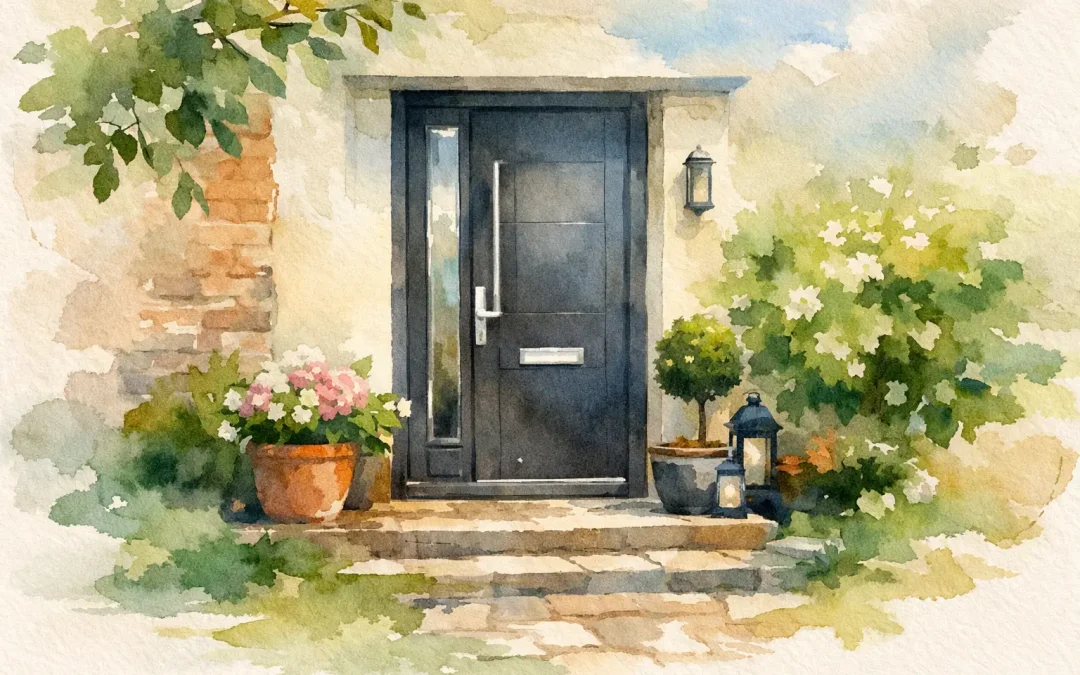
A front door has a big job to do. It needs to keep your home secure, stand up to British weather, help with insulation and still look right every time you pull onto the drive. That is why a proper composite door buying guide matters. If you are replacing an old timber or uPVC door, the right choice can improve comfort, kerb appeal and day-to-day peace of mind.
Composite doors are popular for a reason, but not every door on the market offers the same standard. Some look the part online and disappoint once fitted. Others cost more upfront but prove better value over the years. The difference usually comes down to materials, build quality, hardware and installation.
What makes a composite door different?
A composite door is made from a combination of materials rather than one single piece of timber or plastic. In simple terms, that layered construction is what gives it strength, stability and insulation. Most quality composite doors include a solid or high-density core, a durable outer skin and a reinforced frame system.
For homeowners, the benefit is practical rather than technical. You get a door that feels more solid, resists warping better than traditional timber and generally offers better thermal performance than many older doors. It also gives you more choice on design, from modern anthracite styles to traditional cottage-style doors with decorative glazing.
That said, not all composite doors are built the same way. The core material, thickness, outer finish and frame quality can all affect how the door performs over time. That is where careful comparison matters.
Composite door buying guide – start with what your home needs
Before looking at colours and handles, think about what problem you are actually trying to solve. For some households, security is the main concern. For others, it is draughts around an ageing front entrance. Sometimes it is simply that the existing door lets the whole property down.
A family home on an exposed street may need a door with strong weather resistance and good insulation. A period property may suit a more traditional design with sympathetic glazing. If you use your front door constantly, daily durability matters just as much as appearance.
This is why the cheapest option is not always the best buy. A lower price can be appealing, but if the door lacks rigidity, has poor quality hardware or is badly fitted, you may end up paying again in repairs, adjustments or replacement.
Security should never be an afterthought
Most homeowners now expect a front door to do far more than shut properly. A good composite door should feel secure the moment you use it. Look for a strong frame, quality hinges, a reliable multi-point locking system and hardware that is built for regular use.
It is also worth checking whether the glass, if included, is toughened and properly integrated into the overall design. Large glazed panels can look excellent, but they need to be balanced with privacy and security. In some cases, a smaller glazed section or decorative glass gives the right mix of light and reassurance.
A secure door is not just about the slab itself. Installation plays a major role. Even a well-made door can underperform if the frame is not fitted squarely or the locking points are not aligned correctly. That is one reason many homeowners prefer dealing with an experienced local installer rather than a national sales chain.
Energy efficiency and comfort
If your current door feels cold to the touch or lets in draughts around the edges, a composite replacement can make a noticeable difference. Better insulation helps keep heat in and can make hallways and entrance areas feel less chilly in winter.
Still, it depends on the full specification. The core, seals, threshold and frame all contribute to thermal performance. A door that looks thick and substantial is not automatically the most efficient. Ask what is included as standard and whether the whole door set is designed to reduce heat loss, not just the panel itself.
For many homes in Leicestershire, this is about comfort as much as bills. A warmer entrance, fewer draughts and a door that closes tightly all help the house feel better looked after.
Style matters, but so does proportion
A composite door is one of the first things people notice from the front of your home. It should suit the property rather than compete with it. The right design can freshen up a tired frontage, while the wrong one can feel out of place however expensive it was.
On newer homes, cleaner lines and simpler glazing often work well. On older properties, panelled styles, heritage colours and more traditional furniture may be a better fit. Colour choice matters too. Black, grey, green, red, blue and classic white all have their place, but the best option is usually the one that works with your brickwork, windows and roofline.
It is also worth thinking about how bold you really want to go. A strong colour can look smart, but a more timeless finish may age better if you plan to stay in the property for years.
Glazing, furniture and the finishing details
Small details make a big difference once the door is fitted. Glass design affects privacy, natural light and the overall character of the entrance. Clear glazing brings in more light, but obscure or patterned glass is often more practical for front-facing properties.
Door furniture deserves more attention than it usually gets. Handles, knockers, letterplates and numerals all shape the finished look. They also need to cope with regular use and the weather. Cheap fittings can spoil the appearance quickly, especially if they tarnish or loosen.
This is one area where seeing samples or completed installations can help. A brochure image does not always tell you how the finish will look in real life.
Understanding price without chasing the lowest quote
A composite door buying guide would not be much use without talking about cost. Prices vary depending on size, style, glazing, hardware and the quality of the door system itself. Installation standards and aftercare also matter.
A very low quote can sometimes mean corners are being cut. That might be in the frame, hardware, fitting time or warranty support. On the other hand, the highest quote is not automatically the best value either. What matters is whether you are getting a well-made, made-to-measure product fitted properly by people who will stand behind the work.
When comparing prices, ask what is included. Does the quote cover removal of the old door, disposal, fitting, finishing trims and adjustment? Is there a workmanship guarantee? Will the installer return if the door needs minor tweaks after settling in? Those questions tell you more than the headline figure alone.
Why made-to-measure is worth it
Older properties rarely have perfectly standard openings. Even in newer homes, small differences in levels and frame condition can affect the final result. A made-to-measure composite door usually gives a better fit, better sealing and a neater finish.
This is especially important if your existing door has been sticking, rattling or letting in water. The goal is not just to replace like for like, but to improve the opening as a complete system.
That is where experienced surveying and installation matter. A proper measure-up can prevent problems before the door is even ordered.
Choosing the right installer
The door itself is only half the job. Good installation affects security, performance, appearance and lifespan. A poorly fitted frame can lead to draughts, locking issues and ongoing frustration no matter how good the product looked on paper.
Look for an installer with proven experience, clear guarantees and a straightforward approach to quoting. Local companies often offer a more personal service, and you know where to find them if you need support later. For many homeowners, that accountability is worth a lot.
At Supreme Home Improvements, we know that most customers are not looking for fancy sales talk. They want honest advice, a fair price and a door that is fitted properly and built to last.
Common mistakes to avoid
One of the biggest mistakes is choosing on looks alone. A stylish door still needs to perform in day-to-day use. Another is assuming all composite doors offer the same security and insulation. They do not.
Rushing the decision can also lead to regret. It is worth taking a bit of time to compare the specification, ask about guarantees and think about how the door will suit your home long term. And if a quote seems unusually cheap, ask why.
A front door is something you use every day. It should feel solid, close cleanly and give you confidence each time you lock up.
A practical way to make the right choice
The best composite door for your home is not always the most expensive or the most decorative. It is the one that suits the property, meets your priorities and is fitted to a proper standard. If you focus on security, insulation, build quality and installation rather than sales claims, you will usually make a better decision.
A good front door should make coming home feel better from the first day it is fitted – warmer, safer and a bit smarter every time you walk up the path.