A leaking joint above the front door might not look urgent on a dry afternoon. After a week of rain, it can leave black marks on the wall, overflow onto the path, and start causing damage that is far more expensive than the gutter itself. That is why guttering repair or replacement is not something to keep putting off. If your guttering is cracked, sagging, blocked or pulling away from the roofline, the right choice depends on the condition of the whole system rather than one obvious problem spot.
When guttering repair or replacement becomes necessary
Guttering has one main job – to carry rainwater safely away from your roof and walls. When it stops doing that properly, water starts finding its own route. That can mean damp patches, staining, rotting fascias, moss build-up, slippery paths and in some cases damage to brickwork or foundations.
In Leicestershire, where heavy rain and wind can expose weak points quickly, small faults rarely stay small for long. A loose bracket can lead to a sagging run. A minor crack can widen in freezing weather. A blocked downpipe can force water back over the edge and soak parts of the property that should stay dry.
The key question is simple: is the guttering basically sound with one or two faults, or is the full system showing its age? That is what separates a sensible repair from a replacement that saves money over time.
Signs a repair may be enough
Not every gutter problem means starting again. In many cases, a targeted repair is the most practical option, especially if the rest of the guttering is still in good condition and has been fitted properly.
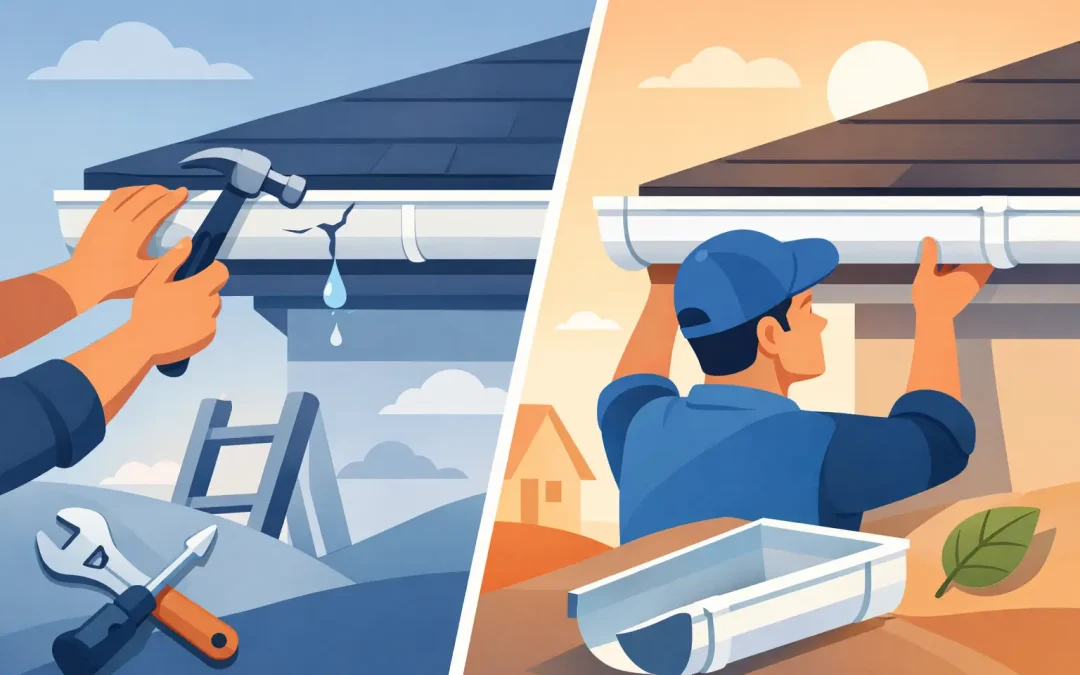
A repair often makes sense when the issue is isolated. For example, a leaking joint, one damaged bracket, a short cracked section or a localised blockage can usually be dealt with without replacing everything. If the gutter line is still aligned correctly and the materials have plenty of life left in them, repairing the affected area is often the better value option.
This is particularly true on newer uPVC systems. If the colour match is close and the existing runs are not brittle, warped or badly faded, replacing a small section can restore performance without unnecessary cost.
Repairs can also work well after storm damage. If a ladder has slipped against the gutter, a branch has struck one corner, or a single downpipe has come loose, the damage may look dramatic while still being limited. In those situations, a proper inspection matters more than guesswork.
When replacement is the smarter option
There comes a point when repeated patching is false economy. If you are dealing with multiple leaks, widespread sagging, old joints failing in several places, or guttering that no longer sits correctly against the roofline, replacement is usually the better long-term decision.
Age is a major factor. Older guttering can become brittle, discoloured and less reliable, especially if it has been repaired several times already. Once materials start to weaken across the whole system, fixing one area simply puts pressure on the next weak point.
Replacement is also worth considering if the fascias and soffits are tired or damaged. Guttering does not work in isolation. If the boards behind it are rotting, swollen or no longer providing a secure fixing point, new guttering on old roofline materials may only solve part of the problem.
Another common reason for replacement is poor original installation. If the falls are wrong, brackets are spaced badly, or the gutter size does not suit the roof area, leaks and overflows may keep returning no matter how often individual sections are repaired. In that case, a full replacement gives you the chance to put the system right properly.
The hidden costs of waiting too long
Homeowners often delay because the guttering still seems to be coping most of the time. The trouble is that rainwater damage builds gradually. You may not notice the effect until paint peels, render stains, timber softens or damp starts appearing inside.
Overflowing water can also affect areas below the roofline. Paths become slippery, flower beds get washed out, and constant water around the base of the house is never ideal. If you have a conservatory, porch or flat-roof extension, badly performing guttering can create extra strain in places that are already exposed to the weather.
There is also the maintenance cost of ongoing temporary fixes. If the same run needs attention every winter, or a joint keeps leaking despite sealants and adjustments, you are paying repeatedly without solving the root issue.
Repair vs replacement: what should guide the decision?
The best decision comes down to condition, cost and lifespan.
If a repair is modestly priced and likely to give you several more years of reliable performance, it is a sensible route. If a repair only buys a short amount of time before the next failure, replacement usually offers better value.
Appearance matters too. Guttering runs along the edge of the roofline, so it has a real effect on how the property looks. Mismatched repairs, faded sections and warped lengths can make the whole front elevation seem older than it is. For homeowners thinking about kerb appeal, replacing worn guttering can freshen the exterior far more than many people expect.
Then there is peace of mind. A well-fitted new system should cope with heavy rainfall, channel water efficiently and reduce the chance of emergency call-outs. That reassurance has value, especially if you have already had issues with damp, overflowing water or timber damage.
Why professional assessment matters
From ground level, guttering problems can be misleading. What looks like a leak from one joint may actually be caused by a blockage further along. A section that appears loose may be the result of failing fascia boards rather than faulty brackets alone.
That is why a proper assessment is worth having before any work is recommended. A dependable local contractor will look at the full roofline, check the falls, inspect joints, brackets and downpipes, and tell you plainly whether a repair is worthwhile or whether replacement is the better investment.
For many households, that straightforward advice is what matters most. You do not want to be sold a full new system if a repair will do the job. Just as importantly, you do not want a cheap fix if the real issue is wider deterioration.
Choosing the right replacement system
If replacement is needed, material quality and fitting standards make all the difference. Modern uPVC guttering is a popular choice because it is durable, low maintenance and available in styles that suit different property types. When measured and installed properly, it gives reliable performance and a clean finish.
The fitting is just as important as the product. Correct alignment, secure bracket spacing and suitable capacity for the roof area all affect how well the guttering performs in heavy weather. Good installation should not only stop current issues but help prevent future ones.
If your fascias and soffits are also ageing, it often makes sense to deal with the roofline together rather than in stages. That can improve the appearance of the home, protect the timber structure beneath and avoid paying twice for access and labour.
For homeowners across Ibstock and the wider Leicestershire area, working with an established local company has clear advantages. You want tradespeople who understand the properties in the area, turn up when promised and stand by the quality of their work. That is one reason many homeowners choose Supreme Home Improvements for practical, affordable roofline solutions backed by long experience.
A practical way to look at the problem
If your guttering has one obvious fault and the rest of the system is sound, repair is often the right call. If problems are appearing in several areas, the materials are ageing, or the roofline behind it is also failing, replacement usually makes better sense.
The worst option is doing nothing and hoping it holds out through another season. Rainwater always finds the weak point eventually. Getting the guttering checked early gives you a clearer idea of the condition, the likely cost and the most sensible next step for your home.
A good guttering job should not draw attention to itself at all. It should simply cope with the weather, protect the property and let you get on with life without worrying every time the rain starts.