
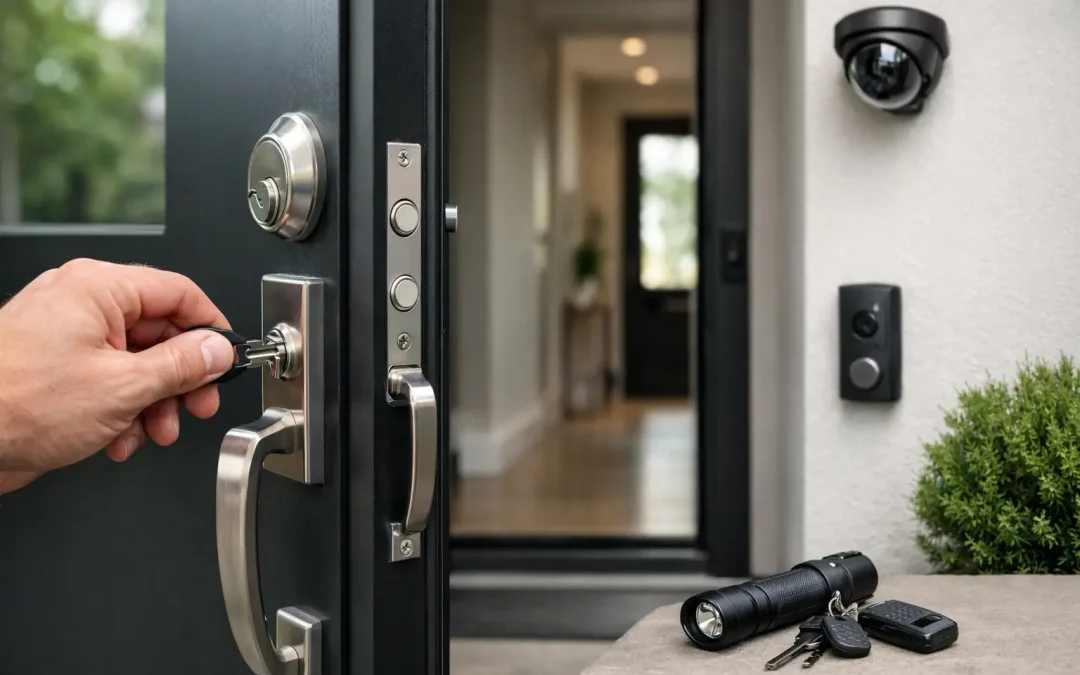
A front door can look solid enough from the kerb and still be the weak point of the house. We see it regularly – older doors with tired frames, loose fittings or glazing that has seen better days. If you are comparing the best front doors for security, the right answer is not just about the slab itself. The frame, lock, hinges, glazing and installation all matter just as much.
For most homeowners, security sits alongside a few other priorities. You want the house to feel safe, but you also want a door that suits the property, keeps draughts down and does not need constant attention. That is why it helps to look at the full picture rather than chasing the thickest or most expensive option.
What makes the best front doors for security?
A secure front door starts with strong construction. If the core is weak or the outer skin can flex too easily, even a decent lock will only do so much. The best-performing doors are built to resist forced entry, hold their shape over time and work properly with a well-fitted frame.
Locking is the next part of the equation. A modern multi-point locking system spreads the locking points along the height of the door, which gives better resistance than a basic single latch and deadlock arrangement. Cylinder quality matters too. If the cylinder is vulnerable to snapping or drilling, that can let an intruder bypass the rest of the lock system far too quickly.
Then there is the frame. A sturdy door fitted into a weak or badly fixed frame is a poor combination. Reinforced frames, good fixings and proper alignment make a real difference. Even the best door can underperform if it is not installed correctly.
Composite doors are usually the strongest all-round choice
If you ask what the best front doors for security are for most UK homes, composite doors are near the top of the list for good reason. They combine a solid core with a durable outer skin, and they tend to be much more rigid than older timber-style alternatives or basic uPVC doors.
That rigidity matters. A door that does not flex easily is harder to force, and it usually keeps its fit better over the years. Composite doors also work well with modern multi-point locking systems, secure hinges and reinforced frames. For many households, they offer the best balance of security, appearance, insulation and low maintenance.
They are not the cheapest option, and that is the main trade-off. If budget is the priority, a lower-cost door may seem tempting. But if you are replacing an ageing entrance door and want a proper upgrade in both safety and everyday performance, composite is often money well spent.
Another advantage is appearance. Security upgrades should not leave your home looking too industrial. Composite doors come in a wide range of styles and finishes, so you can improve security without losing kerb appeal.
Steel doors are very secure, but not always the best fit for every home
Steel doors have a strong reputation for security, and that reputation is deserved. Properly made steel doors can offer excellent resistance to impact and forced entry. They are often associated with commercial settings, but they can be used on domestic properties too.
The question is whether they suit the kind of home you have. For some British homes, especially traditional properties, a steel door can feel out of place unless it is carefully chosen. Domestic steel options have improved in appearance, but style can still be a deciding factor.
There is also the issue of overall package. A secure steel leaf still needs the right frame, hinges and lock set. If those elements are not up to standard, the benefit drops quickly. In many residential cases, a high-quality composite door ends up being the more practical and attractive option, even if steel has an edge in raw strength.
uPVC doors can be secure, but quality varies
uPVC front doors are common because they are affordable and easy to maintain. The problem is that not all uPVC doors are equal. Older or lower-grade models can be the weak link, especially if the panels are thin, the frames have little reinforcement or the locking system is dated.
A well-made modern uPVC door with steel reinforcement and a good locking system can still provide a decent level of security. For homeowners working to a tighter budget, it can be a sensible step up from a worn-out timber or ageing plastic door that no longer closes properly.
That said, if security is your main reason for replacing the door, composite usually has the advantage. It tends to feel more solid, resist warping better and provide a stronger overall build. uPVC can still be the right answer where cost matters most, but it is worth choosing carefully rather than assuming all doors in that category perform the same.
Do not overlook glazing in a secure front door
A glazed front door can still be secure, but only if the glass and layout are right. Decorative panels and glazed sections bring in light and improve the look of the entrance, but they should never create an obvious weak spot.
Toughened or laminated glazing is the better choice for security. The position of the glass also matters. If a letterplate, thumbturn or lock is within easy reach of a glazed section, that can create an avoidable risk. A well-designed door takes these details into account from the start.
This is where practical advice helps. Homeowners often focus on the door style they like, then add security questions later. It works better the other way round – choose the security standard first, then the finish, colour and glazing design that suit the property.
The lock matters as much as the door
You can fit a strong door and still be let down by a poor cylinder or tired hardware. For that reason, one of the most important parts of any front door upgrade is the lock specification.
A quality multi-point locking system is a good foundation. From there, the cylinder should be designed to resist snapping, drilling and bumping. Handles and escutcheons should also be secure and properly fitted. These smaller details often get ignored, but they are part of the door’s real-world performance.
It is also worth thinking about everyday use. A secure locking system should still operate smoothly. If a lock is awkward, stiff or unreliable, people are more likely to leave the door on the latch or avoid using all the locking points. Security only works when the door is easy to use properly.
Installation is where security is won or lost
This is the part many people do not see, but it is often the difference between a secure entrance and a disappointing one. A door has to be fitted square, anchored correctly and adjusted so that every locking point engages as it should.
Poor installation leads to gaps, movement, dropped hinges and locks that never line up properly. Over time, that can affect both security and weather performance. A professionally fitted door should feel solid from day one and continue to close cleanly without forcing or sticking.
That is one reason many local homeowners prefer working with an established family-run firm rather than a national sales operation. The product matters, but so does having skilled people measure it properly, fit it properly and stand behind the work.
How to choose the right front door for your home
The best choice depends on what you are solving. If your current door feels flimsy, lets in draughts and gives you little confidence at night, a composite door is often the clearest upgrade. If you need a more budget-conscious replacement, a reinforced uPVC door can still improve matters substantially. If maximum strength is the only priority, steel may be worth considering, provided it suits the property.
Think about the age and style of the house, whether you want glazing, how exposed the entrance is to weather and how long you plan to stay in the property. A cheap option can cost more in the long run if it ages badly or leaves you wanting to replace it again in a few years.
For many homes across Leicestershire, the sweet spot is a made-to-measure composite front door with a secure cylinder, multi-point locking, reinforced frame and properly specified glazing. It gives you strong day-to-day security without making compromises on appearance, warmth or maintenance.
If you are unsure, get advice based on your actual entrance rather than a one-size-fits-all sales pitch. The right front door should suit your home, your budget and the level of reassurance you want every time you lock up. A good security upgrade is not about choosing the harshest-looking option. It is about fitting a door that does its job properly, year after year.