
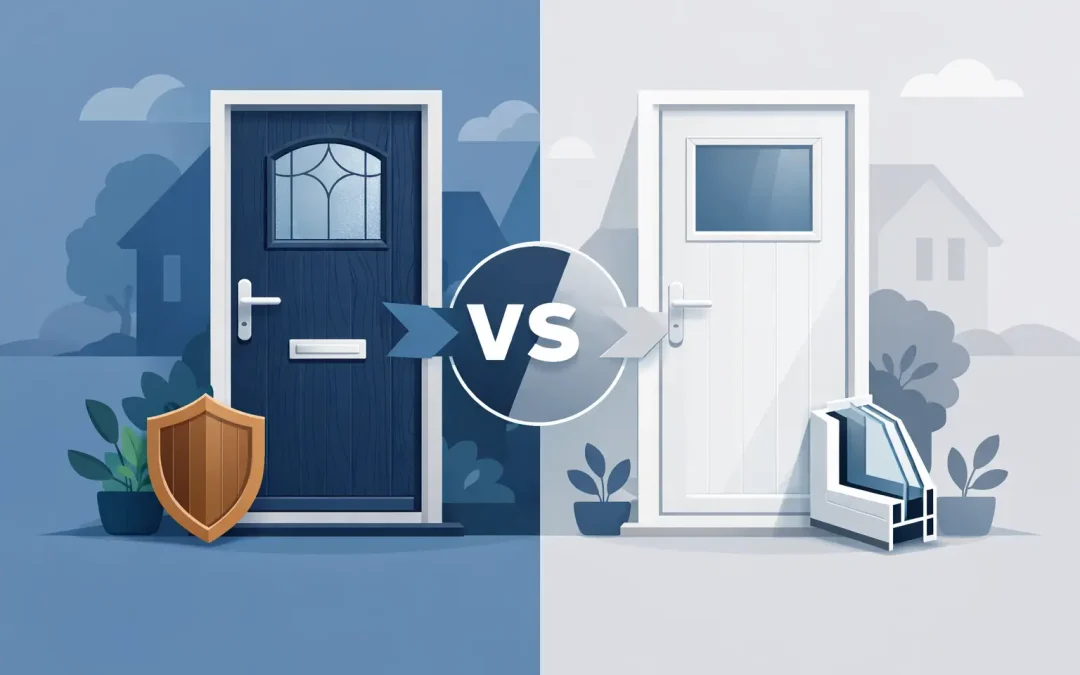
A front door has a hard job to do. It needs to keep the weather out, help your home feel secure, look right from the kerb, and still work properly after years of daily use. That is why the choice between composite doors vs uPVC matters more than many homeowners first expect.
Both options are popular for good reason. uPVC doors are affordable, low maintenance and widely used across the UK. Composite doors cost more, but they are often chosen for their stronger build, better appearance and solid feel. The right choice depends on your budget, the age and style of your property, and what matters most to you over the long term.
Composite doors vs uPVC at a glance
If your main priority is keeping costs down, a uPVC door will usually be the cheaper option. It can still give you good insulation, reliable day-to-day performance and a clean finish that suits many modern homes.
If you want something that feels more substantial, offers a wider choice of styles, and tends to hold its appearance better over time, a composite door is often the better investment. It usually gives a more premium result, especially on the front of the house where first impressions count.
That does not mean one is always right and the other always wrong. A lot depends on where the door is being fitted and how long you plan to stay in the property.
What is the difference between a composite door and a uPVC door?
A uPVC door is made mainly from unplasticised polyvinyl chloride. In simple terms, it is a practical plastic door system designed to resist weathering and reduce maintenance. Many include a reinforced frame and insulated panel, which helps with strength and thermal performance.
A composite door uses a mix of materials rather than one main material alone. The exact make-up varies by manufacturer, but it commonly includes a solid or high-density core, a durable outer skin, and reinforced sections to improve strength and stability. This layered construction is what gives composite doors their heavier, sturdier feel.
For most homeowners, the difference is obvious as soon as they open and close the door. A composite door tends to feel more solid. A uPVC door is lighter and simpler, which some people are perfectly happy with, especially where cost is the deciding factor.
Price: the biggest difference for many homes
For plenty of households, budget comes first. On that point, uPVC usually wins.
A uPVC front door is generally less expensive to supply and fit than a composite door. If you are replacing an old, tired entrance door and want a practical upgrade without stretching the budget too far, uPVC can make a lot of sense. It is also a sensible option for side doors, utility doors or rental properties where value matters more than high-end styling.
Composite doors cost more because the materials and construction are more advanced. You are paying for a thicker, more robust product with a more premium finish. For many homeowners, that extra spend is worthwhile because the door is used every day, sits at the front of the property, and has a big effect on kerb appeal.
The real question is not just what it costs today, but what you want from it over the next 10 or 15 years. If you want the cheapest route, uPVC is often the answer. If you want a door that feels like a longer-term upgrade, composite is usually the stronger choice.
Security and strength
Security matters on any external door, but especially at the front of the house.
Both composite and uPVC doors can be fitted with quality locking systems, secure frames and tough glazing where needed. A badly fitted premium door can still underperform, while a properly installed standard door can do its job very well. That is why installation quality matters just as much as the material itself.
That said, composite doors are often seen as the stronger option overall because of their denser core and more rigid construction. They tend to resist flexing better and usually feel more substantial when locked shut. For homeowners who want that extra confidence, especially on a main entrance, composite often comes out ahead.
uPVC doors can still provide dependable security, particularly when reinforced and fitted correctly. They are not automatically weak or poor quality. The difference is more about the level of solidity and strength you get as standard.
Energy efficiency and weather performance
Most people replacing a door also want a warmer, less draughty home. Both door types can help with that.
Modern uPVC doors can offer good insulation and do a decent job of keeping heat in and cold air out. For many homes, especially where an existing door is old, warped or poorly sealed, switching to uPVC will bring a noticeable improvement.
Composite doors generally perform very well here too, often with an edge thanks to their thicker build and insulated core. They are also known for staying stable in changing weather. That matters in British conditions, where a door has to cope with wind, rain, cold mornings and summer sun without sticking, swelling or losing its fit.
In exposed spots, that extra stability can be a real benefit. If your entrance takes the full force of the weather, paying more for a composite door may be worthwhile.
Appearance and kerb appeal
This is where composite doors really stand out.
If you want a front door that looks smarter, feels more upmarket and suits the character of your home, composite usually gives you more choice. You can often achieve a more convincing timber-style finish, a wider range of colours, better panel designs and more decorative glazing options. For period-style homes or properties where appearance really matters, that can make a big difference.
uPVC doors are available in a range of styles too, and modern versions are far better looking than older ones. Even so, they often have a simpler look and may not offer the same premium finish as composite. On some homes that is absolutely fine. On others, particularly where the frontage is being upgraded to improve overall appearance, composite tends to give the better result.
If you are already investing in new windows, roofline products or other exterior improvements, a composite front door can help pull the whole look together.
Maintenance and lifespan
Both options are low maintenance compared with traditional timber. That is one reason they remain so popular.
A uPVC door is easy to look after. It does not need painting or staining, and cleaning usually involves little more than warm soapy water and a wipe down. For busy households, that practical side is a strong selling point.
Composite doors are also straightforward to maintain, and they generally hold their finish very well. Because they are built to be tougher and more stable, they are often better at resisting the wear that comes with years of regular use. That can mean fewer problems with movement, warping or general tiredness over time.
No door is completely maintenance-free. Hinges, seals, locks and handles still need occasional attention. But if longevity is high on your list, composite often feels like the more durable choice.
Which door suits which job?
When uPVC is often the better choice
uPVC is a good fit when budget is tight, when the door is for the side or rear of the property, or when you simply want a clean, practical replacement without paying for a more premium finish. It suits many modern homes and can be excellent value when fitted properly.
When composite is often the better choice
Composite is usually the stronger option for a main front entrance, for homes where appearance matters, or for homeowners who want a more solid feel and are happy to invest a bit more upfront. It is also a good choice where exposure to the weather is a concern and long-term performance is a priority.
It also depends on the installer
This part often gets overlooked. You can choose the best-looking or most expensive door on the market, but if it is measured badly or fitted poorly, you will not get the benefit.
A good installation means the frame is square, the seals are tight, the lock works smoothly and the finish is neat. It also means getting honest advice rather than being pushed towards the most expensive option every time. For many homeowners across Leicestershire, that local, practical guidance is just as important as the product itself.
A family-run company with proper experience should be able to explain the trade-offs clearly. Sometimes that means recommending composite for the front and uPVC for the back. Sometimes it means saying a well-made uPVC door is all you need.
So, which is better?
If you are asking purely on price, uPVC is better value upfront. If you are asking about overall feel, style, strength and long-term appeal, composite usually comes out on top.
For many homes, the best answer is simple. Choose uPVC when affordability is your main concern and you want a reliable, low-maintenance door. Choose composite when you want a stronger statement at the front of the house and are willing to pay more for it.
The right door should suit your home, your budget and the way you live. If you are unsure, it helps to see samples, compare finishes properly and get advice from someone who fits these doors regularly rather than selling from a script. A good door is not just about what looks best in a brochure – it is about what will still look and work well years after it is fitted.