A peeling timber fascia board or a leaking gutter can make an otherwise well-kept home look tired very quickly. The best low maintenance roofline materials help prevent that cycle of scraping, painting and patch repairs, while protecting the edge of your roof from rainwater, wind and pests. For most homes across Leicestershire, the right choice comes down to the condition of the existing roofline, the property style and how much maintenance you are realistically willing to take on.
Your roofline includes the fascias, soffits, bargeboards and guttering around the roof edge. These parts do a practical job, not just a cosmetic one. Fascias support the gutters, soffits allow airflow into the roof space, and guttering must carry rainwater safely away from the property. When any one of them fails, damp, rot and expensive damage can follow.
What makes a roofline material low maintenance?
A low maintenance material should stand up to regular rain, frost, sunlight and temperature changes without needing frequent painting or sealing. It should also resist rot, warping and insect damage. That does not mean it needs no care at all. Even the best materials need gutters cleared and the roofline checked occasionally, particularly after high winds or heavy rain.
For homeowners, the real benefit is consistency. A quality roofline installation should keep its shape, colour and protective finish for years, so your time and money can go towards enjoying your home rather than repeatedly repairing it.
uPVC is the best all-round choice for most homes
For many properties, uPVC is the leading option when choosing low maintenance fascias, soffits and guttering. It is widely used for good reason: it does not rot, does not need painting and is available in a range of finishes to suit both modern and traditional homes.
White uPVC remains a popular, cost-effective choice, but anthracite grey, black, woodgrain-effect and coloured options can give a property a more individual finish. Woodgrain uPVC is especially useful where homeowners like the appearance of timber but do not want the regular sanding, staining and repainting that real wood demands.
A properly fitted uPVC roofline can last for many years with simple cleaning. A soft cloth, warm water and mild detergent are normally enough to remove general dirt. Avoid harsh abrasives, as these can dull the surface. The main maintenance task is keeping gutters and downpipes clear, rather than treating the uPVC itself.
The trade-off is that quality matters. Thin, poorly supported plastic boards can look weak and may not perform well over time. In some cases, installers fit new capping boards over old timber. This can be suitable where the timber is completely sound, but it is not always the best long-term repair. If the existing fascia has rot or cannot support the guttering properly, a full replacement board is usually the safer option.
Why ventilation matters with uPVC soffits
Soffits are often overlooked because they sit beneath the roof edge. However, they play an important part in ventilating the roof space. Ventilated uPVC soffits or discreet over-fascia ventilation can help reduce condensation in the loft, protecting timbers and insulation from excess moisture.
The correct solution depends on the roof design and existing ventilation. It is worth having this assessed during a roofline replacement rather than simply replacing boards like for like.
Aluminium offers a premium, long-lasting finish
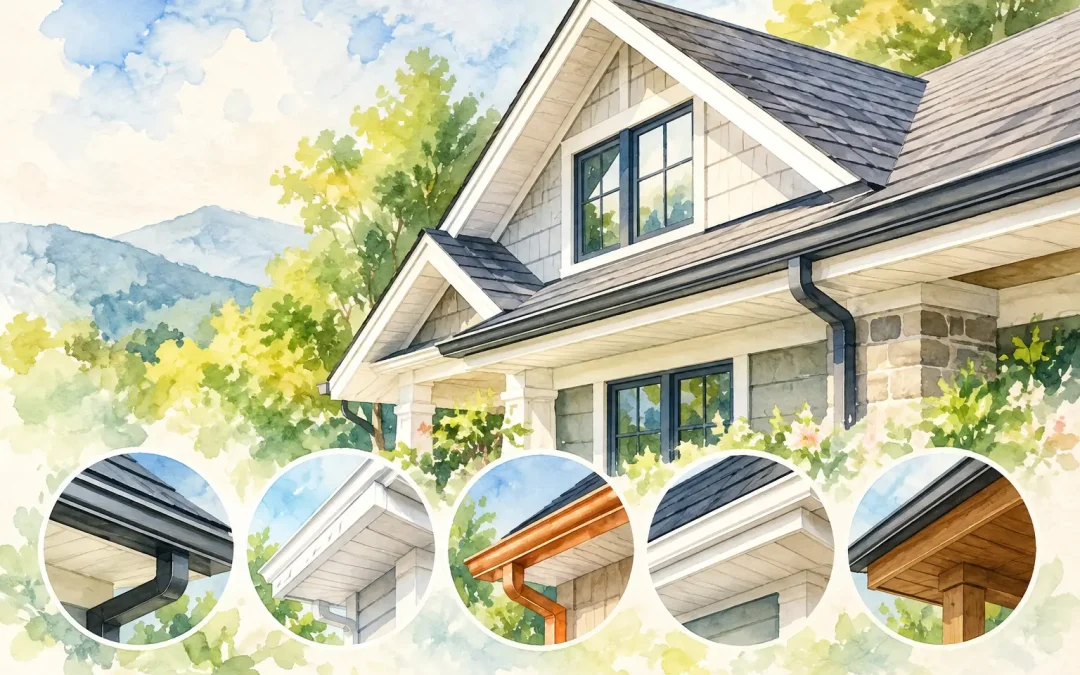
Aluminium roofline and guttering can be an excellent low maintenance option, particularly for contemporary homes or homeowners wanting a sharper architectural appearance. It is lightweight, does not rust like untreated steel and can be powder coated in a wide choice of colours.
Aluminium gutters are often valued for their clean lines and strength. They can cope well with the larger roof areas found on some extensions and modern properties, provided the gutter size and falls are designed correctly. Unlike plastic guttering, aluminium tends to expand and contract less noticeably during temperature changes.
The downside is cost. Aluminium products and specialist installation generally cost more than standard uPVC. Repairs can also be less straightforward if a section is damaged. For a homeowner working to a sensible budget, uPVC often delivers better value. But where appearance, colour matching and long-term performance are the priority, aluminium is worth considering.
Fibre cement can suit selected traditional properties
Fibre cement boards are another durable option for fascias and bargeboards. They are resistant to rot, insects and fire, and they can suit period-style or character properties where a more substantial painted-board look is wanted.
They are not completely maintenance-free. Depending on the finish, fibre cement may need repainting eventually, and installation needs careful handling because the boards are heavier and less forgiving than uPVC. It is also not the usual first choice for soffits and guttering on a standard family home.
For the right property, fibre cement can be a practical middle ground between the traditional look of timber and the ease of modern materials. For most homeowners, however, uPVC gives a simpler and more affordable route to a protected roofline.
Timber looks traditional but needs regular care
Timber fascias, soffits and bargeboards have a natural appearance that can be right for older cottages, listed buildings and homes in conservation-sensitive settings. When properly maintained, good-quality timber can last well. The issue is the maintenance commitment.
Timber needs regular inspection for peeling paint, splits, soft spots and open joints. It usually requires repainting or staining every few years, particularly on exposed elevations. Once water gets behind a failed paint finish, rot can spread out of sight and compromise the board supporting the gutter.
Timber is not a poor material – it is simply not the best choice for homeowners looking to minimise future upkeep. If retaining a traditional appearance matters, woodgrain-effect uPVC may provide a more practical alternative, although planning restrictions should always be checked where relevant.
Choose guttering separately from fascias and soffits
Roofline materials are often discussed as one decision, but guttering deserves separate thought. Your gutters handle large volumes of water during a heavy downpour, so the correct profile and capacity matter as much as the material.
uPVC guttering is affordable, readily available and simple to maintain. It comes in common styles such as half-round, square and ogee. Ogee guttering has a more decorative profile and a good carrying capacity, while square guttering can suit modern homes. A professional installer can advise on the appropriate size based on the roof area and drainage layout.
Aluminium is a premium option, while cast iron is chosen mainly for heritage appearance. Cast iron is strong and attractive but needs painting and ongoing care to prevent corrosion. It is rarely the low maintenance answer unless preserving the character of a particular property is the main concern.
Whatever material you choose, gutter performance depends on fitting. Incorrect falls, poorly positioned brackets, badly sealed joints or inadequate downpipes can cause overflowing water even with brand-new gutters.
Getting the best result from a roofline replacement
The best low maintenance roofline materials will only perform as well as the installation behind them. Before work begins, the condition of the existing timber, brickwork, roof felt, ventilation and gutter fixings should be checked. Covering over a problem may improve the appearance for a short time, but it does not remove the cause of the problem.
Ask whether old rotten timber will be removed, how ventilation will be provided and whether the gutters will be replaced or refitted. It is also sensible to confirm the product specification, colour, waste removal and workmanship guarantee in writing. These details help avoid surprises and make it easier to compare quotations fairly.
For most homes, a full uPVC fascia, soffit and gutter replacement is the sensible balance of durability, appearance and cost. It provides a clean finish without the continual painting associated with timber, and it can be tailored to the character of the property.
Simple maintenance that protects your investment
Even a low maintenance roofline benefits from a quick check twice a year. Look for sagging gutters, water marks on walls, loose clips, blocked outlets and vegetation growing from joints. Clear leaves before autumn and after winter where possible, especially if your home is close to trees.
If you notice persistent overflow, do not assume the gutter simply needs cleaning. The cause may be an incorrect fall, a blocked downpipe, damaged seals or water running behind the gutter because of worn roof felt. Dealing with small issues early is usually far cheaper than waiting for damp to appear internally.
A well-chosen roofline should make home maintenance easier, not create another job list. If your fascias are tired, soffits are damaged or gutters are overflowing, a local inspection can give you a clear view of what needs repairing and what is worth replacing. Supreme Home Improvements can help homeowners choose a practical, made-to-measure roofline solution that suits both the property and the budget.