
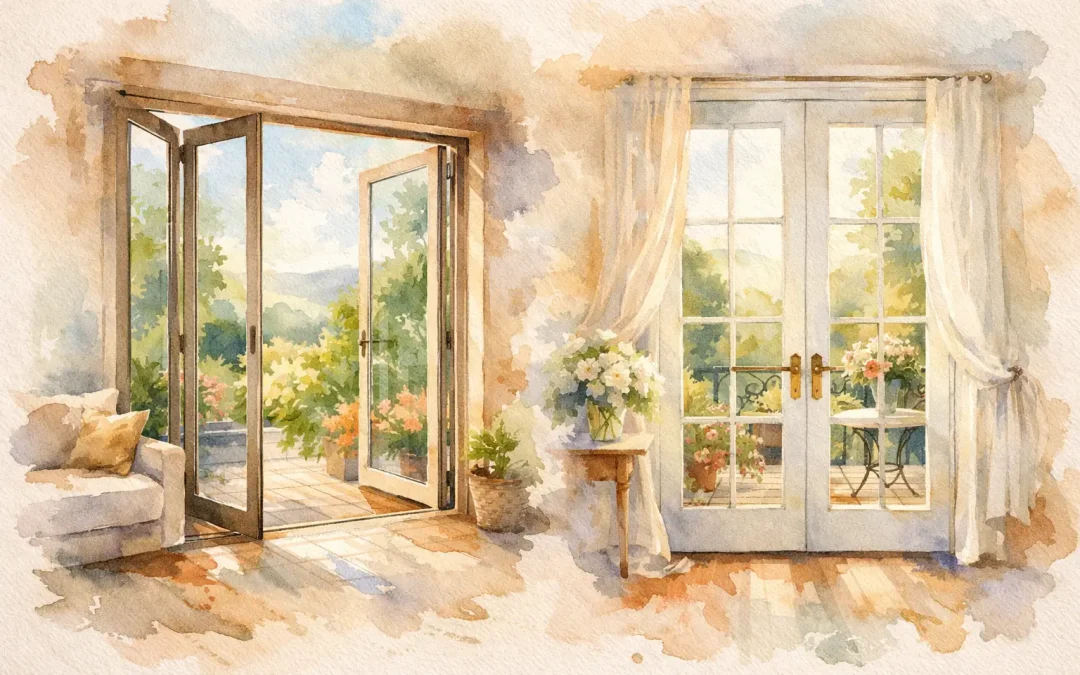
A rear door can change far more than the route into the garden. It affects how much daylight reaches the room, where furniture can sit, how the house feels in summer and how well it holds heat in winter. When comparing bifold doors vs french doors, the best choice is rarely about which style looks smartest in a brochure. It is about the opening you have, the way your family uses the room and the result you want from your investment.
For many Leicestershire homes, both options can be made to measure, secure and energy efficient. The key is choosing a door that works properly every day, not just when it is fully open on a warm afternoon.
Bifold doors vs French doors: the main difference
French doors are a pair of hinged doors that meet in the middle and open outwards or inwards, depending on the layout. They give a traditional, balanced appearance and usually provide a clear, practical opening into a garden, patio or conservatory.
Bifold doors are made up of several glazed panels connected by hinges. The panels fold and slide to one or both sides, stacking neatly when open. This can create a much wider opening between the house and garden, particularly across a larger rear extension or kitchen-diner.
Put simply, French doors are often the straightforward choice for a standard-sized opening. Bifolds are designed for homeowners who want to open up a wider span and make the garden feel closer to the living space.
When bifold doors are the better option
Bifold doors earn their reputation in rooms that are built around entertaining, family meals and garden access. With the panels folded back, there is very little barrier between indoors and outdoors. That works particularly well for an extension leading onto a patio, or for a kitchen where people regularly move in and out during the warmer months.
Their greatest advantage is the width of opening they can achieve. A set of three, four, five or more panels can be tailored to suit the aperture, allowing almost the full space to be opened. If you are replacing a wide run of old patio doors or planning an extension, this creates a real change in how the room feels.
Modern bifolds also bring in plenty of daylight. Even when shut, the large glazed panels can make a rear room feel brighter and more open. Aluminium frames are especially popular for this purpose because they can be slimmer than some alternatives, although uPVC options can offer an affordable route for suitable openings.
There are practical points to consider. Bifolds need a clear area for the panels to stack when open, either inside or outside. The running track needs to be kept free from leaves, soil and grit, especially on a garden-facing elevation. A quality installation matters too: poor alignment can make any folding door difficult to operate over time.
Bifolds are generally the more expensive option because there are more panels, moving parts, glazing units and installation considerations. They are best value when you will genuinely use that full-width opening rather than simply wanting a large glazed door.
Think about how the doors will open day to day
A useful detail is the traffic door. Many bifold systems include one panel that can open like a standard door without folding back the whole set. This is worth asking about if the door will be used for putting the bins out, letting the dog into the garden or stepping outside with washing.
Without a traffic door, opening a bifold set for quick everyday access can feel less convenient than using French doors. The configuration should be planned around the way you live, not selected as an afterthought.
When French doors are the better option
French doors remain a strong choice because they are simple, attractive and practical. They suit period properties, traditional homes and newer houses alike, and can make a modest opening feel more generous without changing the character of the property.
For a dining room, conservatory or lounge with a standard rear opening, French doors often provide all the garden access a household needs. Open both doors for a wide, welcoming entrance, or use one leaf for everyday trips outside. This simple operation is one of their biggest benefits.
They can also be a sensible choice where budget matters. Compared with a multi-panel bifold system, French doors generally use fewer components and are usually less costly to supply and fit. That can leave more of the budget available for quality glazing, improved security, a new patio or other exterior upgrades.
The main compromise is the size of the opening. Even with both leaves open, the central frame and door leaves remain part of the arrangement. You will not get the near wall-to-wall opening possible with bifolds. For many homes, though, that is not a problem. French doors still provide excellent ventilation, good light and a clear connection to the garden.
Outward or inward opening?
In most cases, outward-opening French doors are the practical option. They do not take up floor space inside and avoid clashing with furniture. They do, however, need a clear patio area and should not open straight onto a narrow path, steps or a busy walkway.
Inward-opening doors may suit some layouts, particularly where outside space is limited, but they require room inside the property. An experienced survey will identify the safest and most convenient option before the doors are ordered.
Light, warmth and views
It is easy to assume that bigger glass always means a colder room. That is not necessarily true. The overall performance depends on the frame material, double or triple glazing specification, glass coating, seals and the standard of fitting. A well-made, professionally installed door should help reduce draughts and retain heat far better than an older, worn-out set of patio doors.
Bifolds tend to have more vertical frames because of the number of panels. When closed, this means a broken-up view compared with a large sliding patio door. French doors have a central meeting point, but fewer frame divisions across the opening. Neither is automatically better for light – the size of the aperture and the individual product design make the difference.
For a south- or west-facing room, large glazed doors can bring welcome daylight but also stronger sun in summer. Blinds, suitable glazing and ventilation should be part of the decision. If the room already gets very warm, the right glass specification is just as important as the door style.
Security and weather protection
A modern external door should provide reassurance as well as good looks. Look for multi-point locking, toughened safety glass where required, secure hinges and a strong frame. French doors should have a properly secured inactive leaf, while bifolds should have reliable locks and hardware across the system.
The threshold is another point worth discussing. A low threshold makes access easier for children, older relatives and anyone using a wheelchair or pushchair. However, the door still needs appropriate weather protection and drainage. The right detail depends on whether the opening is exposed to driving rain, how the patio is levelled and the condition of the surrounding brickwork.
This is where accurate measuring and careful installation make a real difference. A door can be made from quality materials, yet still underperform if it is not fitted squarely or sealed correctly around the opening.
Cost, property style and planning
French doors are usually the more affordable route, especially when replacing existing doors in an unchanged opening. Bifolds cost more but can be worthwhile where they form a main feature of an extension or replace a broad section of wall.
Do not choose on headline price alone. Compare the glazing specification, security features, frame material, opening configuration, threshold, guarantee and installation work included. A cheaper door that does not fit the opening or suit the room can become an expensive compromise.
Most straightforward replacement doors do not need planning permission, but properties in conservation areas, listed buildings and homes with restrictive conditions can be different. If structural alterations are needed to create a wider opening for bifolds, building regulations and suitable structural support will also need consideration.
Make the choice around your home
Choose bifold doors if a wide, flexible opening is central to your plans and you have the room and budget for a multi-panel system. Choose French doors if you want reliable daily access, classic style and excellent value from a standard-sized opening.
Supreme Home Improvements helps homeowners across Leicestershire choose made-to-measure doors that suit the property, the budget and the way the space will be used. Before committing, stand in the room, picture the furniture, check the patio layout and think about a wet Tuesday in January as well as a sunny family barbecue. The right door should make home life easier in every season.