
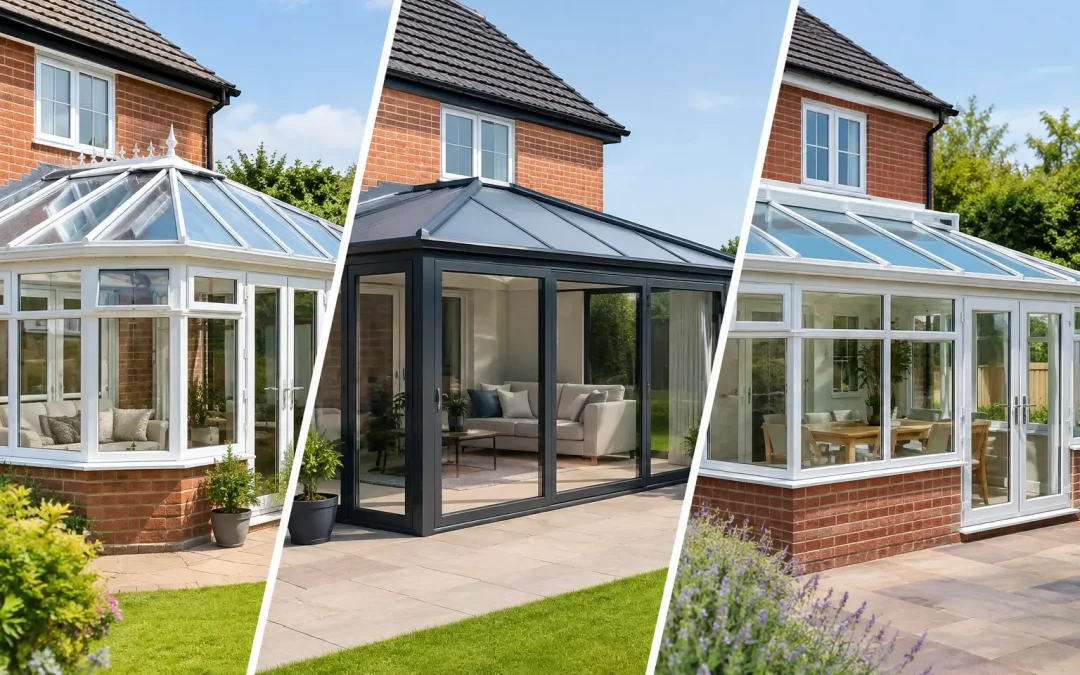
A conservatory that is too hot by lunchtime, too cold on a January morning or too noisy in the rain is rarely a problem with the room itself. In most cases, the roof is the reason. This conservatory roof comparison explains the real differences between polycarbonate, glass and insulated tiled roof systems, so you can choose an upgrade that suits how you want to use the space.
For many Leicestershire homeowners, the decision comes down to more than appearance. You may want a brighter kitchen extension, a peaceful sitting room, or simply a conservatory that does not feel like a spare room for half the year. The right answer depends on your existing structure, your budget, the amount of natural light you need and whether you are replacing an ageing roof or starting from scratch.
Conservatory Roof Comparison: The Main Choices
The three most common options are polycarbonate, glass and insulated tiled roofs. Each can work well in the right property, but they provide very different results for comfort, light and long-term value.
Polycarbonate conservatory roofs
Polycarbonate is the familiar lightweight plastic roof found on many older conservatories. It is usually the lowest-cost option and can be a practical replacement where keeping weight down is the main concern. Modern multiwall polycarbonate is better than older sheets, with improved insulation and coatings that can reduce glare.
However, even a newer polycarbonate roof will not normally match glass or an insulated tiled system for year-round temperature control. It can amplify the sound of heavy rain, and direct sun may still make the room uncomfortable in summer. The material can also discolour, become marked or lose some of its appearance over time.
A polycarbonate roof may suit a conservatory used mainly in milder weather, especially where budget is tight. It is less suitable if your main aim is to turn the room into a quiet, comfortable living space throughout the year.
Glass conservatory roofs
A glass roof gives a more open, premium look and allows the maximum amount of daylight into the room. For conservatories that overlook a garden, this can make a real difference. Modern performance glass can include solar control coatings, self-cleaning finishes and improved thermal properties, making it a much stronger option than older glazing.
The trade-off is that glass tends to cost more than polycarbonate, and performance varies greatly between products. The right specification matters. Clear glass may give you a bright room but can create glare or excess heat where the conservatory faces south or west. Tinted or solar-control glass can improve comfort, though it may reduce the amount of light coming through.
Glass is also heavier than polycarbonate. Before replacement, the existing frames and foundations should be checked to make sure they are suitable for the new load. When properly specified and fitted, a glass roof can be an excellent choice for homeowners who want light and a more refined finish without losing the traditional conservatory feel.
Insulated tiled conservatory roofs
An insulated tiled roof is designed for homeowners who want a conservatory to feel more like part of the house. These systems use a lightweight structural frame, high-performance insulation and tiles or slates that complement the main property. Many include one or more glazed panels or roof windows to prevent the room from becoming too dark.
The biggest benefit is temperature control. By reducing heat loss in winter and limiting solar gain in summer, a properly installed insulated roof can make the room far more usable across the seasons. The insulation also helps soften outside noise, including rain, traffic and nearby activity.
A tiled roof does reduce the amount of overhead light compared with a full glass roof. This is why roof windows or glazed sections are worth discussing at the design stage, particularly if the conservatory is connected to a kitchen or another room that relies on borrowed light. It is also generally the highest-cost choice, but for a room that is currently underused, it can offer the most noticeable improvement in day-to-day comfort.
Comparing Warmth, Light and Noise
There is no single best conservatory roof for every home. The most useful way to compare options is to decide which problem you are trying to solve first.
If overheating is your biggest issue, an insulated tiled roof usually provides the strongest improvement. Solar-control glass can also work very well, especially where preserving daylight is essential. Polycarbonate can be upgraded, but it is less effective at keeping temperatures stable during very hot or cold weather.
If you want as much natural light as possible, glass is usually the leading option. It keeps the sky view and makes the space feel larger. An insulated tiled roof can still be bright when designed with roof windows, but it will naturally give a more enclosed, extension-like feel.
For noise reduction, especially during rain, insulated tiled roofs come out ahead. Glass generally performs better than polycarbonate, but the exact result depends on the glass build-up and the existing frames. If the sound of rain makes it difficult to hear the television or hold a conversation, simply replacing old polycarbonate with new polycarbonate may not give the change you are hoping for.
Cost Is More Than the Price of the Roof
It is understandable to focus on the installation quote, but the cheapest roof is not always the best value. A polycarbonate replacement may cost less initially, yet it may not address the reason you are considering the work. If the conservatory remains uncomfortable for much of the year, the saving can feel short-lived.
Glass is a middle-to-premium option depending on the specification and size of the roof. It can improve appearance and comfort while retaining a bright space. An insulated tiled roof usually involves a larger upfront investment, but can be worthwhile when it changes a room from seasonal to everyday use.
The condition of the conservatory also affects the final price. Ageing frames, damaged guttering, poor seals, weak foundations or leaks may need attention before any new roof is installed. A trustworthy installer should assess the whole structure rather than fitting a new roof onto a conservatory that is not ready for it.
Planning Permission and Building Regulations
Many conservatory roof replacements do not require planning permission, but this depends on the property, its location and the work involved. Listed buildings, conservation areas and homes with specific planning restrictions can have different requirements.
Building Regulations are particularly relevant when changing from a lightweight roof to a solid insulated tiled roof. The new roof must be designed to suit the existing conservatory structure and meet the relevant standards for thermal performance and safety. This is not a job to guess at or price from photographs alone.
A proper survey gives you clarity before work begins. It should look at the frames, walls, base, roof span, drainage and the way the conservatory joins the house. This protects you from unexpected problems and helps ensure the finished roof performs as it should.
How to Choose the Right Roof for Your Conservatory
Start by being honest about how you use the room now and how you would like to use it after the work. If you enjoy the garden view and use the conservatory mainly in spring and summer, performance glass may be the right balance. If it is currently too bright, too noisy and too difficult to heat, an insulated tiled roof is likely to be the better long-term option.
Also consider the direction your conservatory faces. South-facing rooms often need strong solar control, while north-facing rooms may benefit from solutions that retain as much warmth and light as possible. A good design should respond to the property rather than rely on a standard product.
At Supreme Home Improvements, we believe homeowners should be given straightforward advice, clear options and workmanship they can rely on. With more than 30 years in the trade, we assess what will suit the property and budget, not just what is easiest to sell.
The best roof is the one that makes you want to use your conservatory more often. A careful survey and an honest conversation about warmth, light, noise and cost will point you towards a choice that improves the room for years to come.