
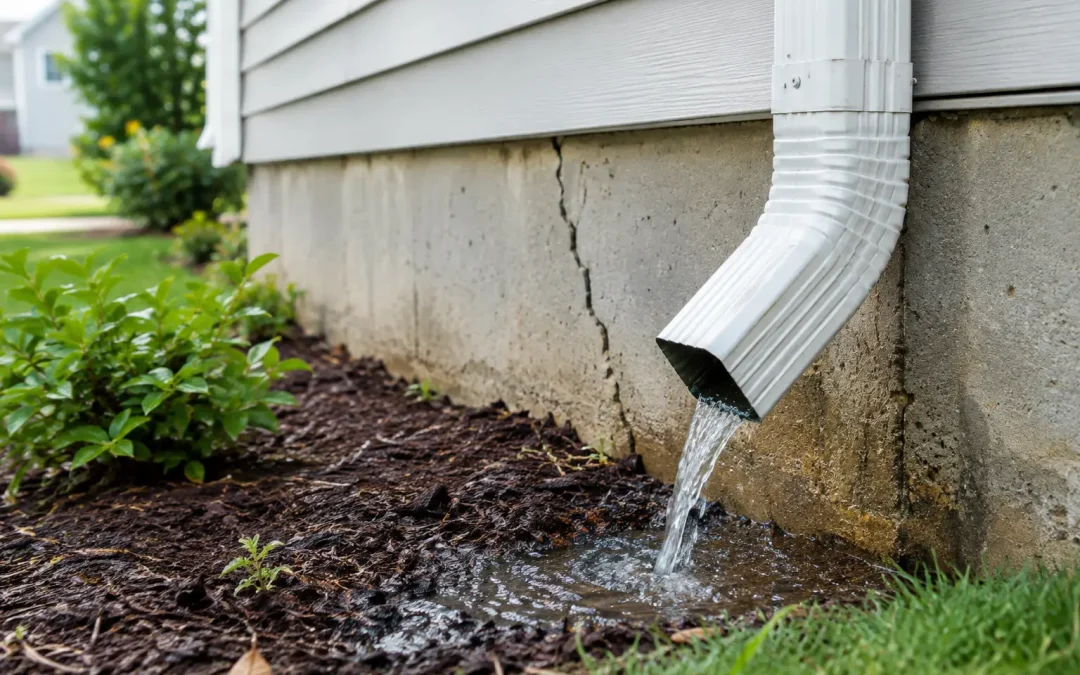
A blocked gutter can look like a small maintenance job, but the water it sends over the edge has to go somewhere. So, can gutters damage foundations? Yes. When rainwater repeatedly lands beside your home instead of being carried safely away, it can saturate the ground around the foundations and create problems that become costly if left alone.
For homeowners in Leicestershire, where heavy rain, clay soils and older properties are all common, good guttering is not just about keeping walls tidy. It is part of protecting the structure of your home.
How can gutters damage foundations?
Gutters collect rainwater from the roof and direct it into downpipes. The downpipes should then discharge water well away from the base of the property, ideally into a suitable drain or soakaway. If any part of that system is blocked, damaged, undersized or poorly positioned, water can spill directly onto the ground beside the house.
One wet day will not usually cause foundation damage. The concern is repeated saturation over months or years. Soil absorbs the excess water, and its behaviour changes. Some ground becomes soft and less supportive, while clay-rich soil can expand when wet and shrink when dry. That movement can put uneven pressure on the foundations and the walls above them.
This is why a gutter problem often starts with a drip, an overflow or a puddle, then develops into signs such as cracking, damp patches or sticking doors. The gutter may not be the only cause, but it is a common and preventable contributor.
Water pooling beside the property
The most direct risk is water collecting along the base of an external wall. A downpipe that ends too close to the house, a broken gully, or guttering that overflows in one area can keep the soil permanently wet.
Look out for puddles that remain after rain has stopped, splashback staining on brickwork, moss near the wall or soil that feels unusually soft. These are clear signs that water is not being managed properly.
Changing soil puts pressure on foundations
Foundation movement depends on the type of soil beneath your home. Clay soil, found in many parts of the Midlands, is particularly sensitive to moisture. During prolonged wet weather it can swell. In drier spells it contracts. If one side of a property receives much more water than another because of leaking guttering, the movement may be uneven.
That does not mean every crack is caused by gutters. Tree roots, drains, poor ground conditions, age and structural alterations can all play a part. However, sorting roof drainage is a sensible first step because it removes one avoidable source of excess moisture.
Damp walls and damaged masonry
Overflowing water does not only affect the ground. It can run down the face of the wall, soak into brickwork and create damp patches indoors. In winter, trapped moisture can freeze and thaw, gradually damaging mortar joints and brick faces.
Over time, this can allow more water into the wall and make the problem more expensive than a straightforward gutter repair. Keeping water off the property is far better than trying to treat damp after it has taken hold.
Warning signs your guttering needs attention
A quick inspection during or shortly after rainfall tells you more than looking at guttering on a dry day. Water should travel smoothly along the channel and through the downpipe, without spilling over the front, back or joints.
Pay attention if you notice any of the following:
- Water cascading over the gutter edge, especially at one point.
- Gutters sagging, pulling away from the fascias or holding standing water.
- Drips coming from joints, corners or the connection to the downpipe.
- Green staining, algae or dark marks on walls below the roofline.
- Cracks in internal plaster or external brickwork that are widening or recurring.
- Doors and windows that suddenly begin sticking, particularly alongside new cracks.
Small hairline cracks in plaster are common in older homes and are not automatically a sign of serious movement. Cracks that are wider than a few millimetres, diagonal, growing, or appearing around doors and windows deserve professional advice. If you suspect significant structural movement, speak to a qualified surveyor or structural engineer as well as addressing the drainage issue.
Common gutter problems that send water towards foundations
Blocked gutters are the usual culprit. Leaves, moss from roof tiles, nesting material and general debris prevent water from reaching the downpipe. It then backs up and spills over, often in the same place every time it rains.
A blockage in the downpipe can be just as damaging. Water may appear to enter the downpipe correctly but then escape from a joint or overflow from the top because it cannot travel any further. Ground-level gullies can also become blocked with silt and leaves, causing water to back up at the base of the wall.
Poor falls are another issue. Guttering needs a slight slope towards the outlet. If brackets have moved, the gutter has sagged, or sections were fitted without the correct fall, water sits in the channel rather than draining away. Standing water adds weight, strains brackets and can lead to leaks at joints.
Old, cracked plastic guttering and tired seals are also worth checking. uPVC guttering is durable, but years of sun, frost and movement can cause fittings to loosen. Replacing a failed section early is normally far more affordable than repairing damp damage to walls or dealing with ground movement later.
What to do if water is collecting by your home
Start with the simplest checks when it is safe to do so. Clear visible debris from low-level gullies and make sure downpipe outlets are not blocked. Never lean ladders against guttering, and do not attempt work at height without the right equipment and experience.
Next, check where the downpipe discharges. Water should not simply empty onto a path or flower bed next to the wall. It needs a clear route into a suitable drainage point or away from the property. The right solution depends on the layout of the home, the local ground conditions and existing drainage arrangements. Extending a downpipe may help in some cases, but it should not send water towards a neighbour’s property or create a new puddle elsewhere.
If guttering is overflowing, sagging or leaking, arrange a proper inspection rather than repeatedly clearing the same problem. A repair may be enough where the system is sound and only a bracket, joint or short section has failed. Full replacement can be better value when guttering, fascias and soffits are all ageing together, as it gives the roofline a clean, reliable system designed to work as one.
Prevention is cheaper than foundation repairs
Most gutter-related foundation risks can be reduced with regular maintenance. Clear gutters and downpipes at least once or twice a year, usually in late autumn after leaf fall and again in spring. Homes near mature trees may need more frequent checks.
Also inspect the roofline after strong winds and heavy rain. A loose bracket, slipped joint or overflowing valley can cause concentrated water flow long before it becomes obvious from inside the home. Keep an eye on external walls, drainage gullies and the ground around the property, rather than focusing on the gutters alone.
For homeowners who would rather avoid ladders and guesswork, Supreme Home Improvements can assess worn guttering, fascias and soffits and recommend a practical repair or replacement. A well-fitted roofline should do its job quietly: carry rainwater away, protect the walls and help keep the ground around your home stable.
If you have noticed overflowing gutters or persistent puddles by the wall, do not wait for a crack to tell you there is a problem. Dealing with the water route now is one of the simplest ways to look after your home for the years ahead.