
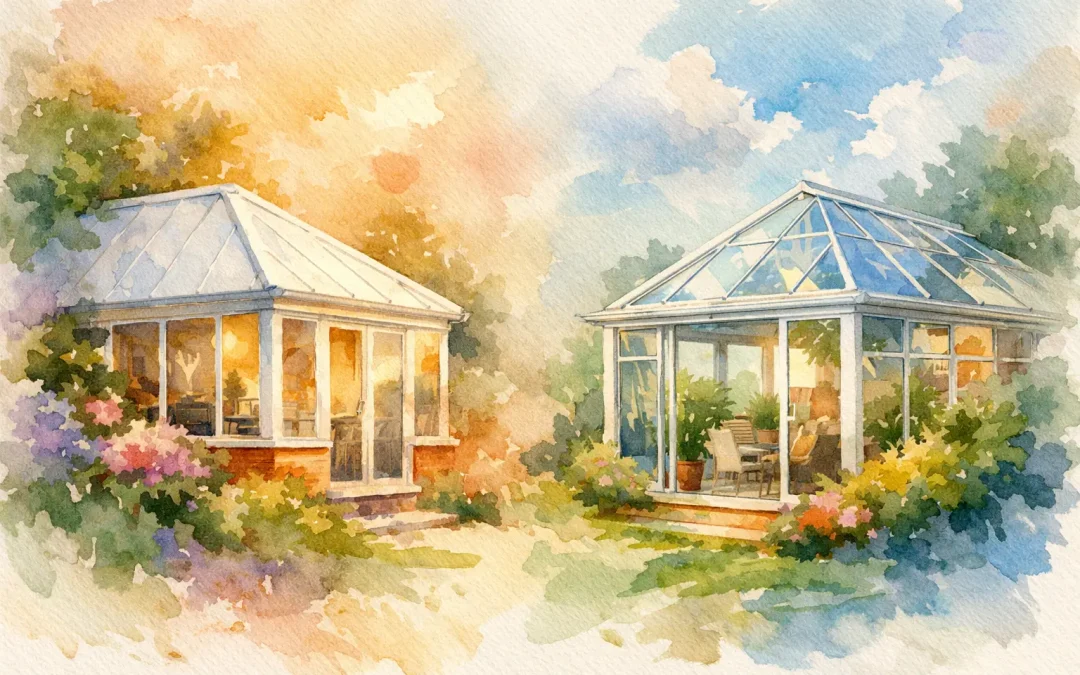
A conservatory that is too cold to use in winter and too hot to sit in during summer can feel like wasted space. When weighing up a conservatory roof vs glass roof, the right answer comes down to how you want to use the room, how much natural light you need and what is causing the current problem.
A glass roof can make a conservatory feel bright and open, while a modern super-insulated roof can make it feel far more like a comfortable extension of the home. Neither is automatically the best choice for every property. Here is what Leicestershire homeowners should consider before making the change.
Conservatory roof vs glass roof: the main difference
In most cases, a conservatory roof means a tiled or solid insulated replacement roof. It is built with high-performance insulation and a lightweight tile finish, often with optional glazed panels or roof windows. Its main purpose is to improve temperature control and turn a seasonal conservatory into a room you can enjoy more often.
A glass roof is made up of glazed panels in an aluminium or uPVC framework. Modern glass options are much more efficient than older polycarbonate roofs, particularly when solar-control glass is specified. They keep the sky visible from inside and let daylight travel deeper into the adjoining room.
The choice is not simply about solid versus transparent. It is a choice between prioritising year-round comfort or retaining the maximum amount of daylight and open views.
Warmth in winter and comfort in summer
Temperature is usually the deciding factor for homeowners replacing an old conservatory roof. Older glass and polycarbonate roofs can lose a great deal of heat on cold days. Even with the heating on, the room may feel chilly near the windows and roof.
A super-insulated conservatory roof holds heat far more effectively. Insulation within the roof structure slows heat loss, so the room can feel warmer without constantly turning up the thermostat. For families hoping to use the space as a dining area, playroom, home office or everyday sitting room, this makes a real difference.
It also helps in summer. Direct sunshine through a glazed roof can quickly raise the temperature, especially on south-facing or west-facing conservatories. Solar-control glass can reduce glare and limit solar gain, but it will not block the sun in the same way as an insulated tiled roof.
That said, a solid roof does not remove the need to think about ventilation. Opening windows, trickle vents and doors still matter, particularly in a room that receives afternoon sun. A well-planned installation looks at the whole conservatory, not just the roof covering.
How much natural light do you want?
This is where glass has a clear advantage. A glass roof gives a bright, airy feel and can be ideal where the conservatory is already a favourite place to enjoy the garden. It is also worth considering if the room behind the conservatory relies on it for daylight. Replacing a fully glazed roof with a solid tiled one may make that internal room noticeably darker.
A solid conservatory roof creates a cosier, more extension-like feel. Many homeowners prefer this, especially if bright glare makes the room uncomfortable or fades furniture and flooring. However, the loss of overhead light should be discussed properly before work begins.
There is a useful middle ground. Roof windows or glazed panels can be included in many insulated roof designs, allowing daylight into the conservatory while retaining the thermal benefits of a solid roof. This can be a good option when you want a warmer room without making it feel enclosed.
Noise levels in rain and bad weather
Anyone with an older polycarbonate roof will know how loud heavy rain can be. Glass is generally quieter than polycarbonate, but rainfall, wind and nearby traffic can still be heard through it.
An insulated tiled roof offers better sound reduction. Rainfall becomes much less intrusive, which is valuable if the conservatory is used for working from home, watching television or eating with family. In a busy area or near a main road, the quieter feel can be one of the most noticeable improvements.
Noise should not be the only reason to choose a roof, but it is a practical benefit that is easy to overlook until you are trying to hold a conversation during a downpour.
Appearance from inside and outside
A glass roof suits homes where a light, traditional conservatory look is part of the appeal. It keeps the structure visually connected to the garden and can work especially well with a contemporary frame design.
A tiled conservatory roof is designed to blend more closely with the main property. With a choice of tile colours and profiles, it can give an ageing conservatory a smarter, more substantial appearance from outside. Inside, the plastered ceiling and optional lighting can make the room feel less like a glazed add-on.
The best style depends on the property. A period home, a modern detached house and a compact semi may each suit a different finish. It is sensible to consider roofline details, window frames and the colour of the existing house roof so the new roof looks considered rather than out of place.
Cost and long-term value
The price of either option depends on the conservatory size, shape, existing frame condition, access and the specification chosen. Glass roofs vary significantly in cost because different glazing options offer different levels of thermal performance and solar control.
A super-insulated tiled roof can cost more upfront than a basic glazed replacement, but it may offer better day-to-day value if it makes the conservatory usable for more months of the year. Lower reliance on heating and a more comfortable space can change how the whole home is used.
It is important not to choose purely on the lowest quote. The roof must be suitable for the existing conservatory structure, fitted correctly and finished neatly around the edges, flashings and guttering. Poor installation can lead to leaks, condensation or unnecessary disruption later on.
Ask what is included in the price, whether any frame repairs are needed, how waste will be removed and what workmanship guarantee is provided. A clear, written quotation makes it easier to compare like for like.
Planning permission and building regulations
Many conservatory roof replacements do not need planning permission, particularly where the conservatory remains within permitted development rules. However, every property is different. Listed buildings, conservation areas, unusual extensions and previous alterations can all affect what is allowed.
Building regulations may also apply when changing from a lightweight glazed roof to a solid tiled roof. The structure needs to be assessed to make sure it can carry the additional load safely. A reputable installer will explain the requirements for your property rather than making assumptions.
This is particularly important with older conservatories. Before deciding on a replacement roof, the frames, base and supporting walls should be checked. There is little value in fitting a new roof onto a structure that needs attention first.
Which roof is right for your home?
Choose a glass roof if natural daylight, garden views and an open feel are your main priorities. Modern solar-control glazing can be a worthwhile upgrade if your existing roof causes glare or overheating, but you still want to preserve the look of a traditional conservatory.
Choose a super-insulated tiled roof if your main goal is a warmer, quieter and more usable room throughout the year. It is often the stronger option for conservatories that currently sit empty during winter or become unbearable during hot weather.
For many households, the best solution is not at either extreme. An insulated roof with carefully positioned glass panels can bring in daylight while dealing with the temperature and noise problems that make older conservatories difficult to enjoy.
A proper survey is the sensible next step. An experienced local installer can assess your current conservatory, listen to how you want to use the space and recommend a roof that suits both your home and budget. The aim is not simply to replace what is there, but to make the room one you genuinely want to use every day.