
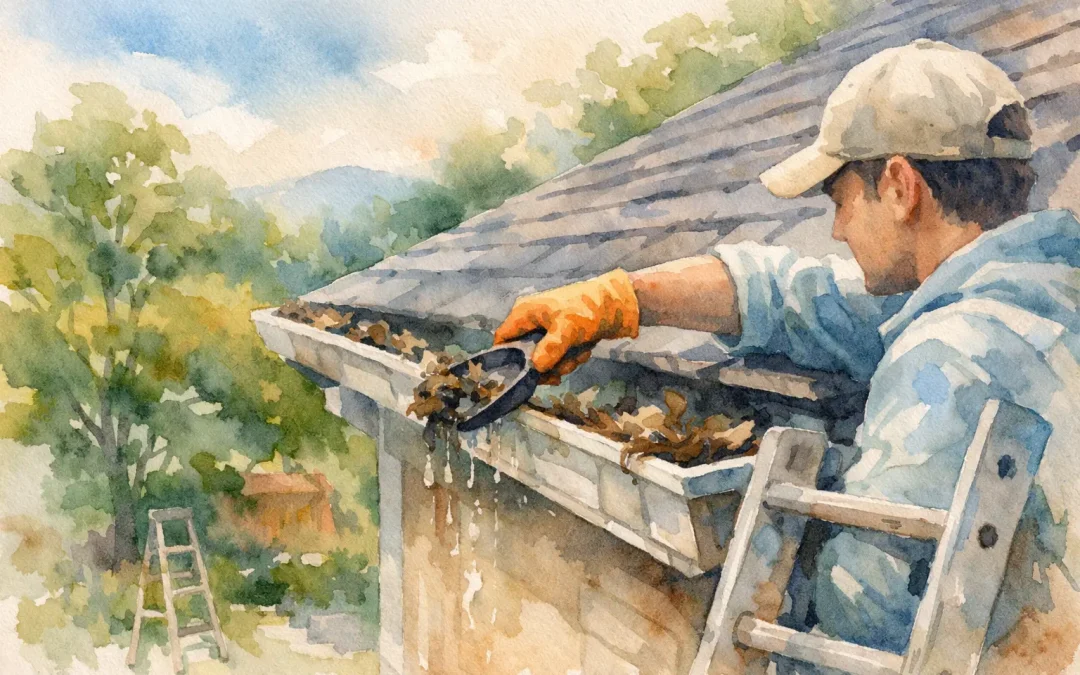
A blocked gutter rarely looks urgent from the ground – until water starts pouring over the edge, staining brickwork, soaking walls, or pooling around the base of the house. If you are looking up at moss, leaves and general build-up and wondering how to clean house gutters safely, the first thing to know is this: the cleaning itself is often straightforward, but the height is what makes it risky.
For many homeowners, the safest option is not always climbing up and getting on with it. It depends on the height of the property, the condition of the guttering, the stability of the ground, and how confident you are working on a ladder. There is no shame in deciding a job is better left to a professional, especially when a fall or damaged roofline will cost far more than a routine gutter clean.
Why safe gutter cleaning matters
Gutters do a simple but important job. They carry rainwater away from the roof and direct it safely to the drainage system. When they are clogged, water overflows. That overflow can lead to damp patches, peeling paint, dirty fascia boards, rotting timber, and in colder weather, extra weight from trapped debris and standing water.
There is also the gutter itself to think about. Older brackets can weaken over time, seals can fail, and joints can start to pull apart. If you lean too heavily on a tired section while cleaning, you can turn a maintenance job into a repair job very quickly.
That is why the focus should always be on safe access first and cleaning second.
Before you clean house gutters safely, check the basics
Start from ground level. Walk around the property and look for obvious signs of blockage or damage. You may spot sagging sections, plant growth in the gutter, staining on exterior walls, or water marks below joints and corners. If the guttering already looks loose or cracked, climbing a ladder beside it may not be the best idea.
Next, think about the ground below. Ladders need firm, level footing. Soft flower beds, loose gravel, sloping paths, and wet decking all create unnecessary risk. If the safest place to position a ladder is not available, stop there.
You should also check the weather. Dry, calm conditions are best. Wind makes ladder work less stable, and wet rungs or wet gloves reduce grip. Even a light drizzle can make a simple task far more awkward than it needs to be.
The tools you will actually need
Most gutter cleaning jobs do not need specialist kit, but they do need the right basic equipment. A sturdy ladder in good condition is essential, and for most homes a ladder stabiliser is a smart addition because it improves contact and helps protect the guttering. You will also want gloves, a bucket or debris bag, and a small scoop or hand trowel to remove compacted leaves and moss.
A garden hose is useful for flushing through the run once the heavier debris is out. Some people use gutter vacuum systems or telescopic cleaning tools from the ground, and these can be a good option on suitable properties. They are not perfect for every blockage, though. If debris has compacted near an outlet or downpipe, hands-on access may still be needed.
Wear practical clothing with good grip on your footwear. Avoid anything loose that can catch on ladder rungs or brackets.
How to clean house gutters safely step by step
Set the ladder up carefully and do not rush this part. The ladder should be placed on stable ground and at a safe angle. If you are unsure, it is better not to guess. Have someone nearby if possible, not to hold an unsafe ladder in place, but to act as a second pair of eyes and assist if needed.
Once you are up, work in small sections. Scoop out the loose debris and place it into your bucket rather than dropping it below. Wet leaves and silt can be surprisingly heavy, so do not overfill the bucket while you are still on the ladder.
Keep your hips centred between the ladder stiles. If you need to reach further along, climb down and move the ladder. Overreaching is one of the quickest ways to lose balance, and it happens when people try to save time.
After removing the bulk of the debris, flush the gutter with a hose to check water flow. Start at the end opposite the downpipe and watch how the water moves. If it drains freely, that section is clear. If it backs up, the blockage may be sitting in the outlet or inside the downpipe.
Downpipes can sometimes be cleared from the top with a hose, but stubborn blockages may need to be tackled from below. If water is not moving at all, avoid forcing tools aggressively into the pipe, especially on older systems. You could dislodge joints or cause a leak.
Common mistakes that make gutter cleaning less safe
One of the biggest mistakes is treating gutter cleaning like a quick weekend chore. Height changes the risk completely. People often use an old ladder that has been sitting in the garage for years, work in poor weather, or try to stretch across several metres without repositioning.
Another common issue is using the gutter as support. Gutters are not designed to carry your weight, and neither are fascias. Even if they look solid, they may have hidden weakness from age or previous water damage.
There is also the temptation to ignore small faults spotted during cleaning. A loose bracket, a minor drip at a union, or a section that does not seem to fall correctly may not look serious now, but these are the things that lead to persistent overflow later on.
When it is better to call a professional
If the property is two storeys or higher, if access is awkward, or if you have a conservatory, extension roof, or uneven ground below the gutter line, it is often better to bring in someone properly equipped for the job. The same applies if the guttering is damaged, heavily blocked, or clearly overdue for maintenance.
This is especially true where there are signs of wider roofline wear. Overflowing water can affect fascias, soffits, render and brickwork, so sometimes what looks like a simple clean is part of a bigger problem. In those cases, a proper inspection is worth more than a quick clear-out.
For homeowners across Leicestershire, this is where a local company with experience in guttering and roofline work can make life easier. A reliable contractor will not just clear debris. They will also spot issues with joints, brackets, alignment and general condition before they turn into more expensive repairs.
How often should gutters be cleaned?
For most homes, once or twice a year is enough. Autumn is the obvious time, especially if you have trees nearby, and a spring check is useful for clearing winter build-up and checking for damage after storms or frost.
That said, it depends on the property. Homes near overhanging trees may need more frequent attention. Bungalows are often easier to inspect and maintain, while taller houses can go longer between cleans simply because the signs are less visible from the ground – which can be misleading.
If you notice overflow during rain, dark streaks on the walls, or debris spilling over the front edge, do not wait for the next planned clean.
A few signs your guttering may need more than cleaning
Sometimes the problem is not just leaves and moss. If water consistently pools in one section, the fall may be wrong. If joints drip even when clear, seals may have worn out. If the gutter line bows in the middle, the brackets may be failing or spaced too far apart.
You might also see cracking, brittleness, or discolouration in older plastic systems. In that situation, cleaning helps in the short term, but replacement may be the better long-term value. A fresh, properly fitted guttering system protects the property better and reduces the need for constant patch-up work.
This is often where homeowners decide they would rather have the job sorted properly than keep revisiting the same issue every few months.
The safest approach is the one that protects both you and the property
If you are confident with ladder work, the weather is dry, the access is good, and the guttering is sound, a careful clean can be manageable. But if any part of the job feels uncertain, trust that instinct. Safe gutter cleaning is not about proving you can do it yourself. It is about keeping water flowing where it should without risking injury or damaging the roofline.
A well-maintained gutter system helps protect the whole exterior of your home, from fascias and soffits to walls, windows and foundations. Sometimes that means a simple clean. Sometimes it means getting experienced hands in to inspect, repair or replace what is no longer doing its job. Either way, dealing with it early is always easier than waiting for the next heavy downpour.