
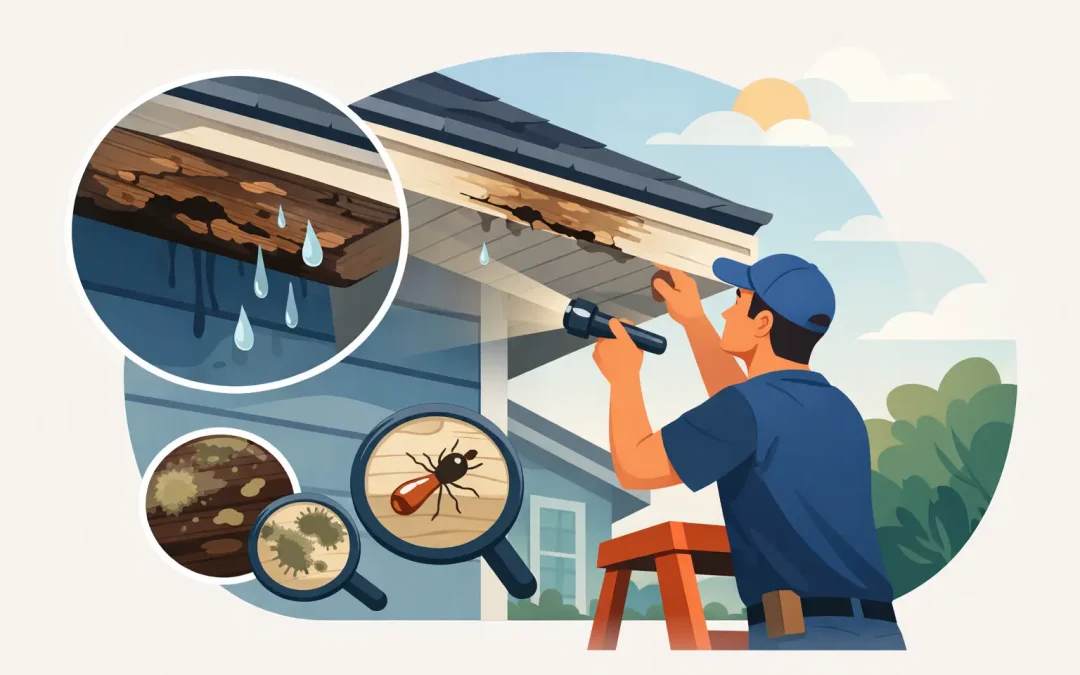
You usually do not notice a soffit until something starts going wrong. A patch of peeling paint, a damp mark near an upstairs wall, or bits of debris on the ground can all be early clues. If you are wondering how to spot rotten soffits before the damage spreads, the good news is that there are a few clear warning signs homeowners can look for from ground level.
Soffits sit underneath the roof overhang and help protect the edge of your roof from moisture, draughts and pests. They also support ventilation into the roof space when fitted with vents. When they start to rot, it is rarely just a cosmetic issue. Left too long, rotten soffits can affect fascias, guttering and even the roof timbers behind them.
What rotten soffits actually look like
Timber soffits do not always fail all at once. In many cases, the damage starts in small areas where water has been getting in for some time. From the ground, you may first notice flaking paint, staining, discolouration or sections that look swollen rather than flat. A soffit board should look neat and firm. If it appears warped, uneven or soft around the edges, that is a sign something is not right.
In more advanced cases, the timber may visibly split or crumble. You might see dark patches, green algae growth or signs of mould where damp has been sitting. If birds or insects have found their way into the roofline, damaged soffits can sometimes be the reason. Gaps and softened timber make an easy entry point.
uPVC soffits do not rot in the same way as timber, but they can still hide problems behind the surface. If an older plastic roofline has sagging sections, staining, trapped moisture or movement where the boards meet, it is worth getting it checked. Sometimes the outer layer looks sound while the timber beneath has already deteriorated.
How to spot rotten soffits from outside
The safest place to start is with a visual check from the ground. Walk around the property and look up at the underside of the roof edge. You are not trying to inspect every inch in fine detail. You are looking for changes in shape, colour and condition.
Pay attention to areas near joints, corners and gutter brackets, because these are common weak points. Water tends to collect or overflow there first. If one side of the house gets less sun, that side may also show signs of damp damage sooner.
There are a few particularly common signs:
- peeling or blistering paint on timber soffits
- black, brown or green staining
- sagging or bowed boards
- cracks, holes or crumbling edges
- visible gaps between soffits and fascias
- nests, insect activity or birds getting into the roofline
If you can see one of these issues on its own, it may still be minor. If you can see several together, there is a stronger chance the soffits are already rotten or holding moisture.
Signs inside the house that can point to soffit problems
The damage does not always announce itself outside first. In some homes, the earliest signs appear indoors. Damp patches near the top of upstairs walls, mould in corners, or poor loft ventilation can all be linked to failing soffits, especially if ventilation openings are blocked or the roofline is letting water in.
That does not automatically mean the soffits are to blame. Roof leaks, gutter problems and faulty flashing can create similar symptoms. Still, if indoor damp appears alongside visible roofline wear, the soffits should be part of the inspection.
A musty smell in the loft is another clue worth taking seriously. Soffits help the roof space breathe. When they are damaged or blocked, condensation can build up and create a damp environment that affects insulation and timber over time.
What causes soffits to rot
Most rotten soffits come back to moisture. Overflowing gutters are one of the biggest causes. When rainwater spills over the front or back of the guttering, it repeatedly soaks the boards below. Over time, painted timber breaks down and rot sets in.
Poor ventilation can also play a part. If moist air cannot escape properly from the roof space, condensation can form and keep the soffit area damp from the inside. This is one reason why a roofline should never be looked at in isolation. Fascias, soffits, guttering and loft ventilation all work together.
Age is another factor. Older timber soffits that have been repaired and repainted many times may simply be reaching the end of their service life. Even good maintenance has its limit. Once the wood has softened in several places, patch repairs can become a false economy.
How to check without putting yourself at risk
Homeowners often feel tempted to get a ladder out and prod the board with a screwdriver. That can tell you if timber is soft, but it also creates obvious safety risks. Uneven ground, awkward gutter positions and working at height all make soffit inspection harder than it looks.
A better first step is to use binoculars or take photos with your mobile phone zoomed in from ground level. On a bright day, this can reveal more than you expect. If you can safely access the loft, look for signs of daylight, dampness, staining or mould near the eaves, but avoid disturbing insulation or forcing your way into tight roof edges.
If the boards already look loose, cracked or water-damaged, it is sensible to leave the closer inspection to a professional. Rotten soffits can be more fragile than they appear, and the real condition behind them is not always obvious from the outside.
Repair or replace?
This depends on how far the damage has gone. If the rot is small, localised and caught early, a repair may be possible. That might involve replacing a short section of timber, dealing with the source of the water ingress and repainting the affected area.
If the soffits are rotten in multiple places, if the fascias are also affected, or if the guttering has been pulling away, replacement is often the better long-term option. Many homeowners choose to upgrade to low-maintenance uPVC because it removes the need for regular painting and offers better resistance to weathering.
There is a balance to strike here. A repair can cost less upfront, but repeated small fixes on an ageing roofline can add up quickly. A full replacement costs more initially, yet it often gives better value if several elements are already tired.
Why early action matters
Soffit rot rarely stays neatly contained. Once moisture gets established in the roofline, it can spread into fascias, rafter ends and other structural timber. The longer it is left, the more labour and material are usually involved in putting it right.
There is also the issue of pest access. Small holes and weakened boards can encourage wasps, birds and insects to settle where they should not. That turns a straightforward roofline repair into a much bigger nuisance.
For homeowners, the practical point is simple. Catching rotten soffits early is usually cheaper, less disruptive and better for the condition of the whole property.
When to call in a specialist
If you can clearly see sagging boards, crumbling timber, recurring damp around the roofline or gutters that regularly overflow onto the soffits, it is time to get proper advice. The same applies if your roofline has not been checked in years and the house still has original timber boards.
A specialist can tell you whether the issue is confined to the soffits or whether the fascias, guttering and ventilation also need attention. That matters, because replacing one part without dealing with the cause can leave you back in the same position not long after.
For homeowners across Leicestershire, this is one of those jobs where local experience makes a difference. Properties vary, and the right fix depends on the age of the house, the roofline materials already in place and how severe the weather exposure is on each side of the building.
How to spot rotten soffits before they become a bigger job
The best approach is to look up now and again, especially after heavy rain or windy weather. Check for peeling paint, staining, sagging sections and any sign that water has been running where it should not. Keep your gutters clear, because blocked gutters are often the starting point for soffit damage.
If your soffits are timber and have not been painted or inspected for some time, do not wait for obvious holes to appear. Early wear is much easier to sort than widespread rot. And if your roofline already looks tired as a whole, it may be worth thinking beyond a temporary patch.
A sound soffit does its job quietly for years. When it starts to fail, the trick is not to ignore the small signs and hope they go away.