
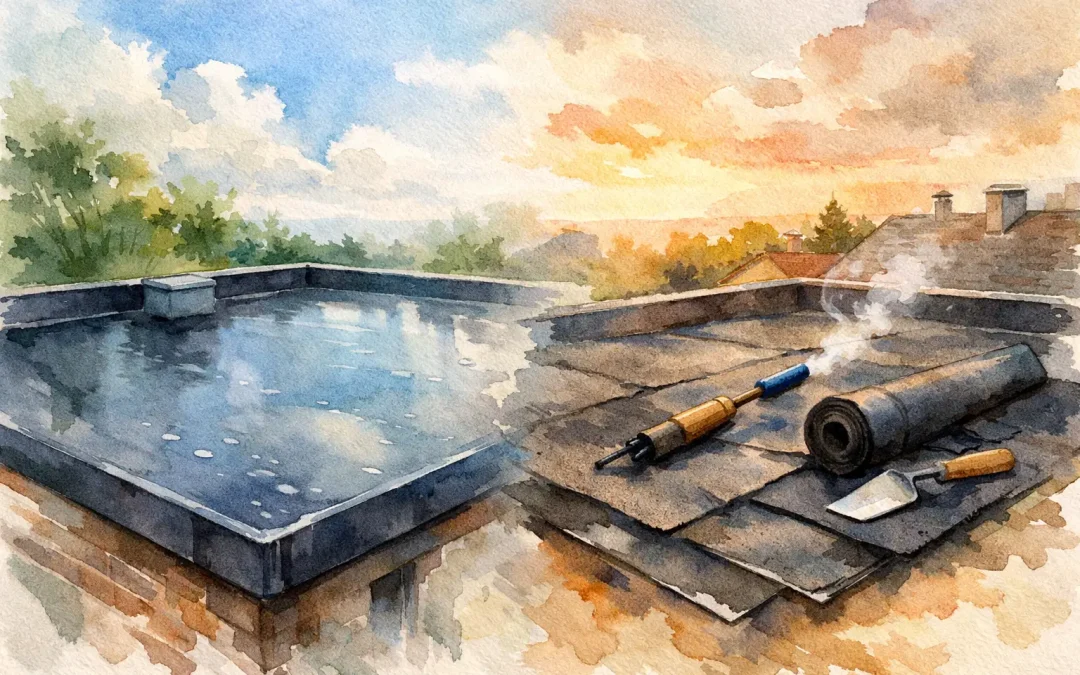
A flat roof that starts holding water, cracking at the edges or staining the ceiling below needs more than a quick patch. When weighing up rubber roofing vs felt, the right choice depends on the roof’s condition, your budget and how long you want the replacement to last. Both materials can protect a garage, extension, porch or dormer roof, but they work in very different ways.
For many Leicestershire homeowners, the decision comes down to paying less now for a traditional felt roof or investing more in a rubber membrane that is designed for a longer service life. There is no one-size-fits-all answer, but knowing the differences makes it easier to spend your money wisely.
Rubber roofing vs felt: the main difference
Traditional roofing felt is usually a bitumen-based material supplied in rolls. Modern felt systems are far better than the old-style mineral felt found on many ageing garages, but they are still laid in layers with sealed joints. Depending on the system, the layers may be bonded with hot bitumen, adhesive or a torch-applied method.
Rubber roofing, often known as EPDM, is a flexible synthetic rubber membrane. It is commonly fitted as one large sheet, with far fewer joins than felt. A quality system such as Firestone rubber roofing is designed to cope with changing temperatures, rain, frost and sunlight without becoming brittle.
That difference in construction matters. Most flat-roof leaks develop at weak points: laps, seams, corners, outlets and upstands. A rubber membrane has fewer seams across the main roof area, while felt has more layered joints to install and maintain correctly.
Lifespan: which material lasts longer?
Rubber roofing generally has the longer expected lifespan. A professionally installed EPDM roof can often last 30 years or more, provided the deck, edge trims and drainage are all in good condition. It remains flexible through cold winters and warm summers, which helps it deal with the movement that naturally occurs in a roof structure.
A modern high-performance felt roof can also give good service, commonly around 15 to 25 years depending on the specification, exposure and installation quality. It is a significant step up from older, basic felt coverings, but it is more likely to need attention earlier than a well-fitted rubber roof.
This does not mean every rubber roof will automatically outlast every felt roof. A membrane laid over damp timber, poor falls or failing roof boards will not solve the underlying problem. Preparation is as important as the covering itself. Before recommending either option, a proper installer should check the deck, drainage, flashings and condition of the surrounding roofline.
Cost: the upfront price is only part of the picture
Felt is often the lower-cost choice for smaller flat roofs, particularly where the existing roof structure is sound and a straightforward replacement is needed. That can make it a sensible option for homeowners who need reliable weather protection on a tighter budget.
Rubber roofing usually costs more at the start because of the membrane, adhesives, trims and skilled fitting involved. However, it may offer better value over the life of the roof if it avoids earlier replacement work. A cheaper covering that needs replacing in 15 years can cost more overall than a longer-lasting option fitted once and maintained properly.
The size and shape of the roof also affect the price. A simple rectangular garage roof is usually quicker to cover than an extension roof with several corners, pipes, rooflights or awkward junctions. If rotten timber needs replacing, that work should be included in the quotation rather than hidden as an unexpected extra later.
Weather resistance on a British flat roof
Leicestershire weather puts every roof covering to the test. Heavy rain, overnight frost, summer heat and wind-driven rain can all expose weak joints and poor detailing. Both felt and rubber can be fully waterproof when installed correctly, but rubber has a useful advantage in flexibility.
EPDM stretches and moves rather than becoming hard and cracking as it ages. It also handles ultraviolet light well, so it is less prone to sun damage on exposed roofs. For a flat roof over a living space, where a leak could damage plaster, electrics and insulation, that added resilience is often worth considering.
Felt remains a proven material and modern systems are built for British conditions. Its layered finish can be particularly practical on roofs with detailed edges or where matching an existing felt area is useful. The key is choosing a quality system rather than treating all felt roofs as the same product.
Standing water deserves attention whichever covering you choose. Flat roofs should have a slight fall that guides rainwater towards the gutter or outlet. A roof that regularly ponds water may have problems beneath the surface, and simply applying a new covering without correcting the fall can shorten its life.
Appearance, repairs and maintenance
A rubber roof has a neat, plain dark finish that suits most modern extensions, garages and garden rooms. It is usually installed in one piece where possible, giving it a clean appearance without visible overlaps across the centre of the roof.
Felt has a more textured, mineral-finished surface and is available in different colours, although dark grey and black are common choices. Some homeowners prefer this familiar look, especially on older properties or where nearby roofs already use felt.
Both materials need occasional checks. Keep gutters and outlets clear, remove leaves and moss, and look for lifted edges after strong winds. Avoid dragging heavy items across the roof or allowing sharp garden furniture to damage the surface.
Small tears or punctures in rubber can often be repaired with compatible patches and adhesives. Felt repairs are also possible, though a crack or split can sometimes point to wider ageing in the layers below. Repeated patching is usually a sign that replacement should be considered rather than delayed.
When felt may be the better choice
Felt can be the sensible choice when the roof is small, the budget is limited and you need a dependable modern replacement without paying for the longest possible lifespan. It may also suit a roof with complex details where a specialist felt system is the most practical fit.
It is not a poor-quality option by default. Problems tend to arise when low-grade materials are used, corners are cut during installation, or the roof is left without maintenance for years. A properly specified felt roof fitted by an experienced contractor can provide reliable protection for a long time.
When rubber roofing is worth the investment
Rubber roofing is often the stronger long-term option for garages, extensions, porches, dormers and flat-roofed outbuildings. It is especially appealing if you plan to stay in your home, want minimal joins across the roof, or have already dealt with recurring felt repairs.
It can also be a good fit where a flat roof sits above an insulated room. A leak over a garage is frustrating; a leak over a kitchen, bedroom or conservatory can be far more disruptive and expensive. Choosing a durable membrane and having the roof detailed properly around walls, outlets and edges gives better peace of mind.
Do not choose on material alone
The best flat roof is not simply rubber or felt. It is a complete system fitted onto a sound base, with correct drainage and secure perimeter trims. Ask what preparation is included, whether damaged decking will be replaced, how the roof edges will be finished and what workmanship guarantee is provided.
At Supreme Home Improvements, we look at the whole roof rather than covering over obvious faults. With more than 30 years in the trade, our family-run team can advise on practical flat-roof solutions that suit your property, budget and plans for the future.
If your roof is nearing the end of its life, do not wait for the first ceiling stain to make the decision for you. A straightforward inspection can show whether repair is still worthwhile or whether a well-fitted replacement will protect your home for years to come.