
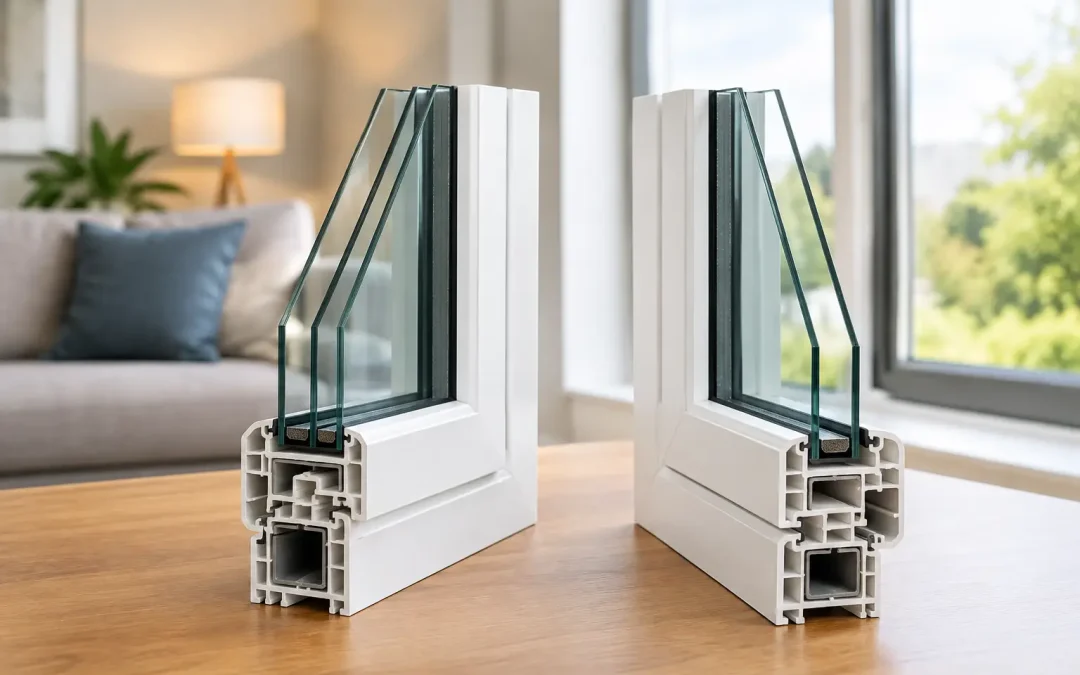
A cold patch beside the sofa, condensation on the inside of the glass and a heating bill that keeps climbing are all signs your windows may be costing you comfort. When comparing triple versus double glazing, the right choice is not automatically the option with the most panes. It depends on your home, its existing windows, your budget and what you want the upgrade to achieve.
For many Leicestershire homeowners, good-quality double glazing remains the sensible, cost-effective answer. For others, particularly those improving a colder property or looking for the highest possible thermal performance, triple glazing can be worth considering. Here is what really separates them.
Triple versus double glazing: the main difference
Double-glazed windows use two panes of glass with a sealed gap between them. Triple-glazed windows use three panes and two sealed gaps. These gaps are normally filled with an insulating gas, such as argon, which helps slow the movement of heat through the window.
Put simply, the additional pane in triple glazing provides another barrier between your heated room and the weather outside. This can improve insulation and reduce the cold feeling near the glass in winter. However, the glass itself is only one part of the window. The frame, seals, spacers, installation quality and size of the opening all affect the final result.
That is why a well-made, correctly fitted A-rated double-glazed uPVC window can perform far better than a poorly specified triple-glazed unit. The product needs to suit the property, and it needs to be installed properly.
Heat retention and energy efficiency
Triple glazing generally offers better thermal performance than double glazing. It can achieve a lower U-value, which is the measurement used to show how quickly heat passes through a building material. Lower is better.
In practical terms, triple glazing can help rooms stay warmer for longer, especially in homes with older windows, exposed elevations or large areas of glazing. You may notice less of a chill when sitting near a window and a more even temperature across the room.
There is a limit to the savings, though. Replacing single glazing with modern double glazing is usually a major step forward. Moving from modern double glazing to triple glazing is an improvement, but the difference is often smaller and takes longer to repay through energy savings alone.
It is also worth considering solar gain. Windows can allow useful warmth from the winter sun into your home. Because triple glazing is designed to hold heat back more effectively, it may also reduce some of that free solar warmth. The effect varies with the glass specification, window direction and amount of shade around your property, so it should be assessed rather than assumed.
Do warmer windows mean a warmer house?
They certainly help, but windows are only one part of the picture. If your roof insulation is poor, your external doors are draughty or your fascias and guttering are allowing damp problems to develop, upgrading glazing alone will not solve every comfort issue.
A practical home improvement plan looks at the whole exterior. Start with the areas that are failing or losing the most heat, then choose improvements that work together and fit your budget.
Noise reduction: more glass does not always mean less noise
A common assumption is that triple glazing will always make a home noticeably quieter. Sometimes it does, but not in every case.
The best noise reduction comes from the right combination of glass thicknesses, the gap between panes, airtight seals and a well-fitted frame. Two panes of different thicknesses can disrupt sound waves more effectively than three panes of the same thickness. Specialist acoustic glass may be a better option than standard triple glazing if road noise, aircraft noise or nearby footfall is your main concern.
For homes near busy routes in Leicester, Coalville or surrounding towns, ask about acoustic performance rather than simply choosing by the number of panes. A made-to-measure specification gives you a better chance of achieving the result you want.
Cost and value for money
Triple-glazed units are normally more expensive than double glazing. They use more glass, require more materials and are heavier to manufacture and fit. The exact difference will depend on window sizes, frame choice, opening styles, glass specification and how many windows are being replaced.
For a homeowner working to a fixed budget, quality double glazing often allows more of the home to be upgraded at once. That could mean replacing every tired window rather than fitting triple glazing to only a few rooms. Complete, consistent replacement can improve comfort, appearance and security throughout the property.
Triple glazing may make more financial sense if you are carrying out a larger renovation, improving a particularly cold house or intend to remain in the property for many years. It can also be a worthwhile choice for bedrooms, north-facing rooms or spaces with large glazed areas where comfort is the priority.
The cheapest quote is rarely the best value. Look at the energy rating, frame quality, locking system, glass specification, guarantees and workmanship included. A window is a long-term part of your home, not a purchase to judge on the initial price alone.
Frame strength, weight and installation
Triple glazing is heavier than double glazing, which matters more than many people realise. Frames, hinges and fixings must be suitable for the added weight, particularly with large opening sashes, bay windows, patio doors and upstairs installations.
Modern uPVC frames can be designed to accommodate triple glazing, but not every existing frame or window design is appropriate. Larger units may need a different specification to remain easy to operate and secure over time.
This is one reason a proper survey matters. Measurements should be taken carefully, and the installer should explain whether triple glazing is suitable for each opening rather than applying one solution across the entire house. A family home may benefit from different glass choices in different rooms.
When double glazing is the better choice
Double glazing is not a compromise when it is well specified. It remains the right choice for many properties because it offers strong insulation, good security, low maintenance and a more manageable price.
It is particularly suitable where you are replacing old single-glazed, misted or draughty units; where the home already has reasonable insulation; or where your priority is a reliable upgrade across several windows and doors. Modern double-glazed uPVC windows can make a clear difference to warmth, condensation and kerb appeal without stretching the budget unnecessarily.
For many older homes in Leicestershire, double glazing is the practical balance of performance and affordability.
When triple glazing is worth considering
Triple glazing is most attractive when you want the best available thermal performance and are prepared to pay more for it. It can suit homes in exposed locations, properties with large window openings, new extensions and renovations where insulation is being improved throughout.
It may also be a good fit for rooms that never seem comfortable in winter, even after the heating is on. If you have a north-facing lounge, a home office beside a busy road or a bedroom where outside temperatures are felt through the existing glazing, a tailored triple-glazed specification could be worthwhile.
Do not choose it only because it sounds like the superior product. The better question is whether its additional performance will be noticeable and valuable in your particular home.
Questions to ask before choosing
Before agreeing to either option, ask for the U-values and energy ratings of the proposed windows, not just a general claim about the glazing. Confirm what gas fill, spacer bars and glass coatings are included. If noise is an issue, ask specifically how the glass is designed to reduce it.
You should also ask whether the quoted frames and hinges are designed for triple glazing, what ventilation arrangements will be used, and what guarantee covers the products and installation. Clear answers now can prevent disappointment later.
A local survey also gives you the opportunity to discuss the condition of your existing frames, sills and surrounding brickwork. If windows are being replaced alongside doors, roofline work or a conservatory roof upgrade, planning the work together can make the finished property look more consistent.
Make the decision around your home
Triple versus double glazing is not a contest with one winner for every property. Triple glazing offers stronger insulation and can improve comfort in the right setting. Double glazing delivers excellent everyday performance at a lower cost and is still a substantial upgrade for most homes.
The best result comes from choosing quality windows made for your openings, with glass suited to your priorities and fitting carried out with care. Supreme Home Improvements can help homeowners make that decision with straightforward advice, tailored products and experienced local installation. A good window should not just look smart on fitting day – it should keep earning its place through warmer, quieter and more comfortable years at home.