
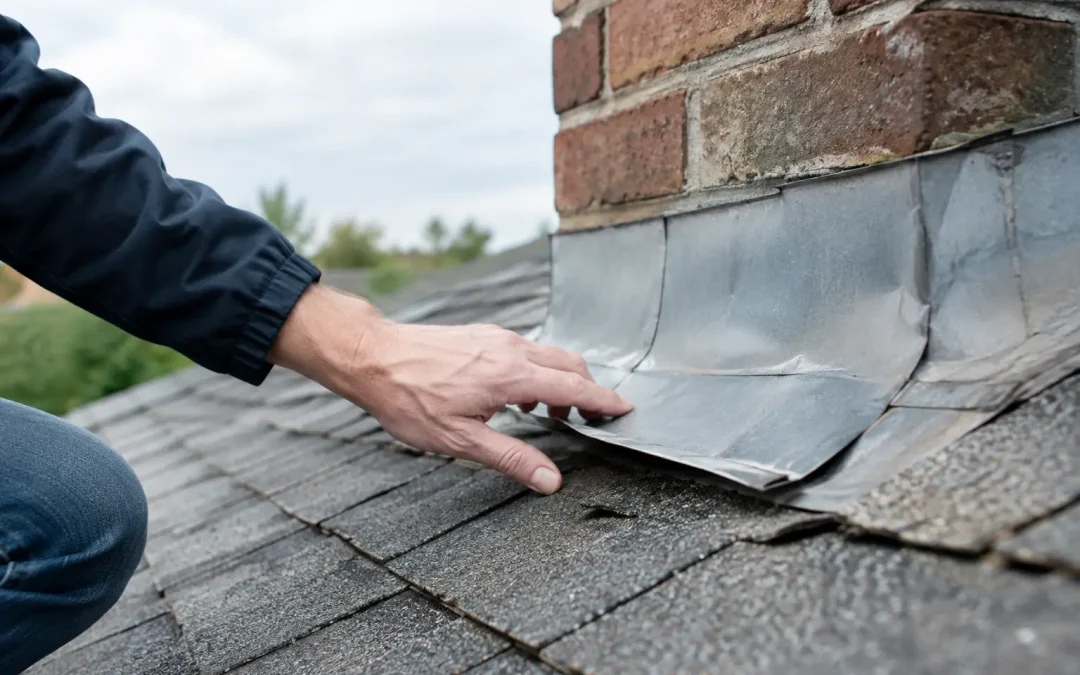
A small strip of lead or metal around a chimney, skylight or roof junction can be the difference between a dry home and a persistent leak. Homeowners often ask, “when does roof flashing fail?” The answer is usually not one dramatic moment. Flashing tends to deteriorate gradually, then reveals itself during heavy rain, high winds or a spell of freezing weather.
Because it sits at the most vulnerable points of your roof, damaged flashing should never be ignored. A prompt repair is usually straightforward. Leaving it until water has reached the roof timbers, insulation or internal plasterwork can turn a manageable job into a far more costly repair.
What roof flashing does
Roof flashing is the weatherproof material fitted where the roof meets another surface or changes direction. You will commonly find it around chimneys, dormer windows, roof valleys, soil pipes, skylights and where a pitched roof meets a wall. Lead is traditional and remains widely used, although some roofs use aluminium, zinc or purpose-made flashing systems.
Tiles and slates are designed to shed water down the roof. They cannot create a watertight seal where surfaces meet. Flashing bridges these gaps and directs rainwater safely towards the guttering. When it is fitted properly, it should allow for small movements in the roof while keeping wind-driven rain out.
When does roof flashing fail?
Roof flashing can fail at any age, but the likelihood rises as materials weather and fixings weaken. Good-quality lead flashing can last for decades when correctly installed and maintained. However, its lifespan depends on the roof design, exposure to the elements, the condition of surrounding tiles and mortar, and the quality of the original work.
In Leicestershire, repeated wet weather, winter frost and strong gusts can all expose weak points. A roof may look sound from ground level, yet have a small opening at a chimney stack or wall junction that only allows water in during certain wind directions.
Cracked or loose mortar around chimneys
Where flashing is built into chimney brickwork, it is often held in place with mortar. Over time, this mortar can crack, crumble or pull away. Water can then run behind the flashing instead of over it. This is one of the most common causes of chimney leaks, particularly on older properties.
The issue may be limited to local repointing and securing the flashing. If the lead itself is split, lifted or too short, it may need replacing as well.
Splits, holes and fatigue in the flashing
Lead expands in warm weather and contracts when temperatures fall. That movement is normal, but repeated expansion and contraction can eventually cause stress cracks, especially where long lengths of lead have not been installed with suitable joints. Poorly supported flashing can also sag and tear.
Damage from falling branches, ladders, birds or careless work around the roof can create holes too. Even a small split can admit a surprising amount of water over a wet season.
Flashing that has lifted or come loose
High winds can lift unsecured edges, while ageing fixings can loosen over time. Once an edge is raised, wind-driven rain can get underneath it. You may notice a visible gap, curled lead, a section hanging away from the wall or displaced tiles beside the flashing.
This needs attention quickly. Loose materials can worsen in the next storm and, in some cases, become a safety concern.
Poor original installation
Not every flashing issue is caused by age. If flashing was fitted without adequate overlap, tucked too shallowly into brickwork or sealed with unsuitable materials, it can fail much earlier than expected. Heavy reliance on sealant is another warning sign. Sealant has a use for minor finishing details, but it is not a long-term substitute for correctly formed, properly fixed flashing.
A repair should address the reason water is getting in, rather than simply covering the area with more sealant. It may cost a little more to put right initially, but it is the better value option when it prevents repeated call-outs.
Signs your flashing may be leaking
A roof leak is not always directly below the damaged flashing. Water can travel along felt, timbers and rafters before it becomes visible on a ceiling. That is why early signs are worth investigating, even if they seem minor.
Look out for damp patches or brown staining on ceilings and walls near a chimney breast, loft conversion or roof window. Peeling paint, bubbling plaster, a musty smell in the loft and damp insulation can also point to water ingress. Outside, check for cracks in chimney mortar, missing sections of flashing, staining on brickwork, slipped tiles or moss collecting in roof valleys.
A leak that appears only after wind-driven rain is particularly likely to involve flashing, tiles or another roof junction. Take note of when and where the damp appears. This can help a professional locate the source without unnecessary work.
Why waiting can make the problem worse
Water entering through failed flashing does not stay neatly in one place. It can soak roof battens, rot sections of timber, reduce the effectiveness of insulation and lead to mould growth. Damp around a chimney can also affect internal plaster, wallpaper and decorations.
There is a trade-off to consider. A temporary repair may be sensible when weather conditions make permanent roof work unsafe or when damage needs immediate containment. But temporary patching should be followed by a proper inspection and repair as soon as possible. A surface treatment alone may hide the symptom while water continues to find its way behind it.
If the roofline is also showing its age, it is sensible to assess the whole water-management system. Blocked or leaking guttering can overflow onto walls and roof edges, creating damp symptoms that are easily mistaken for a flashing leak. Fascias, soffits, gutters, tiles and flashing work together to protect the property.
What a proper flashing repair involves
The right repair depends on the location and extent of the damage. For a small, isolated issue, the work may involve removing loose mortar, cleaning the area, resetting the existing lead and repointing the chase. Damaged tiles or slates around the area may also need replacing.
Where the flashing is worn, badly split or incorrectly fitted, replacement is normally the more dependable choice. This involves carefully removing the failed material, preparing the roof junction and fitting new flashing with appropriate laps, fixings and weatherproof detailing. At chimney stacks, this may include stepped flashing to follow the line of the brickwork and soakers beneath the tiles for added protection.
A good contractor will inspect the surrounding roof rather than treating the visible gap in isolation. There is little point in replacing one strip of flashing if nearby tiles are loose, the chimney pointing is failing or a blocked gutter is pushing water back towards the roof.
How to reduce the risk of future failure
You do not need to climb onto the roof to keep an eye on flashing. A visual check from ground level after storms can reveal obvious movement, missing tiles or debris in valleys and gutters. Binoculars can help, but do not use ladders unless you are confident, properly equipped and working safely.
Arrange a professional inspection if you see staining indoors, notice loose material or have concerns after severe weather. It is also wise to have roof junctions checked when other exterior work is being carried out, such as replacing guttering or improving a flat roof. Regular gutter clearing helps too, because overflowing water puts unnecessary pressure on roof edges and wall junctions.
For homeowners who want a clear, practical assessment, Supreme Home Improvements can inspect exterior roofline issues and advise whether repair or replacement is the sensible route. The aim should always be to protect the home properly, avoid unnecessary expense and give you confidence before the next spell of bad weather.
If you have noticed damp near a chimney, loft window or roof junction, do not wait for the stain to grow. An early inspection can often keep a small flashing fault from becoming a much larger problem inside your home.