
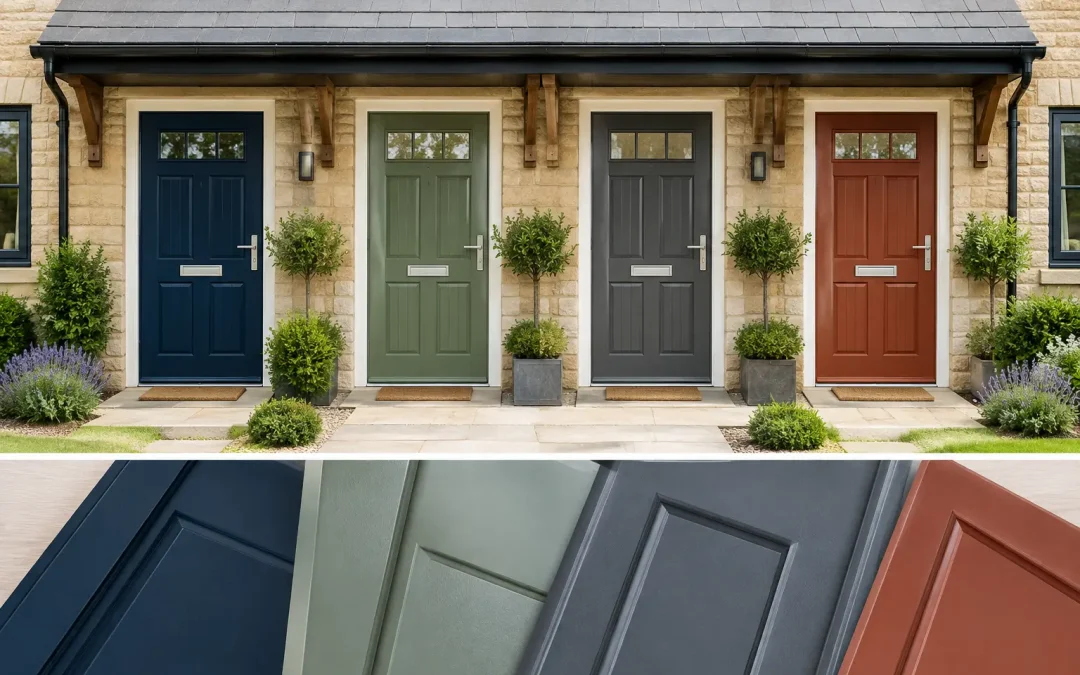
A new front door can change the whole feel of a property before anyone steps inside. Current door colour trends are moving away from one-size-fits-all choices and towards colours that suit the character of the house, the brickwork and the homeowner’s lifestyle. For homes across Leicestershire, the best result is rarely the brightest or newest shade on a display board. It is the colour that looks right on your home in daylight, stands up to everyday use and still feels like a good decision years from now.
Door colour trends that are built to last
Anthracite grey remains a popular choice, and for good reason. It gives a neat, modern finish to contemporary houses, rendered properties and homes with grey window frames or roofline products. It has more depth than a lighter grey and tends to hide everyday marks better than white. However, on a small or shaded frontage, a very dark grey door can sometimes make the entrance feel less welcoming. A lighter frame, glazed panels or well-chosen exterior lighting can make all the difference.
Black is also continuing to hold its place, especially on traditional properties, cottages and homes with white, cream or pale grey window frames. A black composite door can look smart and substantial, but it needs to be chosen carefully. On a south-facing entrance, dark shades absorb more heat, and poor-quality finishes can show dust, fingerprints and fading more readily. A made-to-measure, quality door with a durable finish is worth considering if you want this classic look.
Deep blue has become one of the strongest alternatives to grey and black. Navy, midnight blue and muted slate blue work particularly well with red brick, buff brick and stone details. They offer colour without being overly bold, making them a sensible option for homeowners who want an entrance with a little more personality. Blue also works well with polished chrome, black or antique-style hardware, depending on whether your property is modern or more traditional.
Greens are another growing favourite. Rather than bright, high-gloss shades, homeowners are choosing calmer colours such as sage, olive, moss and deep heritage green. These tones sit naturally alongside gardens, mature trees and rural surroundings, while still looking at home on a suburban street. A darker green can give a period-style property real presence, while a softer sage shade can freshen up a painted or rendered frontage.
Warm neutrals are replacing plain white
White doors will always have a place. They are clean, bright and often a sensible match for existing white uPVC windows. Yet more homeowners are now considering warmer neutral shades, including cream, pebble, mushroom, taupe and soft stone. These colours can make a front entrance feel less stark while remaining easy to live with.
Warm neutrals are particularly useful where a property has light brick, beige render or natural stone features. They give a softer finish than brilliant white and are less likely to look dated as colour fashions change. The trade-off is that pale shades can show mud splashes and scuffs more easily, especially on a busy family home or a door exposed to the weather.
If you like the idea of a lighter door but are concerned about maintenance, consider a mid-tone grey, muted green or blue instead. These shades still provide contrast against white frames without demanding constant cleaning.
Wood-effect finishes still earn their place
Not every home suits a painted-looking front door. Wood-effect composite doors remain a strong choice for homeowners who want warmth and traditional character without the regular sanding, staining and repainting associated with timber. Oak-style finishes suit many brick homes, while darker rosewood tones can work well on older properties with traditional detailing.
The key is to look at the whole exterior rather than choosing the door in isolation. A wood-effect door beside bright white window frames can look excellent, but it may clash with a very modern grey roofline or black garage door. Matching does not mean every part of the property must be the same colour. It means the finishes should look intentional together.
Match the door to the parts of your home you cannot easily change
Brick colour is usually the starting point. Red brick often works well with black, navy, heritage green, charcoal and warm cream. Yellow or buff brick can suit deep green, blue-grey, black, soft grey and natural wood-effect finishes. For homes with pale render, the choice is wider, although a darker door often provides the contrast needed to give the entrance definition.
Then look at your windows, fascias, soffits and guttering. If these are due for replacement soon, it makes sense to plan the colours together rather than installing a door first and trying to match everything later. Anthracite grey windows with an anthracite door create a clean, coordinated look, while a navy or green door can add a focal point without breaking the overall scheme.
Do not forget the roof, driveway and boundary features. A dark door may look excellent against a pale house but feel heavy if you also have black fencing, dark paving and a charcoal roof. Equally, a colourful door can get lost if the rest of the frontage is already busy. Stand across the road and consider what your eye notices first. Your front door should complement the home, not compete with it.
Consider light, weather and day-to-day upkeep
A colour sample can look completely different outside from how it looks indoors. Natural light changes through the day, and a shaded porch can make navy, green and grey appear darker than expected. Before making a final choice, view samples against your property in daylight. If possible, look at them on both a bright day and an overcast one.
Leicestershire weather also plays a part. Entrances exposed to wind and rain will need regular wiping down whatever colour you choose, but pale doors and very dark glossy finishes often show marks first. A composite door with a quality surface finish is designed for straightforward maintenance, although it should still be cleaned with mild soapy water rather than harsh cleaners.
Security and insulation should come before colour. The best-looking door is of little value if it does not fit properly, keep draughts out or give you confidence when you lock up at night. A well-fitted composite door combines a solid appearance with practical benefits for comfort, security and kerb appeal.
Choose a colour you will still enjoy in five years
Trend-led colours can be tempting, but a front door is not a cushion cover. Replacing it is a bigger decision, so it pays to choose a shade with staying power. Grey, black, navy, deep green, warm neutrals and wood-effect finishes remain popular because they work across many property styles rather than because they are a short-lived fashion.
That does not mean avoiding colour altogether. If a rich blue, bottle green or cheerful red suits the property and makes you smile when you arrive home, it may be exactly the right choice. The safest approach is to keep the main door colour timeless and add seasonal personality through planters, a wreath, house numbers or a painted porch feature.
Hardware can change the final look
The handle, letter plate, knocker and glazing design can make the same door colour feel traditional, modern or somewhere in between. Chrome and brushed steel offer a clean contemporary finish. Black hardware gives a bold, coordinated look with darker doors and grey frames. Gold, brass or antique-effect fittings can bring warmth to navy, green and black doors, particularly on older homes.
Keep the hardware practical as well as attractive. A letter plate, handle and lock should be comfortable to use, suited to the door style and fitted properly. Small details matter because they are the parts you touch every day.
For homeowners replacing an ageing entrance door, it is worth seeing real samples and talking through the colour alongside the frame, glazing and hardware options. Supreme Home Improvements can help local homeowners choose a made-to-measure composite door that looks right for the property as well as providing the security and weather protection a front entrance needs. The most successful colour is the one that makes coming home feel better, whatever the season.