If you have ever looked up at the underside of your roofline and noticed small vented panels, you may have wondered what are soffit vents for and whether they really make much difference. The short answer is yes – they play a very important part in keeping your roof space dry, healthy and protected from avoidable damage.
Many homeowners only think about soffits, fascias and guttering when something starts to rot, leak or look tired. But ventilation is one of those details that quietly does its job in the background. When it is right, your loft and roof structure are better protected. When it is missing or blocked, problems can build up slowly and become expensive to put right.
What are soffit vents for in simple terms?
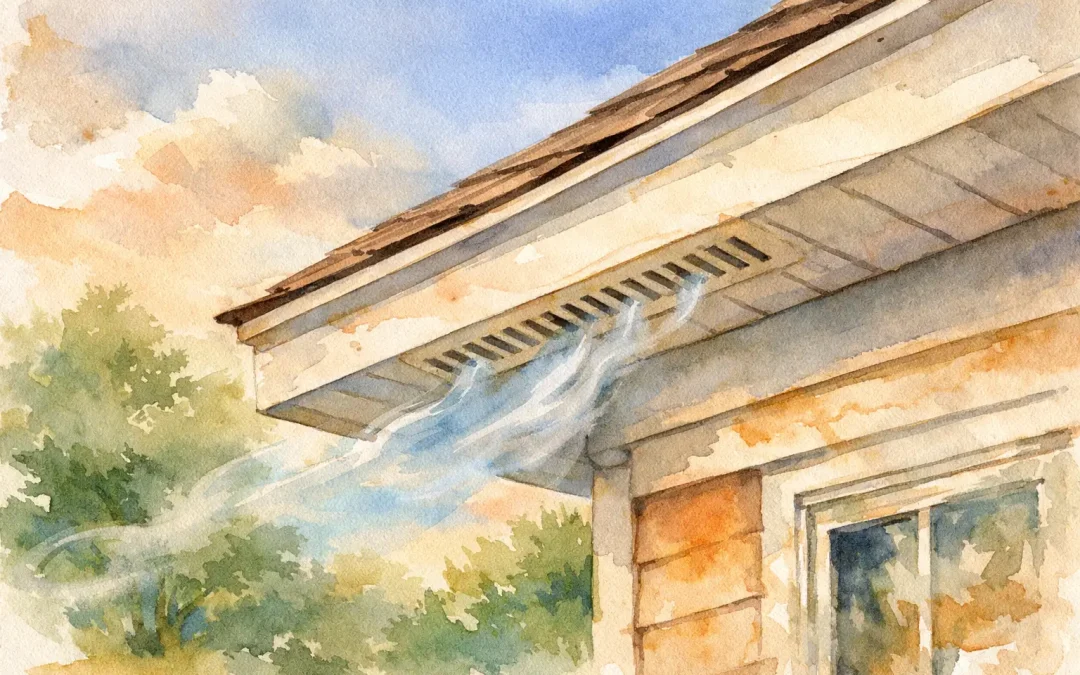
Soffit vents are there to let fresh air into the roof space. They are usually fitted into the soffit boards, which sit underneath the edge of the roof where it overhangs the walls of the house. Their job is to create airflow through the loft or roof void so moisture does not get trapped.
That airflow matters more than many people realise. Warm air from everyday living rises through a property. Even with insulation in place, moisture from cooking, showering, drying clothes and general household activity can make its way into the loft. Without proper ventilation, that moisture can settle as condensation on the colder surfaces inside the roof.
Over time, this can lead to damp timbers, mould growth, musty smells and reduced life in the roof structure. In more serious cases, it can contribute to timber decay and damage to insulation.
Why roof ventilation matters
Your roof is not meant to be sealed up like a plastic box. It needs controlled ventilation. Soffit vents are one part of that system.
In most homes, air comes in through the soffit vents at the eaves level and then exits higher up through other ventilation points, depending on the roof design. This constant movement helps carry moisture out before it can collect.
The main benefit is moisture control, but that is not the only reason they matter. Good ventilation can also help regulate temperatures in the roof space. In summer, it can reduce heat build-up. In winter, it can lower the risk of condensation forming when warm indoor air meets a cold roof.
If you have ever opened a loft hatch and been hit by a damp, stale smell, poor ventilation could be part of the problem.
What happens if a home has no soffit vents?
Not every property was built with modern roof ventilation in mind. Older homes in particular may have little or no effective airflow at eaves level. Some have had replacement soffits fitted in the past without proper venting being included. Others have vents that are blocked by insulation, paint, dirt or insect mesh that has become clogged.
When soffit vents are missing or not doing their job, you may start to notice signs such as condensation in the loft, black mould on felt or timbers, damp insulation, peeling paint around the roofline or a general feeling that the roof space never seems dry.
It is not always obvious straight away. Roof ventilation issues often build slowly over the years. That is why they are easy to ignore until a loft inspection or roofline replacement brings them to light.
How soffit vents work with fascias and the wider roofline
Soffit vents are only one part of the roofline, but they work best when the whole system is in good order. Soffits sit beneath the roof overhang, fascias support the lower edge of the roof and carry the guttering, and together they help protect the property from weather and moisture.
If the soffits are damaged, poorly fitted or made from ageing timber that has started to deteriorate, ventilation can suffer. Likewise, if guttering overflows or leaks onto the roofline, it can add extra moisture where you do not want it.
This is why roofline upgrades are often about more than appearance. New, properly fitted soffits and fascias can improve airflow, reduce maintenance and give better long-term protection. For many homeowners, especially where older timber roofline products are failing, replacing the full system makes more sense than patching one section at a time.
Are soffit vents needed on every house?
Not always in exactly the same way. The right ventilation setup depends on the style of roof, the age of the property and how the loft is insulated. Some roofs use continuous soffit ventilation, while others may rely on different venting arrangements such as tile vents, ridge vents or over-fascia vents.
That is where a bit of experience matters. There is no one-size-fits-all answer, and adding vents without understanding the roof structure can cause as many questions as it solves. The aim is not just to add holes to the roofline. It is to create the right airflow path for that particular property.
For example, if loft insulation has been pushed tightly into the eaves, it may block the incoming air from soffit vents. In that case, the vents may be present but not effective. If a loft has been boarded or altered over the years, airflow can also be reduced.
What are soffit vents for when you already have insulation?
This is a common point of confusion. People often assume that because their loft is insulated, ventilation becomes less important. In practice, the opposite can be true.
Insulation helps keep heat in the living space below, but it can also make the roof space above colder. When warm moist air reaches that colder area, condensation becomes more likely. So while insulation is essential for energy efficiency, ventilation is essential for moisture control.
Both need to work together. A well-insulated home still needs a roof space that can breathe.
Signs your soffit ventilation may need attention
You do not need to be a roofer to spot early warning signs. If you notice mould in the loft, damp patches near the eaves, flaking paint on the roofline, sagging soffit boards or excessive condensation on cold mornings, it is worth getting things checked.
You might also find that birds or insects have got into damaged soffit areas, or that old timber soffits have softened due to years of moisture exposure. In some cases, homeowners only realise there is a problem when they replace guttering or start a wider exterior upgrade.
Where newer uPVC soffits are fitted, the issue is less often rot and more often poor original installation or blocked airflow. That is why quality fitting matters just as much as the material itself.
Repair or replace?
It depends on the condition of the existing roofline. If the soffits are generally sound and the issue is limited to blocked or insufficient venting, a repair or ventilation upgrade may be enough. If the boards are warped, rotting, cracked or past their best, replacement is usually the better long-term option.
For many homeowners, replacing old timber soffits with low-maintenance uPVC vented soffits is the practical choice. It cuts down on upkeep, improves appearance and helps protect the property properly going forward.
The cheapest fix is not always the most affordable in the long run. If poor ventilation has already started affecting roof timbers or insulation, dealing with the cause early can save money later.
Getting the job done properly
Roofline work can look simple from the ground, but getting ventilation right takes more than just swapping boards. The condition of the eaves, the layout of the loft, the type of roof covering and the existing insulation all need to be considered.
That is why it helps to use an experienced local team that deals with fascias, soffits and guttering every day rather than treating it as an add-on job. A proper assessment can show whether your current setup is ventilating the roof space as it should, or whether changes are needed.
At Supreme Home Improvements, we often find that homeowners call about tired soffits or worn guttering and only then discover that poor ventilation has been part of the problem for years. Once the roofline is updated properly, the house not only looks smarter but is better protected against damp and weather as well.
If you have been asking what are soffit vents for, the answer is simple: they help your roof space stay dry, balanced and protected. And if your home is showing signs that the roofline is no longer doing its job, it is worth having it looked at before a small issue turns into a bigger repair.