
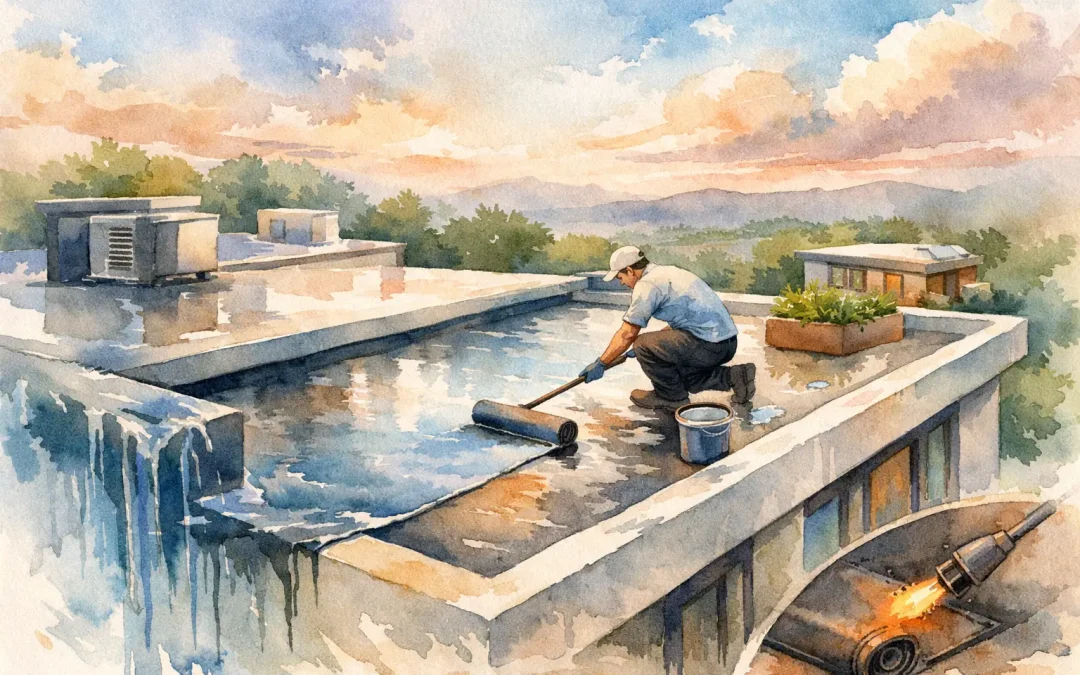
A flat roof can look perfectly sound from ground level while water is slowly finding its way through a split seam, tired edge trim or blocked outlet. That is why choosing between the best flat roof waterproofing options is not simply about covering the surface. The right system must suit the size of the roof, its existing condition, how water drains away and how long you expect the repair or replacement to last.
For garages, extensions, porches, dormers and bay windows across Leicestershire, a properly fitted waterproof roof can protect the rooms below and prevent a small leak becoming expensive timber, plaster and insulation damage. The cheapest quote is not always the best value if it leaves weak joints or needs replacing again in a few years.
What makes a flat roof waterproof?
Flat roofs are built with a slight fall so rainwater can run towards a gutter, outlet or downpipe. They are not meant to hold standing water for long periods. Waterproofing is provided by the outer roof covering, but the full system also relies on sound decking, correctly formed upstands, secure edge details and clear drainage.
This is where many problems begin. A new coating over damp or rotten boards may hide the issue temporarily, but it will not fix the cause. Equally, a quality membrane can fail early if the flashing around a wall, rooflight or pipe is poorly finished. Before selecting a material, the roof should be inspected for soft spots, ponding water, damaged trims and signs of moisture inside the property.
Best flat roof waterproofing options compared
EPDM rubber roofing
EPDM is a synthetic rubber membrane and one of the most dependable choices for residential flat roofs. It is often installed in large sheets, which means there are fewer joins than with traditional felt. Fewer joints can mean fewer potential places for water to get in.
For many homeowners, EPDM offers the best balance of lifespan, flexibility and cost. It copes well with changing temperatures, heavy rain and UV exposure, and is particularly well suited to garage roofs, extensions and conservatory roof areas. A well-installed rubber roof has a clean, modern appearance and needs relatively little ongoing maintenance beyond keeping outlets clear.
The quality of fitting still matters. The membrane needs a smooth, suitable base and careful detailing at perimeters, corners and wall abutments. It is not a job to rush or simply lay over an unknown roof structure. Firestone rubber roofing is a well-regarded EPDM option commonly chosen for domestic properties because it provides a tough, long-lasting finish.
GRP fibreglass roofing
GRP, often called fibreglass roofing, creates a hard, seamless waterproof surface. It is made by applying resin and reinforcement over a prepared deck, then finishing with a protective top coat. Once complete, it has a crisp appearance and can be a strong choice for smaller flat roofs, balconies, porches and roofs with awkward shapes.
Its main advantage is the lack of seams across the main roof area. This makes it effective where a neat, continuous finish is needed. GRP is also tough under foot, although a roof should only be walked on when it has been designed for that purpose.
The trade-off is that installation is more weather-sensitive than some other systems. The deck must be dry, conditions must be suitable and the resin mix needs to be applied properly. GRP can also be less forgiving of movement in the roof beneath, so preparation is essential. A fibreglass roof fitted over unsuitable decking is far more likely to crack or fail around details.
High-performance felt roofing
Modern torch-on felt is very different from the thin, short-lived felt many homeowners remember. A good multi-layer mineral felt system can provide reliable weather protection at a sensible price, particularly on straightforward garage roofs and larger areas where budget is a key consideration.
The covering is normally formed from layers that are bonded together, with a mineral-finished cap sheet protecting the roof from sunlight and wear. It can be repaired more easily than some seamless systems if a localised problem develops later.
Felt does have more laps and joints than EPDM or GRP, so workmanship at every overlap matters. It may not offer the same long-term flexibility as rubber, especially where a roof moves through seasonal temperature changes. However, when correctly specified and professionally installed, high-performance felt remains a practical option rather than a second-best choice.
Liquid waterproofing systems
Liquid-applied coatings are painted or rolled onto the roof to form a continuous waterproof layer. They can be useful where a roof has complicated details, numerous penetrations or areas that are difficult to cover with a single membrane. Some systems are designed for refurbishment, allowing an existing covering to be renewed without a full strip-back where the roof below is still sound and dry.
This option depends heavily on preparation. Loose material, trapped moisture, failed sections and poor drainage must be dealt with first. The coating also needs to be applied at the correct thickness, not simply brushed on like ordinary paint. For a small repair or a complex detail, liquid waterproofing can be very effective. For a large roof that has reached the end of its life, replacement with a full membrane system is often the wiser investment.
Choosing the right system for your roof
There is no single answer for every property. EPDM is frequently the strongest all-round choice for homeowners who want a durable, low-maintenance replacement. GRP is worth considering where a seamless, hard finish suits the roof design. Modern felt can be a cost-effective solution for the right roof, while liquid systems have their place for certain repairs and detailed areas.
The decision should also account for how the roof is used. A garage roof that is rarely accessed has different requirements from a flat roof beneath an upstairs window, where future maintenance access may be needed. If you are fitting solar panels, a rooflight or changing the drainage, deal with those plans before the new waterproofing is installed. Cutting into a new roof later creates unnecessary risk and cost.
Do not ignore drainage and roof edges
Ponding water is a common concern on older flat roofs. A small amount of water shortly after rainfall may be normal, but water that remains for days can speed up deterioration and expose weaknesses in the covering. The answer may be to improve the fall, replace sagging decking, alter an outlet or clear blocked guttering – not just install a new surface over the top.
Roof edges deserve the same attention. Drip trims, gutters, wall flashings and upstands direct water away from the building. If these details are poorly fixed, rain can track behind the waterproof layer and cause damage that is not visible until it becomes serious.
Repair or replacement: which is better value?
A local repair can make sense when the roof is generally in good condition and the issue is clearly limited to one split, puncture, lifted edge or failed joint. Prompt repairs are usually much cheaper than waiting for a leak to spread.
Replacement is often better value when the covering is brittle, repeatedly leaking, badly blistered or nearing the end of its expected life. It is also the sensible route if the boards beneath are soft or water damaged. Re-covering a failing roof without checking the structure below can lead to the same problem returning sooner than expected.
Ask what is included in any quote. It should be clear whether the old roof is being removed, whether damaged decking will be replaced, how drainage details will be finished and what workmanship guarantee applies. Comparing like for like is the only fair way to judge price.
A roof covering is only as good as its installation
The best material cannot make up for poor preparation. A reliable installer will assess the condition of the roof, explain whether repair or replacement is appropriate and recommend a system that matches your budget without cutting corners on the details that keep water out.
For homeowners who want a local, straightforward service, Supreme Home Improvements can assess flat roof problems and fit practical long-lasting solutions, backed by experienced workmanship. Whether your roof needs a targeted repair or a full replacement, acting before staining or damp spreads indoors will usually save money and disruption. A dry, well-finished flat roof should give you one less thing to worry about every time the rain starts.