
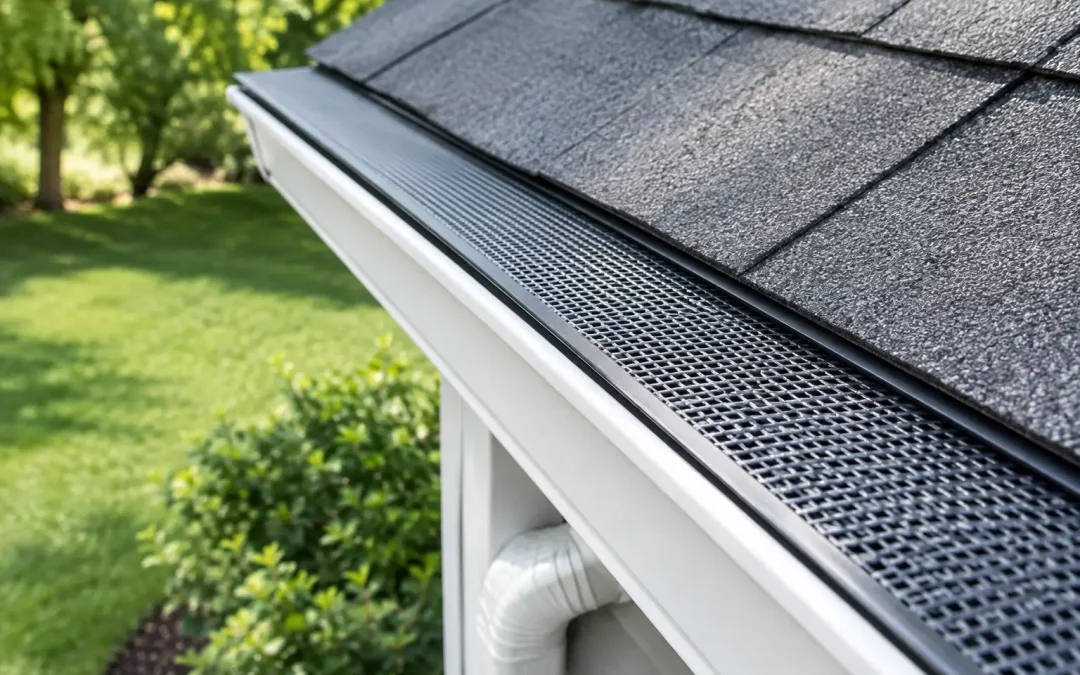
A gutter can look clear from the ground while quietly filling with wet leaves, moss, seed pods and roof debris. Once water cannot move freely, it overflows onto fascias, soffits, brickwork and paths – often causing a problem that costs far more than a routine clean. The best gutter guards for homes help reduce this build-up, but the right choice depends on your roof, nearby trees and the condition of your existing guttering.
For many homes across Leicestershire, gutter guards are a sensible addition to a sound roofline system. They are not a replacement for proper installation or occasional maintenance, but they can make blocked gutters much less likely and reduce the frequency of cleaning.
What a gutter guard should do
A good gutter guard allows rainwater into the gutter while stopping most leaves and larger debris from entering it. It should sit securely through heavy rain, strong winds and frosty weather without lifting, sagging or restricting the flow of water.
That last point matters. A guard that blocks leaves but sends rainwater straight over the edge is not doing its job. This can happen when the guard is poorly fitted, the gutter has the wrong fall, or the product is too fine for the volume of water coming off a steep roof.
The aim is simple: keep water moving safely towards the downpipe, protect the roofline and minimise avoidable maintenance. Before choosing any system, it is worth checking whether the gutters are already damaged, undersized or pulling away from the fascia. Guards work best when installed on clean, correctly aligned guttering.
The best gutter guards for homes: main options
There is no single product that suits every property. The best option for a detached home with mature trees may be different from the right guard for a terrace with little overhead foliage.
Aluminium or stainless-steel mesh guards
Mesh guards are among the most practical options for many UK homes. They sit over or inside the gutter and use small holes to let water pass through while catching leaves, twigs and other debris.
Metal mesh is generally stronger and longer-lasting than lightweight plastic. Aluminium does not rust and is easy to handle, while stainless steel offers excellent durability where a tougher material is preferred. A well-fitted mesh guard is a good all-round choice for homes affected by broad leaves, especially where gutters are accessible for occasional checks.
The trade-off is that fine debris, moss and grit can settle on top of the mesh. Rain will wash some of it away, but a quick brush-down may still be needed once or twice a year. Very fine mesh can also slow water entry during a heavy downpour if it is not fitted at the correct angle.
Hedgehog or brush gutter guards
Brush guards are flexible bristles that sit inside the gutter. They are straightforward to install and can catch larger leaves before they reach the downpipe. They are often chosen as a lower-cost solution where access is easy.
Their weakness is that debris can collect in the bristles rather than blow away. Over time, damp leaves and moss can compress, meaning the brush itself needs lifting out and cleaning. They can help in the short term, but they are not usually the lowest-maintenance choice for a property surrounded by trees.
Foam inserts
Foam gutter inserts fill the channel of the gutter while allowing water to filter through. They are simple and inexpensive, which can make them tempting for a quick fix.
However, foam can hold moisture and trap smaller debris. It may break down under prolonged sun, frost and wet weather, and it can be difficult to see when a blockage is forming beneath the surface. For a long-term roofline upgrade, metal mesh or a professionally installed solid-cover system is usually a more dependable investment.
Solid surface or reverse-curve guards
Solid guards use a shaped cover that encourages rainwater to follow into the gutter while leaves fall to the ground. When designed and fitted well, these systems can be very effective at keeping gutters clear and can offer a neat finish.
They need careful installation. The pitch of the roof, position of the tiles and size of the gutter all affect whether water enters correctly. On some properties, particularly those with heavy rainfall run-off or awkward roof details, a poorly selected solid guard can lead to water overshooting the gutter. This is why professional assessment is especially valuable with this type of system.
Choose for your property, not the packaging
It is easy to buy a gutter guard based on a promise of “never clean your gutters again”. In reality, every system benefits from inspection. Wind can deposit debris on any cover, and downpipes can still collect grit over time.
Look first at the trees around your home. Large deciduous leaves are usually handled well by mesh and solid guards. Pine needles, blossom, roof moss and seeds need a finer solution, but an overly fine screen may need more frequent surface cleaning. If moss is regularly coming down from the roof, dealing with the roof moss and checking the condition of tiles should be part of the plan.
Also consider access. A single-storey extension may be straightforward to check yourself, while the gutters on a two-storey house should be inspected safely by a professional. Saving money on a guard is not worthwhile if it creates difficult, unsafe maintenance later.
The gutter itself matters too. Older plastic gutters can become brittle, sag or lose their shape at joints. If water is already overflowing because brackets are loose or the fall is wrong, fitting guards alone will not solve the issue. Repair or replacement should come first.
Signs your gutters need attention before guards are fitted
You do not need to wait for a visible blockage. Water marks beneath the gutter line, peeling paint on timber fascias, damp patches on exterior walls and pools of water near the property can all indicate poor drainage.
Watch the gutters during rain if it is safe to do so. Water spilling over the front edge often points to a blockage, whereas water running behind the gutter may indicate a problem with the roof edge, gutter position or fascia condition. Downpipes that overflow or drain slowly need checking as well.
A proper inspection should include the gutter channels, outlets, joints, brackets, fascias and soffits. Roofline components work together, so addressing a small issue early can prevent rot, staining and avoidable repair work later.
Professional fitting gives a better result
Some clip-on guards can be fitted by a confident homeowner, but a professional installation is often the better route for a lasting result. The gutters can be cleared and flushed first, damaged sections can be identified, and the guard can be secured without disturbing tiles or creating gaps around joints.
This is particularly worthwhile where there are high gutters, conservatory roofs, recurring leaks or older roofline materials. A contractor can advise whether guards are appropriate at all, or whether new guttering, fascias and soffits would provide better value over the long term.
At Supreme Home Improvements, we take a practical view of roofline protection. A guard should support a properly fitted guttering system, not hide an existing fault. For homeowners who want a cleaner finish and less time spent dealing with blocked gutters, the right materials and careful fitting make all the difference.
A sensible maintenance routine
Even the best gutter guards need a little attention. Check them after autumn leaf fall, after strong winds and following heavy rainfall. Remove visible debris from the top where it can be done safely, and make sure water is leaving through the downpipes freely.
For most properties, an annual professional gutter and roofline inspection is a sensible precaution. Homes beneath mature trees may need checks more often. This small amount of care helps guards perform as intended and gives you a chance to spot loose brackets, cracked seals or damaged fascia boards early.
The most suitable gutter guard is one that matches your roof, handles the debris around your home and is fitted onto guttering that is already doing its job properly. Choose quality over a quick fix, and your roofline will be better placed to deal with whatever the British weather brings.