A flat roof can look perfectly harmless until a damp patch appears on the ceiling below. By that point, water may already have found its way through worn felt, split seams or failed edges. This Firestone EPDM roofing review looks at whether this rubber membrane is a sensible long-term upgrade for garages, extensions, porches, dormers and conservatory roofs.
The short answer is that Firestone EPDM can be an excellent flat-roof material when it is properly specified and fitted. It is durable, flexible and low maintenance, but the finished roof is only as good as the deck, drainage and workmanship underneath it. It is not a miracle cure for a roof with structural problems or persistent standing water.
What Is Firestone EPDM Roofing?
EPDM stands for ethylene propylene diene monomer. In plain English, it is a tough synthetic rubber membrane designed for waterproofing flat and low-pitched roofs. It is generally supplied in large sheets, allowing many domestic roofs to be covered with fewer joins than traditional felt systems.
That matters because seams and laps are common weak points on older felt roofs. A single-piece EPDM installation can reduce the number of places where water could eventually get in. The material also remains flexible through changing temperatures, which is particularly useful during cold Leicestershire winters and warm summer spells.
For most homeowners, the main attraction is straightforward: it provides a clean, modern, long-lasting alternative when an ageing flat roof has started to crack, blister or leak.
Firestone EPDM Roofing Review: The Main Benefits
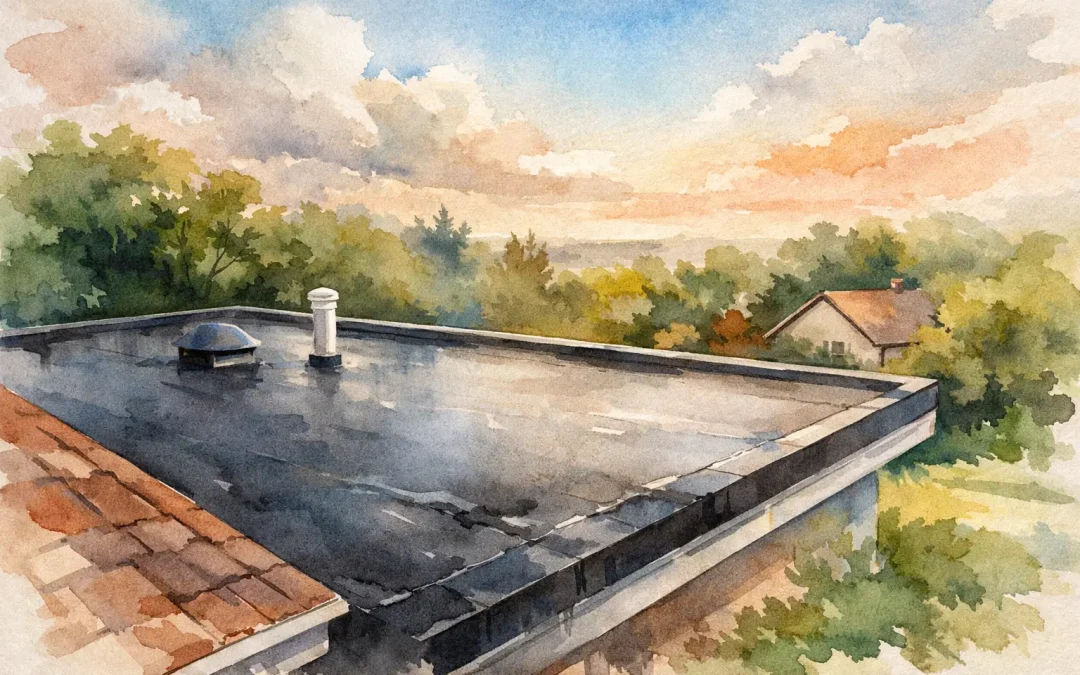
A well-fitted EPDM roof has a neat black finish and suits many types of property, from a detached garage to a rear extension. It does not rely on a surface layer of loose chippings, and it is less likely to become brittle with age than some older roofing materials.
Designed for a long working life
EPDM has a strong reputation for durability. When installed over a sound, properly prepared roof deck, it can provide many years of dependable protection. It copes well with UV exposure, rain, frost and normal movement in the roof structure.
This does not mean every roof will last exactly the same length of time. A sheltered garage roof with good falls to the gutter will have an easier life than a large extension roof beneath overhanging trees or one that holds water after every downpour. Regular checks still make sense, especially around outlets, trims and roof penetrations.
Fewer seams, fewer potential weak points
One of the best reasons to choose EPDM is the ability to cover a domestic roof in a single membrane. Traditional felt systems are built up in layers and use more overlaps. There is nothing wrong with a correctly installed felt roof, but additional joins create more areas that must be formed properly.
On a simple rectangular roof, a large EPDM sheet can give a very tidy finish with minimal joints. Complex roof shapes, skylights, pipes and adjoining walls will still need carefully detailed edges and flashings, so installation experience remains vital.
Flexible in changing weather
Roofs expand and contract as temperatures change. EPDM is flexible enough to accommodate normal movement without the cracking associated with tired felt. This makes it a practical option for roof areas that are exposed to the elements all year round.
Its flexibility also helps when roofing around corners, upstands and outlets. However, these details should never be rushed. The membrane must be correctly bonded and finished with suitable trims to keep wind-driven rain out.
Low-maintenance day to day
An EPDM roof does not need regular coating or repainting. Most homeowners simply need to keep gutters and outlets clear, remove heavy leaf build-up, and arrange an inspection if they spot lifted trim, damage from overhanging branches or water that is slow to drain away.
Avoid dragging garden furniture, ladders or sharp objects across the surface. EPDM is hard-wearing, but it is not designed to be treated as a walkway unless the roof has been planned for occasional foot traffic with suitable protection.
The Trade-Offs to Consider Before Choosing EPDM
No roofing material is right for every situation. The cost of a Firestone EPDM roof can be higher upfront than a basic felt repair, particularly where the old roof needs stripping back or the timber deck has deteriorated. Yet a lower initial price is poor value if the same roof needs repeated patching over the next few years.
The condition below the membrane is just as important as the membrane itself. If the roof deck is soft, uneven or rotten, covering it over will not solve the problem. A proper assessment should establish whether new decking, insulation improvements, new fascias, guttering adjustments or drainage work are needed before the new roof goes down.
EPDM also needs the correct adhesive system and finishing details. A membrane that is poorly bonded, stretched incorrectly or finished with inadequate edge trims can lift or leak. This is why the cheapest quote is not always the best quote. Ask what preparation is included, how edges will be finished and whether workmanship is guaranteed.
Where Firestone EPDM Works Best
EPDM is particularly well suited to straightforward domestic flat roofs. Garage roofs, bay windows, porches, dormers, small extensions and replacement conservatory roof sections are common applications. It can provide a smart, understated finish without adding unnecessary bulk to the roof.
It is also a good choice when a homeowner wants to replace an old leaking felt roof rather than continue with short-term repairs. If the roof is nearing the end of its useful life, a full replacement often gives more certainty than chasing new leaks each winter.
That said, a roof that regularly ponds water needs closer attention. EPDM can withstand wet conditions, but pooling water may point to inadequate falls, blocked outlets or a sagging deck. Correcting the cause is better than simply laying a new membrane over the top and hoping for the best.
What a Proper EPDM Installation Should Include
The fitting process begins with inspection, not adhesive. The installer should check the existing roof structure, decking, perimeter edges, outlets and adjoining walls. Where necessary, the old covering is removed so damaged areas can be found rather than hidden.
A sound deck is then prepared to give the membrane a smooth, stable base. Depending on the roof design, this may include insulation work and vapour-control layers. The EPDM sheet is measured carefully, positioned without unnecessary tension and bonded in place using the appropriate system.
The final details are where quality shows. Edges should be securely finished with suitable trims, upstands should be neatly dressed, and drainage routes should remain clear. A good installer will leave the roof tidy and explain any simple aftercare needed, rather than disappearing once the membrane is down.
How Does EPDM Compare With Felt and Fibreglass?
Modern felt roofing can be a sensible budget-conscious option, especially for smaller projects, and quality systems are far better than the old felt many homeowners remember. However, it usually contains more seams and may need more attention over its lifetime than a well-installed EPDM roof.
Fibreglass roofing can create an attractive, hard-wearing finish and is often chosen for certain roof layouts. It is rigid once cured, though, while EPDM remains flexible. For a simple residential roof where movement, weather resistance and a clean single-sheet installation are priorities, EPDM is often the more practical choice.
The best material depends on the roof shape, budget, access, existing structure and the standard of finish required. A trustworthy roofer should explain the options plainly rather than pushing one material for every job.
Is Firestone EPDM Worth the Cost?
For homeowners replacing a failing flat roof, Firestone EPDM is usually worth considering as a long-term investment rather than a quick repair. Its key value is not just the rubber itself. It is the combination of a quality membrane, careful preparation, reliable drainage and skilled fitting.
Be cautious of quotes that give one headline figure without explaining what is included. The size and shape of the roof, access requirements, removal of old materials, replacement decking, insulation, trims and guttering work can all affect the final cost. A clear written quotation makes it easier to compare like for like.
Supreme Home Improvements provides Firestone rubber roofing as part of a practical external home improvement service across Leicestershire, backed by experienced local workmanship and a 10-year workmanship guarantee. If your flat roof is showing its age, arrange an inspection before a small stain becomes a larger repair – a sound roof is one of the simplest ways to protect the home beneath it.