
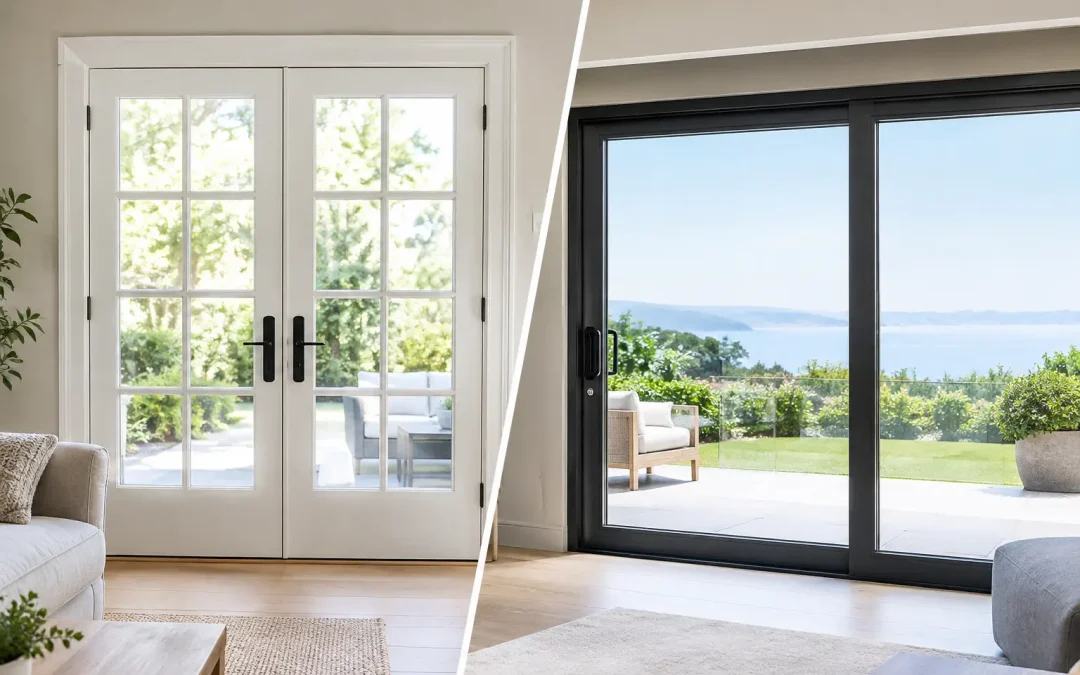
A new patio door can change how a room feels every day. It affects the light coming into your kitchen or lounge, the view of the garden and how easily the family can move in and out. When comparing French doors versus sliding doors, there is no single right answer. The best choice depends on your opening, your available space and how you use that part of the home.
Both options can be made to measure, fitted with modern double glazing and designed to provide secure access to your garden, patio or conservatory. The difference is in how they open, how much of the opening they use and the look they create.
French doors versus sliding doors: the key differences
French doors are a pair of hinged doors that open from the middle. You can open one door for everyday access or both doors when you want a wide, clear route outside. They are a popular choice for traditional homes, extensions and conservatories because they create an open, welcoming feel.
Sliding patio doors move sideways along a track. Usually, one panel slides behind the other, although larger designs can include more panels. They are often chosen where space is limited or where homeowners want broad glass panels and uninterrupted views of the garden.
The choice is not simply traditional versus modern. A well-designed set of uPVC French doors can look clean and contemporary, while sliding doors can work perfectly on an older property when the frame colour and proportions are chosen carefully.
Consider the space around the door
This is usually the first practical question to answer. French doors need a clear area to swing open. If they open outwards, make sure there is enough room on the patio and that garden furniture, pots or steps will not get in the way. If they open inwards, consider the furniture layout inside the room.
That opening action is also one of the main benefits of French doors. With both doors open, the full width is available. This is useful for entertaining, carrying furniture through, bringing in pushchairs or simply making a kitchen and garden feel more connected in warm weather.
Sliding doors do not take up any extra floor space when opened. The panels stay within their own frame, making them a sensible option for compact patios, narrow kitchens and rooms where a door leaf would clash with a dining table or sofa. They provide a generous access point without changing how you arrange the room.
For a smaller opening, French doors can often make better use of the width. For a very wide rear opening, sliding doors may give a more balanced look, especially if you want larger panes of glass rather than several narrower sections.
Light, views and the feel of the room
Sliding doors are well known for bringing in plenty of natural light. Their large glass panels and relatively slim vertical sightlines can make a garden feel like part of the room. If you have a good view, a well-kept patio or a conservatory roof that brings light into the space, this can be a major advantage.
French doors have more frame lines because there are two opening sashes and a central meeting point. That does not mean they make a room dark. Far from it. They still provide excellent daylight and, when fully open, create a lovely indoor-outdoor feel. They can also suit properties where symmetry and character matter more than having the biggest possible glass area.
Think about what you will see when the doors are closed for most of the year. If your garden is a real feature, sliding doors may be worth considering. If you value the occasion of opening both doors wide on a sunny day, French doors can be hard to beat.
Security should be built into either choice
A patio door should never be chosen on appearance alone. Modern uPVC French and sliding doors can both offer strong security when they are properly specified and fitted. Look for toughened safety glass where needed, quality locking systems, reinforced frames and secure handles.
French doors should include a dependable multi-point locking system and secure protection around the slave door, which is the door that stays closed when only one side is in use. A professionally fitted pair should close firmly, lock smoothly and sit evenly within the frame.
For sliding doors, the strength of the track, rollers and locking mechanism is particularly important. The moving panel should glide without sticking, while still closing tightly against draughts and unwanted access. Cheap or poorly installed sliding doors can become difficult to operate over time, so workmanship matters as much as the door itself.
At Supreme Home Improvements, doors are tailored to the property rather than treated as a one-size-fits-all replacement. Accurate measuring and careful fitting help ensure the door performs as it should from day one.
Warmth, weather protection and ventilation
Older patio doors are often a source of cold spots, draughts and condensation. Replacing them with modern double-glazed doors can make the room more comfortable and may help reduce heat loss. The glass, frame, seals and installation all play a part.
French doors generally give you flexible ventilation. On a mild day, you can open one door a small amount rather than opening the entire doorway. This is useful when cooking, airing out a conservatory or letting fresh air through without having a large opening.
Sliding doors also offer controlled ventilation because you can slide the panel to the width you need. Their larger glass area may mean more solar gain in a sunny south-facing room, which can be welcome in cooler months but may make the room warmer during summer. Blinds, shading and ventilation should be considered if the patio gets strong afternoon sun.
Whichever style you choose, the doors need to be level, properly sealed and fitted with suitable drainage. In Leicestershire, where wind-driven rain and cold winter weather can test external fittings, details such as thresholds, seals and frame alignment should not be overlooked.
Maintenance and everyday use
Both door styles are straightforward to maintain, particularly with modern uPVC frames. Regular cleaning with warm soapy water will keep the frames looking smart. Avoid abrasive cleaners that can damage the finish or seals.
French doors have hinges, handles and locking points that benefit from an occasional check and light lubrication where recommended. Keep the drainage channels clear, particularly after autumn when leaves and dirt can build up near the threshold.
Sliding doors need their tracks kept clean so grit does not affect the rollers. A quick vacuum along the bottom track now and then can prevent a stiff or uneven sliding action. If a door starts catching, needs force to close or no longer locks neatly, arrange a repair before a minor issue becomes a bigger one.
Which door style suits your home?
French doors are often the better choice if you want a classic appearance, a fully open doorway and flexible day-to-day access. They work especially well for modest-sized openings, garden-facing dining rooms and conservatories where you want a traditional finishing touch.
Sliding doors are often better for homes with limited indoor or outdoor clearance, wide openings and a focus on light and garden views. They are a practical option for modern extensions, kitchen diners and properties where the patio is used regularly.
Budget also plays a part. The final cost will depend on the opening size, glazing, colour, hardware, security features and any building work needed around the frame. Comparing like for like is essential. A lower quote may not include the same glass specification, locking system, finishing work or installation standard.
Get the fitting right from the start
The best-looking door will not perform properly if it is poorly measured or installed. Before choosing, ask for a survey of the opening and discuss how the doors will open, the threshold height, the condition of the existing brickwork and whether any internal finishing is required.
A good installer will help you consider the practical details rather than pushing one style. Take a moment to stand in the room, picture where furniture will go and think about the route you take to the garden. The right patio door should make everyday life easier while giving your home a warmer, smarter finish for years to come.