
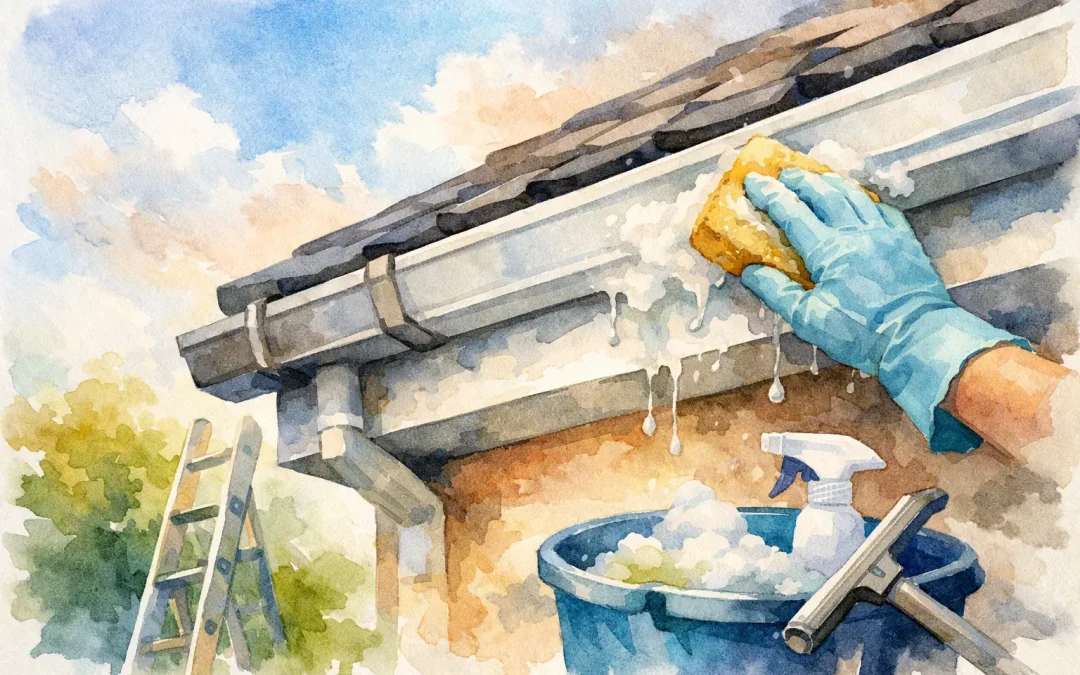
A clean roofline can make a surprising difference to the look of a property, particularly when windows, doors and guttering have already been upgraded. Knowing how to clean uPVC fascias safely means getting a brighter finish without scratching the boards, damaging seals or taking unnecessary risks on a ladder.
uPVC fascias are made to cope with British weather, but they still collect dirt. Traffic film, algae, cobwebs, bird mess and overflow marks from blocked gutters can leave white boards looking grey or green. A gentle clean once or twice a year is usually enough to keep them looking smart and helps you spot small maintenance issues before they become more expensive repairs.
Start with a safe assessment
Before bringing out a bucket, stand back and look at the roofline from ground level. Check for overflowing gutters, loose clips, staining beneath gutter joints, sagging sections or boards that appear bowed. Cleaning will improve surface dirt, but it will not fix a gutter leak or a failing roofline installation.
Choose a dry, still day with good daylight. Avoid working in rain, high winds, frost or very hot sunshine. Rain makes ladders and paths slippery, while strong sun can cause cleaning solution to dry onto the fascia before it has been rinsed away.
If your property is more than a single storey, or access is awkward because of a conservatory, extension or uneven ground, think carefully before working at height. The safest option is often to clean what you can reach from the ground and arrange professional maintenance for the rest. No clean fascia is worth a fall.
What you need to clean uPVC fascias safely
For most homes, simple equipment gives the best result. Use a bucket of warm water with a small amount of mild washing-up liquid, a soft microfibre cloth or non-abrasive sponge, and a soft-bristled brush for stubborn marks. A garden hose on a gentle setting can help with rinsing if it can be used without soaking brickwork or windows below.
You may also need a stable ladder, ideally with a ladder stabiliser or stand-off that keeps it from resting directly against guttering. Wear footwear with a firm grip and gloves if you are using any cleaning product.
Avoid abrasive scouring pads, wire brushes, cream cleaners and harsh solvents. These can dull the surface, leave fine scratches that hold more dirt, or affect the protective finish of the boards. Bleach, strong caustic cleaners and undiluted patio chemicals should also stay away from uPVC. They may remove algae quickly, but they can cause discolouration and harm nearby plants, paintwork and seals.
Clean the guttering first where possible
Fascias sit behind the gutters, so dirty or overflowing guttering often causes the staining homeowners are trying to remove. If leaves and debris are allowed to build up, rainwater can spill over the front or back of the gutter and leave dark streaks on the fascia board.
Clear the guttering first if it is safe to do so. Remove loose debris by hand while wearing gloves, then check that downpipes are flowing freely. Do not lean across a ladder to reach too far along the gutter. Move the ladder regularly instead.
Where gutters are blocked, leaking, cracked or pulling away from the fascia, stop there. Cleaning the board may make it look better temporarily, but the cause of the problem needs repairing. Persistent overflow can affect the roofline, brickwork and foundations over time.
How to clean uPVC fascias safely, step by step
Start by brushing away dry cobwebs, dust and loose leaves. This prevents grit from being rubbed across the uPVC when you start washing. Work in manageable sections, especially on a longer roofline, so cleaning solution does not dry out before rinsing.
Dip your cloth or sponge in warm, soapy water and squeeze it until damp rather than dripping. Wipe the fascia gently from one end of the section to the other. Pay attention to the lower edge beneath the gutter and the joints between boards, where dirt commonly gathers.
For green algae or heavier traffic film, hold a soft brush lightly against the surface and use small, gentle strokes. Let the warm soapy water do most of the work. There is no need to scrub hard, and pressing too firmly around joints, vents or gutter brackets can cause unnecessary wear.
Rinse with clean water using a fresh cloth, sponge or gentle hose setting. Never direct a powerful jet upwards behind the guttering or beneath the fascia. Water forced into gaps can reach areas that are designed to remain dry, and a pressure washer can damage seals, dislodge gutter clips or force water into the eaves.
Finally, dry the boards with a clean microfibre cloth where you can safely reach them. Drying reduces water marks and leaves the white finish looking clearer. It also makes it easier to see whether a stain has actually lifted or needs another gentle pass.
Be cautious with ladders and pressure washers
Most accidents during roofline cleaning are caused by poor access rather than the cleaning itself. Place a ladder on firm, level ground and follow the manufacturer’s angle guidance. Do not rest it on plastic guttering, as gutters are not designed to carry that weight.
Keep three points of contact when climbing and do not carry a full bucket in one hand. A small bucket attached securely to the ladder, or cleaning equipment passed up by another adult, is safer. Never overreach. Your belt buckle should stay between the ladder stiles. If it does not, climb down and reposition.
Pressure washers are often tempting because they seem quick, but they are rarely the right choice for uPVC fascias. On a low setting and from a sensible distance, they may be suitable for certain ground-level surfaces. At roof height, however, the risk of forcing water behind the boards or damaging the guttering usually outweighs the time saved.
Removing stubborn marks without harming the finish
Bird mess, black streaks and ingrained grime may need more than washing-up liquid. Use a purpose-made, non-abrasive uPVC cleaner if a gentle wash has not worked. Always read the label, test it on a small hidden area first and avoid applying it in direct sunlight.
Apply the product with a soft cloth rather than spraying it overhead. This gives you better control and prevents cleaner drifting onto glass, brickwork, plants or roofing materials. Wipe away as directed, then rinse thoroughly with clean water.
Some staining is not surface dirt. Brown marks can indicate long-term water overflow, while grey patches may be weathering or residue from previous harsh cleaning. If the surface has become permanently discoloured, aggressive cleaning will not restore it and may make the board look worse. In that situation, a professional inspection can establish whether cleaning, repair or replacement is the sensible option.
Keep fascias cleaner for longer
A little routine maintenance prevents a bigger job later. Check gutters in spring and autumn, and after periods of heavy wind when leaves, moss and twigs are more likely to collect. Trim back overhanging branches where practical, as they drop debris and can keep roofline areas damp.
Look out for moss on the roof too. As moss breaks away, it can enter gutters and cause repeat blockages. You should also keep an eye on joints and downpipes during heavy rain. A quick observation while water is running through the system is often the easiest way to identify an overflow or leak.
For homes with older timber boards covered by uPVC capping, take extra care around loose edges or soft areas. Capping can improve appearance, but it does not resolve rotten timber underneath. Any signs of movement, damp staining or a gutter pulling away should be assessed before further cleaning.
When to call a roofline specialist
Cleaning is a straightforward job when fascias and gutters are secure, access is safe and dirt is only on the surface. It is time to get help if boards are cracked, gutters are leaking or sagging, water is getting behind the fascia, or you cannot safely reach the area.
A local specialist can clean, repair or replace worn roofline components and make sure the guttering is fitted correctly for reliable drainage. For homeowners across Leicestershire, Supreme Home Improvements provides practical roofline services with the reassurance of experienced workmanship and a 10-year workmanship guarantee.
A careful clean should leave your fascias brighter, not compromised. Work gently, stay realistic about working at height and treat recurring stains as a useful clue that your guttering or roofline may need attention.