
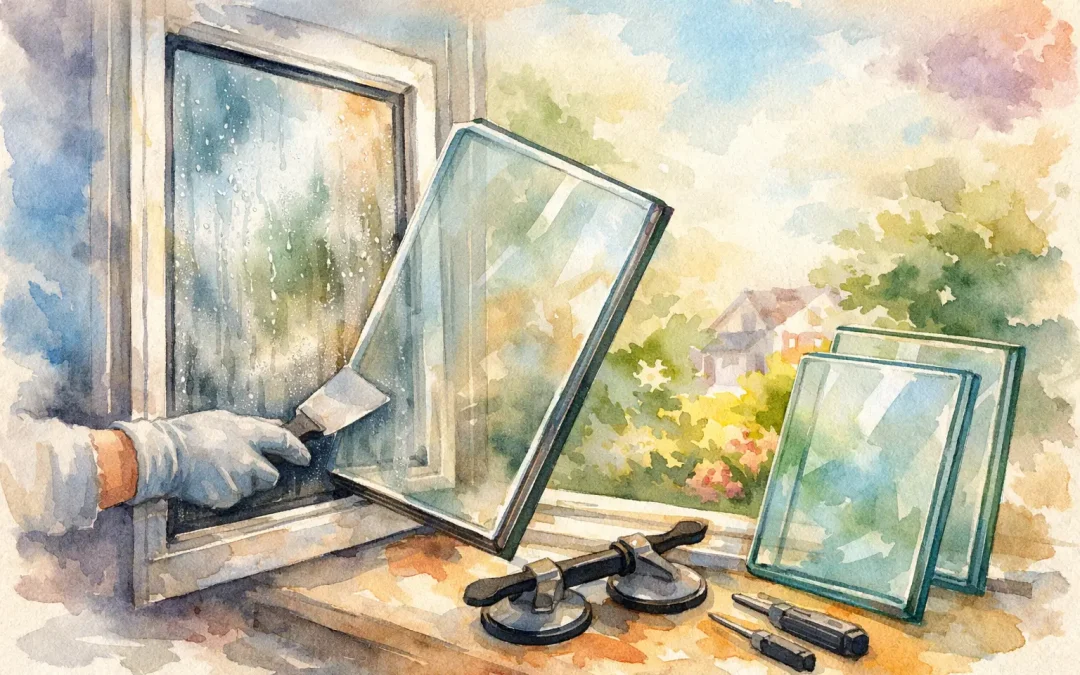
Misting between the panes is more than an annoyance when you look out into the garden. It is usually a sign that the sealed glass unit has failed, allowing moisture into the gap that should keep your window insulated. Knowing how to replace failed double glazing can save you from paying for an entire new window when the frame itself is still in good condition.
For many homes across Leicestershire, the sensible answer is to replace the glass unit only. But that depends on the condition of the window, the cause of the failure and whether the replacement can be made accurately. Here is what homeowners need to know before arranging the work.
What failed double glazing looks like
A double-glazed unit is made from two panes of glass separated by a spacer bar and sealed around the edge. The gap is filled with dry air or an insulating gas. When the edge seal breaks down, moisture enters the cavity and causes condensation, misting or a cloudy appearance inside the glass.
The key sign is that the condensation cannot be wiped away from either side of the window. If it is on the room-facing surface, it may simply be everyday condensation caused by moisture in the home. If it is trapped between the panes, the unit has failed.
Other signs include a noticeable draught around the glass, cold areas close to the window, black marks around the unit edge, or glass that has developed a permanent hazy look. Older units can also lose some insulating performance before misting becomes obvious.
Do you need new glass or a whole new window?
Failed glass does not automatically mean the whole window needs replacing. A sound uPVC, timber or aluminium frame can often take a new made-to-measure sealed unit, restoring the appearance and thermal performance without the cost and disruption of fitting a complete window.
A glass-only replacement is normally suitable where the frame is secure, the opening sash works properly, the hinges and handles are serviceable, and there is no significant damage or distortion. It is a practical option for homeowners who want a straightforward repair at a fair price.
A full window replacement may be the better investment if the frame is cracked, warped, faded badly, leaking around the structure, or difficult to lock. The same applies if several units have failed and the windows are old, draughty or no longer meet the standard you want for warmth, security and appearance. Replacing one failed unit is sensible; repeatedly repairing a window that is reaching the end of its life may not be.
How to replace failed double glazing: the proper process
Replacing a sealed unit is specialist work. Although the job may appear simple, the new glass needs to be measured precisely, fitted on the correct packers and sealed securely within the frame. Poor fitting can affect how the sash closes, place pressure on the glass and lead to another premature failure.
1. Check that the unit is the problem
A professional should first inspect the window rather than assume the glass is at fault. They will confirm that moisture is between the panes and assess the condition of the frame, beads, hinges, handles and drainage channels.
This is also the time to identify why the unit may have failed. Age is a common reason, but blocked drainage, movement in the frame, damaged glazing beads or poor original installation can all contribute. Addressing an underlying issue helps protect the replacement.
2. Take accurate measurements
The old unit is measured for width, height and thickness. This must be exact. Double-glazed units are not one-size-fits-all, and a unit that is even slightly wrong can leave gaps, strain the frame or make the sash difficult to operate.
The installer will also check the glass specification. Depending on the location, you may need toughened safety glass, for example in doors, low-level windows or areas close to a bath or shower. Obscure glass for bathrooms, decorative units, Georgian bars and energy-efficient low-E glass can all be matched where required.
3. Order a made-to-measure sealed unit
The replacement unit is manufactured to suit the existing frame and the chosen specification. Modern energy-efficient glass can improve comfort, particularly where the failed unit is older. However, the result still depends on the rest of the window. A new high-performance glass unit cannot completely overcome a badly fitting or damaged frame.
If your current window has leaded, patterned or coloured glass, ask whether the appearance can be matched before ordering. A close match is usually possible, but very old designs may not be identical.
4. Remove the old unit carefully
Once the new unit is ready, the installer removes the glazing beads and takes out the failed glass. This needs care, especially if the unit is cracked or the frame has become brittle with age. The frame rebate is cleaned, and any worn packers or damaged materials are dealt with before the replacement goes in.
The old sealed unit should be removed and disposed of safely. Glass is heavy and sharp, so this is not a job to rush or treat as a general DIY repair.
5. Fit, pack and test the new glass
The new unit is positioned on packers that support it correctly within the sash or frame. This part matters more than many people realise. Correct packing keeps the glass square, helps the window open and close properly, and avoids pressure points that could damage the unit.
The glazing beads are then refitted, and the window is checked for operation, security and a neat finish. On an opening window, the installer should make sure the sash closes evenly and locks without force.
Can you replace failed double glazing yourself?
Confident DIY homeowners may be tempted to change a sealed unit themselves, especially in a simple fixed window. However, there are real risks. You need the correct unit size and thickness, suitable tools, safe handling methods and an understanding of glazing packers and beads. A mistake can crack the glass, damage the frame, compromise security or leave the window poorly sealed.
Safety glass requirements are another consideration. Certain locations require toughened or laminated glass, and fitting ordinary glass in the wrong place can create a safety issue. There is also the question of guarantees. A professionally supplied and fitted unit gives clearer accountability if something goes wrong.
For most homeowners, it is better value to have the unit surveyed and replaced by an experienced local installer. You avoid handling heavy glass, and the finished result should look and perform as it should.
How long does replacement take?
The survey itself is usually quick, but the replacement glass must be made to measure. The fitting appointment is often completed in a single visit once the unit has arrived, with many straightforward replacements taking around an hour per unit.
Timescales can be longer for shaped glass, unusual colours, integral blinds, decorative designs or specialist safety specifications. If the weather is poor, a professional installer will also take sensible precautions to avoid leaving the opening exposed for longer than necessary.
Choosing the right replacement glass
The lowest quote is not always the best value if it means lower-quality glass or a poor fit. Ask what type of sealed unit is being supplied, whether it is made to measure, and what warranty applies to both the glass and fitting.
It is worth considering an energy-efficient replacement if your current units are old. Low-E glass reflects heat back into the room while allowing daylight through, helping to reduce the cold feeling near windows. For rooms that overheat in strong sun, specialist solar-control glass may be useful, though it can slightly alter the look of the glass and is not necessary for every property.
For homes near busy roads, acoustic glass can help reduce noise, but it is generally a more considered upgrade rather than a standard replacement. Your best option depends on the room, the existing frame and what problem you are trying to solve.
When to arrange an inspection
Do not wait until a misted unit becomes impossible to see through. Failed double glazing can make a home feel colder and less cared for, and it can spoil the appearance of an otherwise good window. If a unit is cracked, loose, difficult to secure or allowing water in, arrange an inspection promptly.
Supreme Home Improvements provides practical, made-to-measure window repairs and replacements for homeowners who want clear advice without pressure. An experienced installer can tell you honestly whether replacing the sealed unit is enough or whether a wider window upgrade would offer better long-term value.
A clear window should also be a warm, secure and properly working one. Getting the failed unit assessed early gives you the best chance of keeping the repair simple, affordable and built to last.