
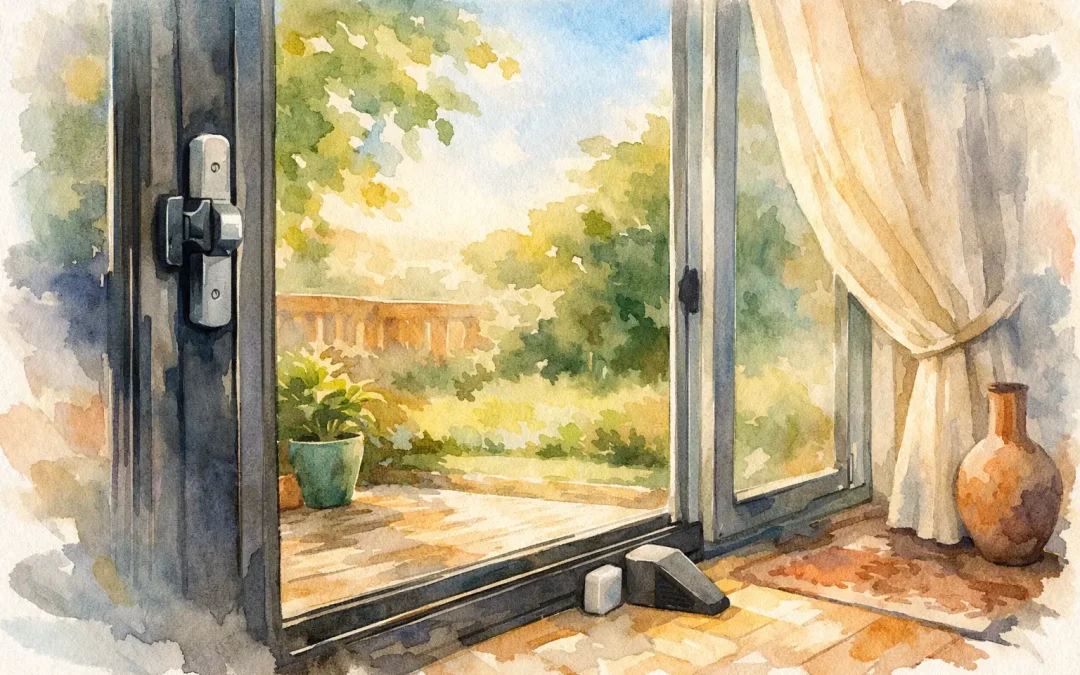
A sliding patio door should bring light into your home, not create an easy weak point at the back of it. Knowing how to secure sliding doors properly starts with looking beyond the handle lock. The track, frame, glass and fitting all play a part in keeping the door closed, stable and difficult to force.
For many homes, the patio door is used every day for the garden, conservatory or kitchen. That convenience can lead to small security issues being overlooked: a lock that needs a lift before it catches, a worn roller that leaves a gap, or a door that can be moved in its track. Dealing with these problems early is usually simpler and more affordable than waiting for a complete failure.
How to Secure Sliding Doors With the Right Basics
A modern uPVC sliding door in good condition should close squarely, lock firmly and sit securely within its frame. Before adding extra security devices, test the basics. Close the door slowly and check whether the lock engages without forcing the handle. Look along the meeting edge of the two panels to make sure there is no obvious gap, and check that the door does not rattle when locked.
If the door has dropped on its rollers, the locking points may no longer line up correctly with the keeps in the frame. This can make a perfectly decent lock less effective. Adjustment may solve the problem, but worn rollers, damaged tracks or a distorted frame can need a more thorough repair.
The lock itself matters too. Older patio doors may have a basic handle lock that offers limited resistance compared with newer multi-point locking systems. A multi-point lock secures the panel at more than one position, helping to hold the door tightly against the frame. It is a worthwhile feature when replacing an ageing door, particularly for a ground-floor opening or a door hidden from view at the side or rear of the property.
Stop the Door Being Lifted or Forced Open
Sliding doors work by moving on rollers, so their tracks need particular attention. A common concern with older systems is whether the moving panel can be lifted upwards and removed from the bottom track. Anti-lift devices or blocks can reduce this movement by limiting how far the panel can rise.
These devices should be fitted carefully. If they are too tight, they can make the door difficult to slide or cause unnecessary wear. If they are too loose, they may not provide useful protection. A professional installer can assess the clearance around the panel and fit an appropriate solution without affecting day-to-day operation.
A security bar or purpose-made patio door lock can also provide an additional physical stop when the door is shut. This is particularly useful overnight or when the property is empty for longer periods. Avoid relying on a loose piece of timber in the track as a permanent answer. It can move, split, look untidy and may prevent the door from closing properly. A fitted device is safer and more reliable.
Keep the bottom track clean while you are checking security. Grit, leaves and small stones can stop the door from running smoothly, encourage wear and make it tempting to force the panel. Vacuum the track and wipe it down regularly, then use only a suitable light lubricant if recommended for your door system. Heavy oil tends to attract more dirt.
Check the Glass, Frame and Handles
The glass is just as relevant as the lock. Double-glazed units should be sound, securely beaded and free from cracks. If you notice misting between panes, damaged seals or movement around the glass, arrange an inspection. Misting does not automatically mean a door is insecure, but it can be a sign that the sealed unit is reaching the end of its serviceable life.
For replacement doors, toughened safety glass is normally used in patio door locations. Laminated security glass is another option worth discussing for areas where you want an added layer of resistance. The right choice depends on the door design, budget and the level of exposure at the property.
Do not ignore a loose handle, stiff key or lock cylinder that turns inconsistently. These faults may be inconvenient now, but they can leave you unable to lock the door properly when you need it. A good handle and lock should feel positive, not vague or strained. Never force a sticking key, as it can break inside the cylinder and turn a straightforward repair into an urgent problem.
The frame should also be fixed securely to the surrounding opening. Cracks around the frame, failed sealant, rotten timber nearby or visible movement when the door is operated all deserve attention. Security and weather protection often go together: a properly fitted, well-sealed door is harder to shift and helps keep draughts and rain outside.
Everyday Habits That Make Patio Doors Safer
Most sliding-door security comes down to a well-fitted door and sensible routines. The following checks are worth making part of your regular home maintenance:
- Lock the door fully whenever it is not in use, including when you are in the garden or upstairs.
- Remove keys from the lock and store them out of sight, especially if glazing near the handle could be reached after damage.
- Keep furniture, ladders and garden items away from the door where they could help someone gain access or hide while working on the lock.
- Use exterior lighting around darker side paths and rear gardens, making sure it does not shine directly into neighbouring homes.
- Check that children and visitors do not leave the door only partly latched after coming in from the garden.
It is also sensible to review who has keys after moving house, completing building work or losing a key. Replacing a lock or cylinder can provide reassurance, but compatibility depends on the specific patio door system. A specialist can advise on the right upgrade rather than fitting a part that does not work smoothly with the existing handle and mechanism.
When Repair Is Enough and When Replacement Makes Sense
Not every insecure sliding door needs replacing. A door that is generally sound may only require adjustment, new rollers, replacement handles, a lock repair or refreshed seals. This is often the most cost-effective route where the frame and glass are in good condition.
Replacement becomes the stronger option when the door is badly warped, repeatedly drops out of alignment, has obsolete locking hardware, suffers persistent draughts or has damaged double-glazed units alongside other faults. A new made-to-measure uPVC patio door can improve security, insulation and appearance in one job. It also gives you the chance to choose a locking arrangement and glazing specification that suit how your family uses the space.
Be cautious about buying universal security parts without checking measurements and compatibility first. Patio doors vary widely in track design, panel weight, lock position and frame depth. A low-cost item that does not fit properly can interfere with closing or give a false sense of security.
For homeowners in Ibstock, Coalville, Leicester and the wider Leicestershire area, Supreme Home Improvements can inspect worn or poorly operating patio doors and advise whether repair or replacement is the better value option. The aim should be a door that slides easily when open, locks confidently when shut and continues to protect your home through every season.
A patio door should never need a shoulder push, a workaround or crossed fingers before bed. If yours does, having it checked now can restore the simple reassurance that comes from hearing a proper lock engage.