
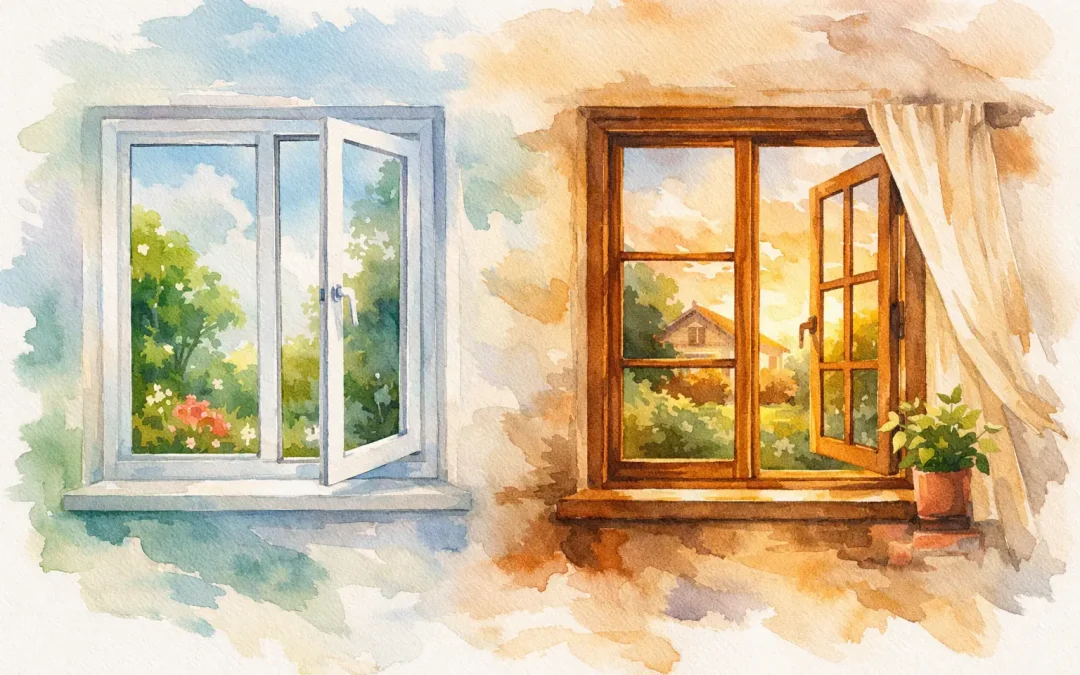
A window can look perfectly acceptable from the pavement while costing you money every winter. Draughts around the frame, peeling paint, misted double glazing and difficult locks are all signs that replacement is worth considering. When weighing up uPVC versus timber windows, the right choice comes down to more than appearance: it affects maintenance, warmth, security, budget and the character of your property.
For many homes across Leicestershire, modern uPVC windows offer the sensible, low-maintenance answer. Timber remains a strong option where period detail and natural materials matter most. Neither material is automatically better in every situation.
uPVC versus timber windows: the main differences
The biggest practical difference is the amount of care each material needs. uPVC is designed to cope with rain, frost and changing temperatures without needing regular painting or sealing. A wash with warm soapy water and an occasional check of the hinges, handles and drainage channels will usually keep it looking smart.
Timber needs more attention. Quality wooden frames can last for decades, but they must be properly painted, stained or treated at the right intervals. If moisture gets into neglected wood, it can lead to swelling, cracking or rot. That does not make timber a poor product – it simply means the homeowner needs to be willing to maintain it.
Appearance is the other clear dividing line. Timber has a natural grain, depth and traditional finish that many people prefer, particularly on cottages, older village properties and homes in conservation areas. uPVC has improved greatly over the years. Modern frames are available in white, anthracite grey, black, cream and realistic wood-effect finishes, giving homeowners far more choice than the plain white frames of the past.
Cost: the upfront price and the years ahead
For most replacement projects, uPVC is the more affordable option at the outset. The frames are generally less expensive to manufacture and install, and their low-maintenance nature means there are fewer ongoing costs. This can make a real difference when replacing every window in a family home.
Timber windows normally carry a higher initial price, especially when they are made to measure for unusual openings or designed to match original sash or casement windows. Over time, the cost of repainting and repairs should also be allowed for. A well-maintained timber window can provide excellent long-term value, but it is not usually the lowest-cost route.
It is worth comparing like for like. A cheap window of any material can become a false economy if the glazing, hardware, fitting or finish is poor. The quality of the installation matters just as much as the frame material. An accurately measured, properly fitted window will close correctly, keep out draughts and look right against the brickwork.
When uPVC offers better value
uPVC often makes the most sense for homeowners who want an attractive upgrade without adding another regular maintenance job to the list. It is especially practical for busy households, rental properties, upper-floor windows that are difficult to reach, and larger whole-house replacement projects where the budget needs to work hard.
A quality uPVC window with energy-efficient double glazing can improve comfort quickly. Rooms feel less chilly near the glass, outside noise can be reduced and the property gains a cleaner, more cared-for appearance.
When timber is worth the extra spend
Timber may be the better investment when preserving the original look of the property is a priority. A Victorian terrace, listed building or rural cottage can lose some of its appeal if replacement windows do not suit its proportions and period features.
In some conservation areas, planning requirements may limit the materials or styles that can be used. Always check before ordering windows, particularly if the home is listed or sits within a designated area. In these cases, timber may not just be a design preference but the most suitable route.
Energy efficiency and warmth
Both uPVC and timber frames can achieve strong thermal performance when paired with good double glazing, appropriate seals and professional fitting. It is not accurate to say that one material is always warmer than the other without looking at the full window specification.
Timber is naturally insulating, while modern multi-chamber uPVC frames are made to reduce heat transfer. The glass unit has a major role too. Low-emissivity glass, warm-edge spacer bars and the correct gas-filled sealed unit can all help retain heat inside the home.
When asking for quotations, look beyond broad claims about energy efficiency. Ask what glazing is included, whether the units are made to measure and how the installer will deal with existing gaps, damaged reveals or tired external sealant. A high-performing window fitted badly will not deliver the result you expect.
Security, strength and everyday use
Modern replacement windows in both materials can be fitted with secure locking systems, toughened glass where needed and reliable handles. Security is not simply about choosing uPVC or timber. It depends on the quality of the frame, locking points, hinges, glazing and installation.
uPVC frames are popular because they stay stable and easy to operate with little effort. Timber can also perform well, but movement caused by damp conditions or missed maintenance may affect how freely a window opens and closes. Quality engineered timber is designed to reduce this movement, although it still needs suitable protection from the weather.
For ground-floor windows, windows beside doors and any opening that could be vulnerable to forced entry, discuss security features as part of the specification rather than treating them as an afterthought.
Style matters more than people think
Windows are one of the most visible features of a home. The wrong frame width, opening style or finish can make a property look out of balance, even if the window itself is well made.
uPVC suits a wide range of modern and traditional homes. Flush sash designs can give a neater, more traditional look than standard casement frames, while woodgrain finishes can soften the appearance where bright white would feel too stark. For detached homes, semis and newer estates, uPVC is often the easiest way to improve kerb appeal at a fair price.
Timber has the edge where authentic detailing is essential. Fine glazing bars, slim sightlines and a painted finish chosen to complement the front door can suit character homes particularly well. However, a good-looking timber window only stays good-looking if its coating is kept in sound condition.
How to choose the right material for your home
Start with the condition and style of your property. If you are replacing dated windows in a typical modern home and want warmth, security and minimal upkeep, uPVC is likely to be the practical choice. If you own a period property and the original appearance is central to its value, timber could justify the additional cost and care.
Then consider where the windows are located. A hard-to-reach bedroom or stairwell window is a good candidate for low-maintenance uPVC. A prominent bay window at the front of a heritage-style home may be where timber makes the strongest visual difference.
Finally, be honest about maintenance. Timber is a worthwhile choice for homeowners who enjoy looking after their property or are prepared to budget for professional redecoration. If painting window frames every few years is unlikely to happen, uPVC will probably give a better long-term result.
A local installation should be tailored, not off the shelf
Every house has different openings, brickwork, finishes and priorities. A proper survey should identify whether old frames are causing damp patches, draughts or damage around the reveals, and should help you choose a frame style that suits the property rather than simply what is easiest to fit.
Supreme Home Improvements provides made-to-measure uPVC double-glazed windows for homeowners who want a dependable, affordable upgrade backed by experienced local workmanship. Clear advice at the survey stage can prevent costly compromises later, whether you are replacing one troublesome window or planning a full exterior refresh.
The best choice is the one that fits your home, your budget and the amount of maintenance you are realistically prepared to take on. Choose a window that will still look right and work properly long after the initial installation day has passed.