
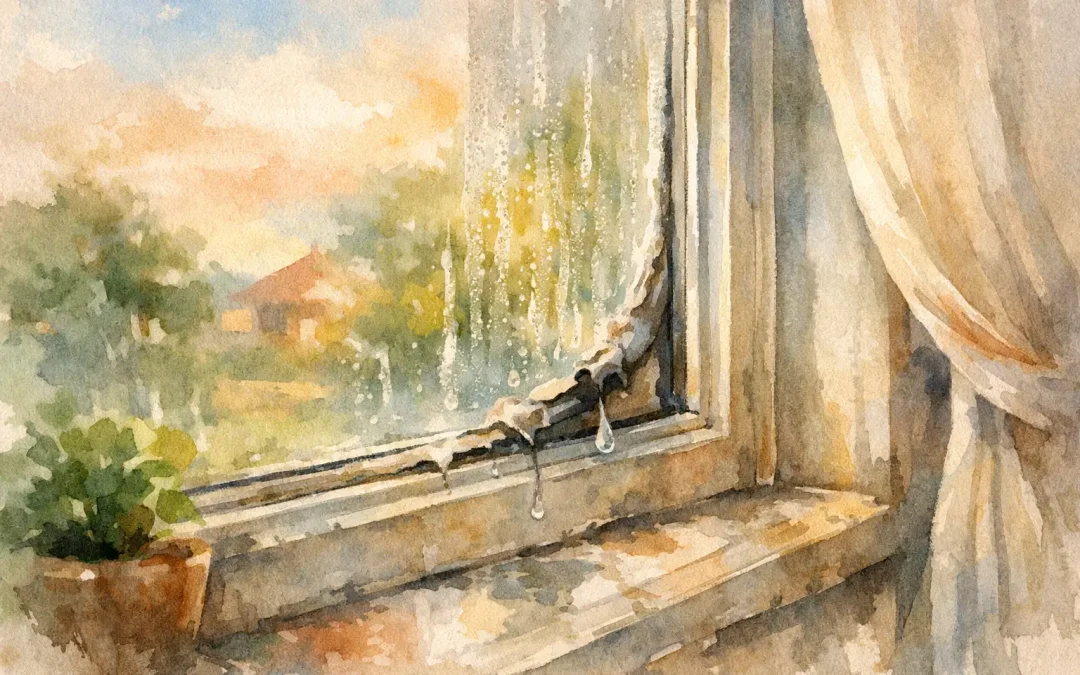
A clear patch of mist between the two panes is more than an annoyance when you look outside. It is usually the first reliable sign of when to replace window seals. For homeowners, failed seals can mean colder rooms, more condensation, reduced energy efficiency and windows that no longer look their best. The good news is that a misted window does not automatically mean every frame in the house needs replacing.
What a window seal does
Most modern double-glazed windows have a sealed glass unit made from two panes of glass separated by a spacer bar. The gap is filled with dry air or an insulating gas, while seals around the edge keep moisture out. This insulated unit is then fitted into the uPVC, timber or aluminium frame.
There is also a separate weather seal around the opening sash of the window. This rubber gasket helps the window close tightly against the frame, preventing draughts and rain getting through.
These parts are often both called window seals, but they fail in different ways. A broken double-glazing seal causes moisture between the panes. A worn gasket around the sash is more likely to cause draughts, rattling or small leaks around the edge of the opening window. Knowing which one has failed helps avoid paying for work you do not need.
When to replace window seals: the main warning signs
The most obvious sign is condensation or fogging trapped inside the glass unit. Unlike condensation on the room-facing side of a window, which can be caused by everyday moisture from cooking, showers or drying clothes, moisture between the panes cannot be wiped away. It means the sealed unit has lost its airtight barrier.
You may also notice a white haze, water marks, or small droplets appearing between the panes on cold mornings. In some cases, the glass looks cloudy even during dry weather. Over time, the spacer bar and internal coatings can deteriorate, making the window look permanently dull.
A failed perimeter gasket can be harder to spot. Stand close to the window on a windy day and check for cold air around the opening sections. You may hear whistling, feel a draught near the handle side, or see curtains moving when they should not. If the rubber seal is flattened, cracked, brittle or pulling away from the frame, it may no longer be doing its job.
Water coming in around the inside of the frame deserves prompt attention. However, it is worth checking the cause before assuming the seal is at fault. Blocked drainage channels, poor installation, damaged external sealant, worn hinges or problems with brickwork can all allow water to find a way in. A proper inspection is far better than simply applying more sealant over the visible gap.
Do not confuse internal condensation with a failed unit
Condensation on the inside face of the glass is common in occupied homes, particularly in bedrooms, kitchens and bathrooms. It happens when warm, humid air meets a cold surface. Although it can contribute to mould around frames if ignored, it does not necessarily mean the window seal has failed.
Try improving ventilation first. Use extractor fans, keep trickle vents open where fitted, cover pans while cooking and avoid drying washing indoors without ventilation. If the condensation clears with these changes and is only on the room side of the glass, the unit itself may still be sound.
Condensation on the outside face can also be a positive sign. It often occurs when efficient glazing keeps heat inside the house and the outer pane remains cold. The key difference is location: moisture between the panes points to a failed glazed unit; moisture on either exposed surface has other causes to investigate.
Can a failed window seal be repaired?
It depends on the type of seal and the condition of the window. If the rubber weather gasket around an opening sash is worn, it can often be replaced without changing the frame or glass. Adjustment to hinges, locks or keeps may also improve how tightly the window closes.
If the sealed unit between the panes has failed, the usual long-term solution is to replace the glass unit. A made-to-measure double-glazed unit can normally be fitted into a sound existing frame. This restores the clear view and insulation without the cost and disruption of a full window replacement.
Some companies offer defogging or drilling services for misted glass. These may improve the appearance for a while, but they do not always restore the original insulating performance or provide the same dependable result as a new sealed unit. For a home you plan to keep, replacing the failed unit is usually the more sensible investment.
When a whole window replacement makes better sense
Replacing only the glass is not always the right answer. If several units have failed and the frames are discoloured, cracked, warped or difficult to operate, a complete window upgrade may offer better value over time. The same applies if the locking system is unreliable, hinges have dropped, or there are ongoing draughts despite new gaskets and adjustments.
Older double glazing can also be less efficient than current options. New uPVC windows with modern low-emissivity glass, warm-edge spacer bars and quality weather seals can make rooms more comfortable and help reduce heat loss. For a bay window, front elevation or a home with multiple ageing units, replacing everything together may give a neater finish and a more consistent improvement.
That said, there is no benefit in replacing good frames purely because one pane has misted up. A local specialist should be prepared to explain whether a replacement unit, new gasket, adjustment or full installation is genuinely required. The right solution is the one that protects your home and budget.
How long do window seals normally last?
There is no fixed expiry date. Quality double-glazed units can last 15 to 20 years or longer, while weather gaskets may need attention sooner depending on exposure, use and maintenance. South-facing windows experience more heat and UV exposure, while windows exposed to driving rain and strong winds can face greater strain.
Poor installation, low-quality units, movement in the building and damage from cleaning or decorating can shorten their life. It is also common for one window to fail years before the rest. Treat each window on its condition rather than assuming all seals need changing at the same time.
A few checks homeowners can make safely
You do not need to dismantle a window to identify a likely problem. Look closely at the glass in daylight, open and close the sash, and check whether it locks without forcing it. Inspect visible rubber seals for splits or gaps, and make sure drainage slots at the bottom of the external frame are not blocked by dirt or moss.
Avoid using silicone as a quick fix around moving parts, and do not push sharp tools into drainage holes or between the glass and beads. These jobs can make a small issue worse or affect the way the window drains. If water is entering the property, there is damage to the glass, or the window no longer locks securely, arrange an inspection promptly.
Choosing a replacement that lasts
A replacement sealed unit needs to be accurately measured and correctly fitted. The thickness of the unit, glass specification, spacer colour and glazing beads all matter if you want a secure, tidy result. Where safety glass is required, such as near doors or low-level glazing, the new unit must meet the appropriate standard.
For a full window replacement, ask about the glass performance, security hardware, ventilation and workmanship guarantee, not just the headline price. Cheaper work can become expensive if poor fitting creates draughts, leaks or problems with opening and locking later.
At Supreme Home Improvements, homeowners across Leicestershire can get straightforward advice on whether a misted or draughty window needs a new sealed unit, replacement gaskets or a complete upgrade. With more than 30 years in the trade, the focus is on a made-to-measure repair or installation that suits the property rather than a one-size-fits-all answer.
A misted pane rarely improves on its own, so it is best not to leave it until winter exposes every draught. Check the window while the issue is still small, get the cause confirmed, and choose the repair that keeps your home warm, dry and secure for the years ahead.