
A cold draught around the living-room window was the issue that first prompted this window installation case study. What began as an uncomfortable corner of the house had become a wider concern: rising heating costs, tired-looking frames, difficult-to-use openings and a front elevation that no longer matched the rest of the property.
The homeowners wanted a practical upgrade rather than a sales pitch. Their priority was a made-to-measure replacement that looked right for their home, improved day-to-day comfort and offered dependable security without stretching the budget unnecessarily. This project shows why careful planning matters just as much as the new windows themselves.
The problem: ageing windows affecting comfort and appearance
The property was a traditional family home in the Leicestershire area with older uPVC windows fitted many years earlier. The frames had become discoloured and several opening sashes no longer closed as neatly as they should. The homeowners could feel cold air near the windows during winter, particularly in the lounge and main bedroom.
There were also signs that the sealed units were nearing the end of their useful life. A small amount of condensation had appeared between panes in one window, while another had a stiff handle that needed force to operate. These are common signs that a window should be assessed rather than simply patched up.
Replacing just the worst window may have provided a short-term fix, but it would have left the property with mismatched frames and older units elsewhere. After discussing the options, the homeowners chose to replace the windows across the main front and side elevations in one planned installation.
Planning the right replacement windows
A good window replacement starts with a proper survey. Every opening was measured individually, as older properties can have small variations that are not obvious from the outside. This helps ensure the new frames fit correctly, open smoothly and sit neatly against the brickwork and internal finishes.
The homeowners chose white uPVC double-glazed casement windows to retain the familiar look of the property. White was the most cost-effective choice and suited the existing fascias and soffits, so there was no reason to pay extra for a coloured finish. For a different type of home, anthracite grey, black or woodgrain-effect frames may be a better fit, but the best choice depends on the style of the property and the available budget.
The design included top-opening fanlights for ventilation in the bedrooms and a larger side-opening casement where access and cleaning were important. Security was also considered from the outset, with modern locking mechanisms and secure handles selected for the ground-floor windows.
This is where working with a local installer can make a real difference. The right answer is not always the most expensive option. It is the product and layout that suit the home, the way the household uses each room and the amount the customer wants to spend.
Window installation case study: the work on site
Before installation day, the team confirmed the order details and planned the work so the house was not left exposed for longer than necessary. Window replacement creates some noise and dust, but a well-organised installation keeps disruption manageable.
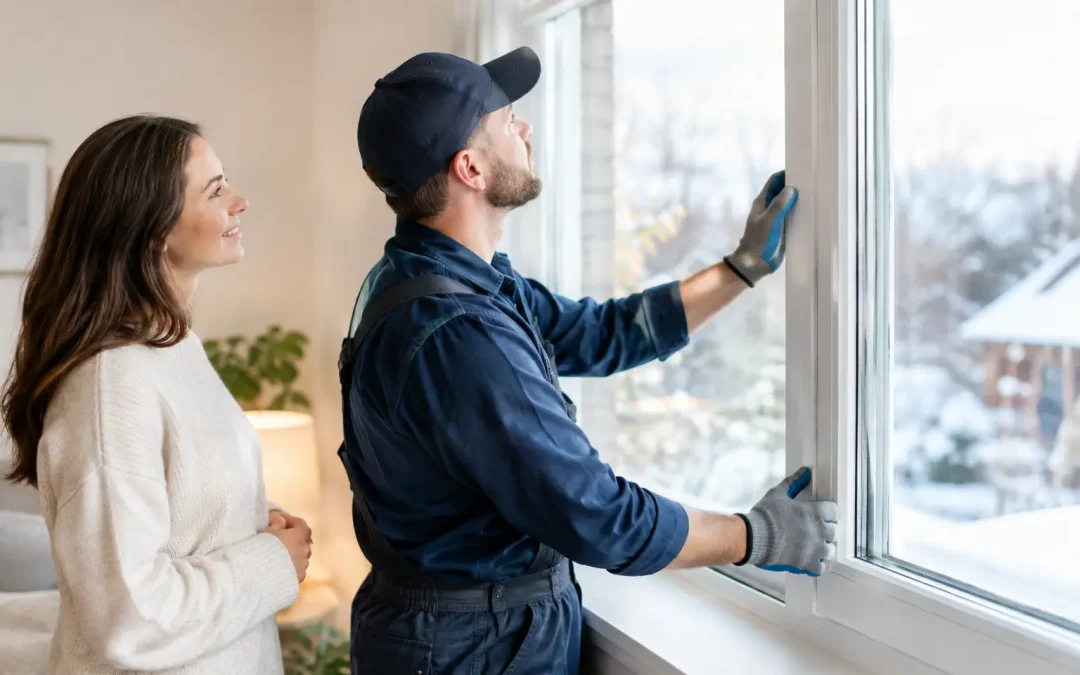
The old windows were removed carefully, one opening at a time. This is particularly important in occupied homes, especially during cooler weather. Once each old frame was out, the opening was checked for loose material, damaged sealant or gaps that needed attention before the new unit went in.
The new frames were then positioned, levelled and fixed securely. Good installation is not simply a case of fitting a window into a hole. The frame must be square, the fixings must be appropriate for the structure, and the gaps around the window need to be insulated and sealed properly. Poor fitting can lead to draughts, water ingress and problems with operation, even when the window itself is good quality.
After each window was fitted, the sashes were tested to make sure they opened, closed and locked as intended. External trims and sealant were applied for a tidy weatherproof finish, while internal edges were made good where required. The old frames and glazing were removed from site, leaving the homeowners with a clear space rather than a pile of waste to deal with.
The result: a home that feels more settled
The difference was noticeable straight away. The new windows gave the front of the house a cleaner, brighter appearance and brought a more consistent finish to the property. Inside, the rooms felt less exposed to cold air around the frames, particularly in the areas that had previously been draughty.
The homeowners also appreciated the simpler everyday details. Windows that open without sticking, handles that work properly and locks that feel secure all add up. These are not dramatic changes on their own, but they make a house more comfortable to live in.
The replacement glazing also reduced the amount of outside noise reaching the rooms facing the road. Noise reduction varies depending on the existing windows, the type of glazing and the location of the property, so it should never be promised as an identical result for every home. However, well-fitted modern double glazing can make a worthwhile difference where tired frames and older units are being replaced.
What homeowners can learn from this project
The main lesson from this window installation case study is to act before minor faults become bigger problems. A stiff opener or failed sealed unit may seem manageable, but worn windows can affect comfort, security and the condition of the surrounding finishes over time.
It is also worth looking at the whole property rather than one frame in isolation. If several windows are similar in age and condition, replacing them together can produce a more consistent result and avoid repeated disruption. On the other hand, if only one window is damaged and the others remain in good condition, a targeted replacement or repair may be the better value option.
Before agreeing to any work, homeowners should ask what is included in the fitting price. This should cover measuring, removal of old windows, fitting, sealing, trims, waste disposal and any guarantee on workmanship. A low headline price can become less attractive if essential parts of the job are treated as extras.
It is equally sensible to think about other exterior work while access is available. If fascias, soffits, guttering or a conservatory roof are also showing their age, planning improvements together can make the process easier and help achieve a neater overall finish.
Choosing a local team you can rely on
For most households, new windows are a long-term investment rather than an impulse purchase. The product matters, but so does the standard of installation and the willingness of the contractor to explain the work clearly. Homeowners should feel able to ask questions about styles, glazing, security, timescales and aftercare without being pushed into a decision.
Supreme Home Improvements takes a straightforward approach: made-to-measure products, experienced fitting and practical advice based on what the property genuinely needs. With more than 30 years in the trade and a 10-year workmanship guarantee, the focus is on providing a result that looks right, works properly and lasts.
If your windows are letting in draughts, showing signs of damage or simply making your home look tired, a proper survey is a sensible first step. The right replacement can make everyday rooms feel warmer, safer and more enjoyable without changing the character of the home.