A fascia board may sit just below your roof tiles, but it does a great deal of work. It supports the guttering, protects the roof edge and gives the whole property a neat finish. When old timber starts peeling, splitting or holding moisture, choosing the best fascias for low maintenance can save years of painting, patch repairs and worry about hidden rot.
For most homes in Leicestershire, quality uPVC fascia boards are the practical answer. They are hard-wearing, made to measure and designed to handle the wet, cold and changeable weather we get throughout the year. However, the right choice also depends on the condition of your existing roofline, the style of your home and whether you want to replace the boards fully or cover sound timber.
Why low-maintenance fascias matter
Fascias are not only there for kerb appeal. Together with soffits and guttering, they form a protective roofline system. Rainwater needs to flow cleanly into the gutters, while the roof edge needs protection from wind-driven rain, nesting birds and moisture.
Traditional timber fascias can look smart when freshly painted, but they need regular attention. Once paint cracks or joints open up, water can soak into the wood. Over time, this can lead to rot, loose gutter brackets and damage around the eaves. The problem is often not obvious from ground level until it has become more expensive to put right.
A low-maintenance material reduces that ongoing workload. Rather than sanding and repainting every few years, homeowners can usually keep modern boards looking tidy with a simple wash using warm soapy water. That is particularly useful on two-storey properties, where maintenance is less convenient and working at height carries obvious risks.
The best fascias for low maintenance: uPVC
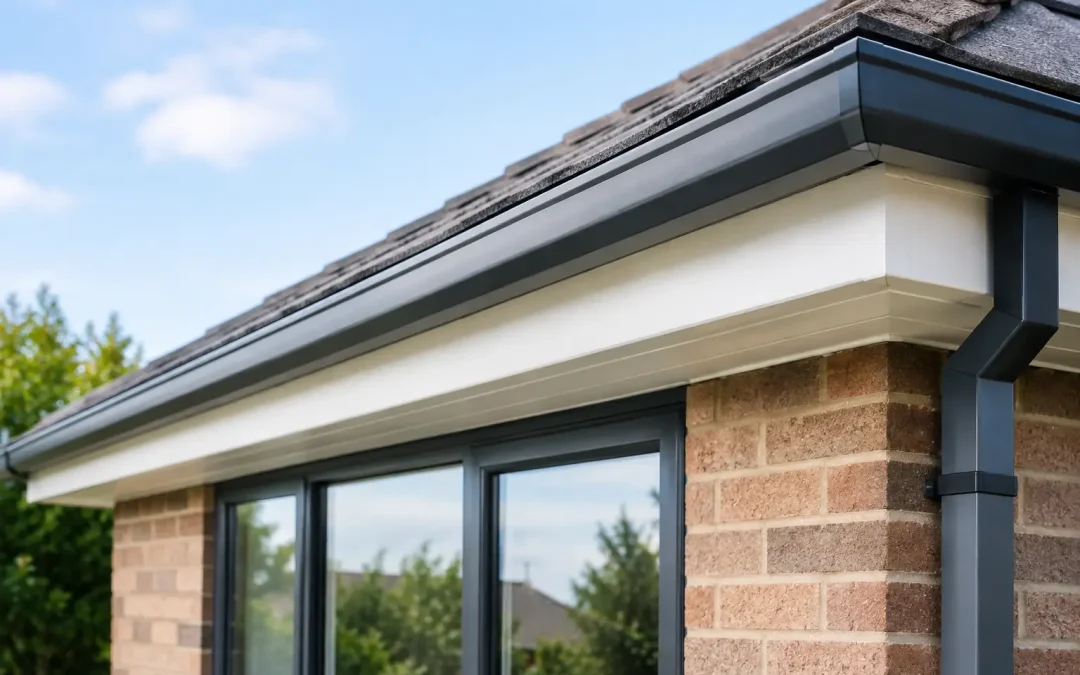
For a dependable balance of price, appearance and long-term care, uPVC is usually the best fascia material for residential properties. It does not rot, warp or need painting, and it is available in a wide range of colours and finishes.
White remains a popular choice because it is clean, classic and suits most homes. Anthracite grey, black and coloured woodgrain finishes are also widely chosen for homeowners updating windows, doors or guttering at the same time. A wood-effect fascia can provide a traditional look without committing to the upkeep that real timber demands.
Quality matters. Thin plastic boards can be unsuitable for carrying the weight of guttering, especially where gutters regularly fill with rainwater, moss or ice. A proper replacement fascia board should be strong enough for the job and installed securely as part of a complete roofline system. The guttering must be set to the correct fall so water drains towards the downpipe rather than overflowing onto the fascia.
uPVC is also a sensible choice because damaged sections can often be repaired or replaced without rebuilding the whole roofline. It is not completely maintenance-free, though. Gutters still need clearing, joints should be checked and boards benefit from an occasional clean to prevent grime building up.
Full replacement or capping boards?
This is one of the most important decisions when fitting new fascias. Capping boards are fitted over existing timber. They can be a cost-effective option when the timber behind them is dry, solid and in good condition.
If the timber is rotten, softened by damp or unable to support the guttering properly, covering it up is not a lasting repair. Full replacement is the better route. The old boards are removed so the roof edge can be inspected, any damaged timber dealt with and new fascia boards fitted correctly.
A full replacement costs more initially, but it avoids trapping problems behind a new surface. For a roofline that has been neglected for years, it is normally the more reliable investment.
Aluminium fascias: durable but higher priced
Aluminium fascias are another low-maintenance option. They are strong, lightweight and resistant to rot. Their crisp appearance can suit modern extensions, contemporary homes and projects where a more premium finish is wanted.
The main trade-off is cost. Aluminium materials and installation are typically more expensive than uPVC, and the choice of colours and profiles may be more limited depending on the system used. If your priority is a practical, affordable roofline replacement, uPVC often provides better value.
Aluminium can make sense where a particular architectural look is required or where a homeowner wants a metal roofline to match other exterior finishes. It should still be professionally fitted, with care taken around joints, fixings and connections to the guttering.
Why timber is rarely the low-maintenance choice
Timber fascias have character and can be the right choice for period properties or homes in locations where original materials need to be retained. Properly prepared and painted wood can look excellent.
But timber is not normally among the best fascias for low maintenance. It needs painting or staining at regular intervals, and its lifespan depends heavily on the quality of the finish, ventilation, drainage and exposure to the weather. A small failure in the paintwork can allow moisture into the board.
If maintaining an authentic appearance is more important than reducing upkeep, timber may still be worthwhile. For most busy households, though, a good-quality uPVC woodgrain finish offers a far easier alternative.
Do not choose fascias in isolation
New fascias perform best when the rest of the roofline is considered at the same time. Soffits help ventilate the roof space and close off the underside of the eaves. Gutters and downpipes carry rainwater safely away from the property. If one part is failing, the others may already be under strain.
For example, blocked gutters can overflow behind the fascia, even if the boards are brand new. Poor loft ventilation can contribute to condensation and moisture issues around the roof edge. Old gutter brackets may also be too weak or incorrectly spaced to support a new system properly.
A proper inspection should look for more than peeling paint. It should check the condition of the existing timber, roof felt, rafters at the eaves, gutter falls, downpipes and ventilation. This gives you a clear idea of whether a straightforward upgrade is suitable or whether repairs are needed before the new boards go on.
Choosing the right colour and finish
The best finish is one that suits the property and will still look right in years to come. White uPVC is often the safest, most cost-effective option and works well with traditional brick homes. Black and anthracite grey can create a sharper, more modern appearance, particularly alongside matching windows, doors and gutters.
Woodgrain finishes are useful when you want the warmth of timber without regular painting. Look at samples in natural daylight before deciding. Dark colours can make a strong statement, but they may show dust, pollen and water marks more readily than white boards.
It is also worth thinking about the complete exterior. Fascias, soffits, guttering, windows and doors do not need to match exactly, but a coordinated colour scheme gives the home a more considered finish and can improve kerb appeal.
What to expect from a professional installation
A good roofline installation starts with safe access and a close inspection of the existing structure. Old boards and gutters should be removed where full replacement has been agreed, allowing the installer to identify hidden decay rather than simply cover it.
The new fascia, soffit and guttering should then be fitted to suit the property, with secure fixings and correctly positioned outlets and downpipes. The area should be left tidy, and you should understand what guarantee applies to both materials and workmanship.
Supreme Home Improvements provides tailored roofline work for homeowners across Ibstock and the wider Leicestershire area, with more than 30 years of trade experience and a 10-year workmanship guarantee. The aim is not just to make the roof edge look smarter, but to give it the protection needed for the years ahead.
A simple way to make the right choice
If you want the least ongoing work for a sensible budget, choose quality uPVC fascias as part of a properly fitted fascia, soffit and guttering system. Choose full replacement where the existing timber is damaged or doubtful, rather than hiding a problem that could continue behind new boards.
A quick look from the driveway cannot always reveal what is happening under the eaves. Having the roofline checked before the next spell of heavy rain can turn a routine home upgrade into lasting protection for your property.