
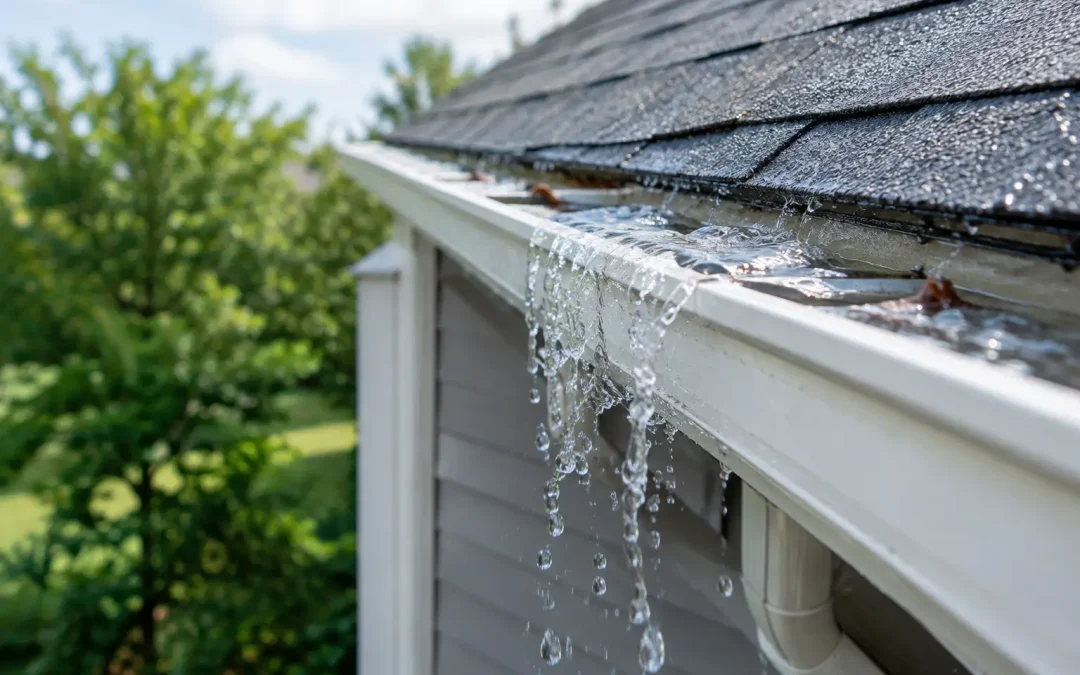
A gutter overflowing in heavy rain is not just an annoyance. Water can run down brickwork, soak the ground around your foundations, stain render and eventually find its way into roofline timbers. Knowing how to stop gutter overflow starts with working out whether water is being blocked, diverted or simply asked to drain through a system that is no longer up to the job.
For homeowners in Leicestershire, this often becomes obvious during a proper downpour. A gutter may look fine on a dry day, then spill over one section as soon as rain gets heavier. Acting early is usually far more affordable than waiting for damp patches, rotten fascias or damaged masonry to appear.
Find Where the Water Is Escaping
Before clearing or replacing anything, watch where the overflow happens during rainfall if it is safe to do so. The position tells you a great deal. Water spilling over the front edge of a gutter commonly points to a blockage or poor fall. Water running from a joint suggests a failed seal, a loose connection or a section that has moved.
If the overflow is at the top of a downpipe, the downpipe may be blocked. If the gutter fills from one end to the other, the outlet could be obstructed or the gutter may be holding water because it has sagged.
Do not assume every leak means the whole system needs replacing. A sound uPVC gutter with one blocked outlet or a worn joint can often be repaired. On the other hand, repeated leaks across an older system may mean the brackets, joints and gutter lengths have reached the end of their useful life.
Clear Leaves, Moss and Roof Debris
The most common answer to how to stop gutter overflow is also the simplest: remove the blockage. Leaves, moss, twigs and grit wash down the roof, settle in the gutter and collect around outlets. Over time, this creates a dam that stops water reaching the downpipe.
Gutters should normally be checked at least twice a year, particularly after autumn leaf fall and after winter storms. Properties near mature trees may need more frequent cleaning. A conservatory roof, nearby trees or an overhanging roof valley can all send a surprising amount of debris into one short section of guttering.
Only work at height if you have the right access equipment and feel confident doing so. Never lean out of an upstairs window or balance a ladder on uneven ground. For many homeowners, professional gutter cleaning is the safer choice, especially where access is awkward or the roofline is high.
Once the gutter is clear, flush it through with water. This helps reveal hidden build-up around the outlet and shows whether the water is travelling freely to the downpipe.
Check the Downpipe and Drainage Point
A clean gutter will still overflow if the downpipe is blocked. Look for water backing up at the outlet, slow drainage or a downpipe that gurgles when rain is falling. Debris often builds up at bends, shoes and the bottom of the pipe where it enters a drain or gully.
Remove any visible obstruction from the top first. If water still will not pass through, the blockage may be lower down. A careful flush can help, but avoid forcing water into a completely blocked drain, as it may come back towards the property.
Also check where the downpipe discharges. The gully should be clear and able to take water away. If it is full of silt, leaves or standing water, the issue may be with drainage rather than the gutter itself. This is particularly worth checking after a long dry spell, when debris can harden inside the gully.
Make Sure the Gutter Has the Right Fall
Guttering needs a slight slope towards the downpipe. It is not a dramatic angle, but it must be enough for water to move steadily rather than sitting in the channel. Standing water is a warning sign that the gutter has dropped, brackets have loosened or the original fall was not set correctly.
From ground level, look along the gutter line. You may notice a dip in the middle, a section pulling away from the fascia or water sitting after rainfall. These issues can cause overflow even when the gutter is clean because rainwater gathers faster than it can reach the outlet.
A few loose brackets may be straightforward to refix, provided the fascia board behind them is sound. However, if the fixings have pulled away from rotten timber, simply tightening them is only a short-term answer. The damaged board needs attention before the gutter can be secured properly.
This is one reason roofline maintenance matters. Fascias and soffits protect the edge of the roof and give guttering a firm base. When they are worn, cracked or rotting, gutter problems tend to return.
Inspect Joints, End Caps and Brackets
A gutter can overflow through a faulty joint even when it is not visibly full. uPVC joints rely on rubber seals that can dry out, move or become clogged with dirt. Temperature changes also make guttering expand and contract, which can gradually affect an older installation.
Check for drips beneath joints, end caps and outlet connections. A joint that has separated or sagged may need reseating, a new seal or replacement. Keep in mind that sealant is rarely the best long-term repair for a failed uPVC gutter joint. The correct fitting and seal should do the work, allowing the system to move naturally with changing temperatures.
Brackets deserve the same attention. They should be evenly spaced and firmly fixed. Missing or broken brackets let the gutter bow under the weight of rainwater, moss and debris. In severe weather, that extra weight can pull a whole section away from the roofline.
Consider Whether Your Gutters Are Big Enough
Not every overflowing gutter is faulty. In some cases, the system is simply too small for the amount of water coming off the roof. This can happen on large roof areas, extensions, conservatories or properties where several roof slopes feed into one valley.
A standard gutter may cope perfectly with ordinary rainfall but overflow during the heaviest storms. As weather becomes more unpredictable, this distinction matters. If the gutter is clean, correctly aligned and draining freely but still cannot keep up, a larger-capacity gutter or additional downpipe may be the sensible solution.
This is a job worth assessing properly rather than guessing. The roof area, direction of fall, number of outlets and existing drainage all affect the right solution. Adding another downpipe can reduce pressure on a long run of guttering, but only if the ground drainage can handle the extra water.
Do Gutter Guards Stop Overflow?
Gutter guards can reduce the amount of leaves and larger debris entering the system, but they are not maintenance-free. Fine moss, roof grit and seeds can still collect on top or wash beneath some designs. A poorly fitted guard can also restrict water flow during very heavy rain.
They can be useful for homes surrounded by trees, but they work best alongside regular inspection. Choose a guard that suits the roof and gutter profile, and make sure it does not interfere with water running off the tiles. If your main issue is poor alignment, leaking joints or an undersized system, a guard will not solve it.
When to Repair and When to Replace Guttering
A targeted repair makes sense where the problem is localised: a blocked outlet, one leaking union, a slipped bracket or a short damaged length. It is a cost-effective way to restore a newer system that is otherwise in good condition.
Replacement becomes better value when gutters leak in several places, sag repeatedly, have become brittle or no longer suit the roof. Replacing the guttering alongside tired fascias and soffits can also prevent the inconvenience of separate jobs later. Modern uPVC roofline products are low maintenance, weather resistant and available in finishes that can improve the look of the property as well as its protection.
If water has been overflowing for some time, inspect the surrounding areas too. Look for peeling paint, algae, staining, soft timber, damp marks inside near the roofline and washed-out soil below the downpipe. These signs do not always mean serious damage, but they are a good reason to have the area checked before a minor gutter fault becomes a larger repair.
For homeowners who want a clear diagnosis and a lasting fix, Supreme Home Improvements can inspect guttering, fascias and soffits and recommend work that suits the condition of the property and the budget. A gutter should quietly do its job in every season – if it is spilling over, it is worth putting right before the next heavy rain does more than make a mess.