
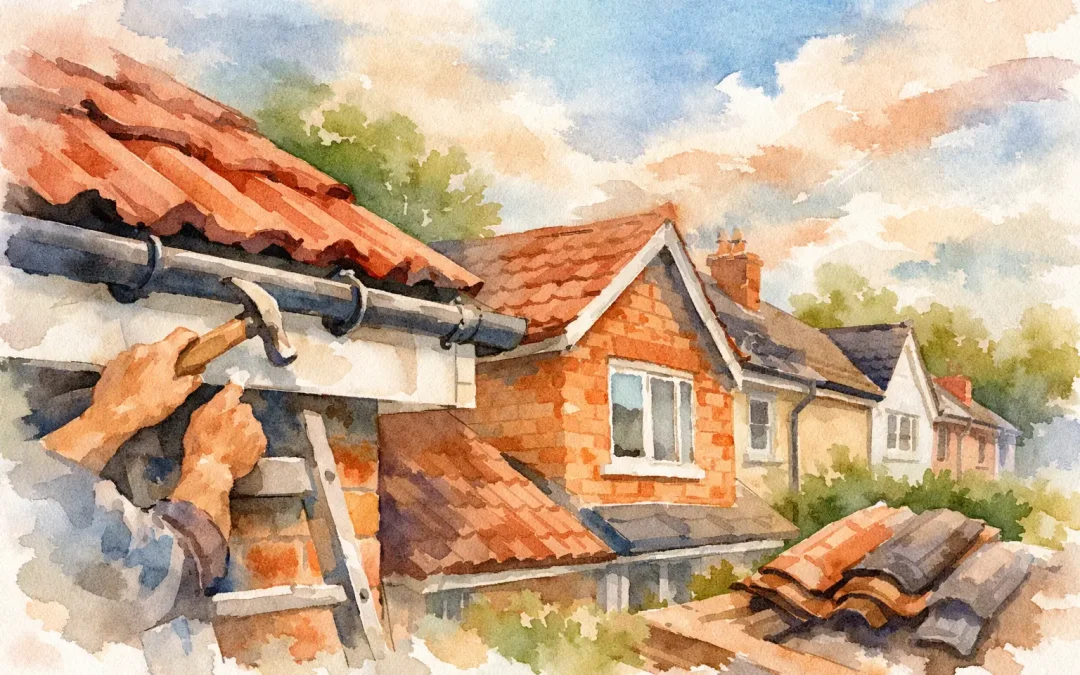
A leaking gutter can look like a small nuisance until water starts running down brickwork, soaking the soffit boards and staining an internal wall. This Leicestershire roofline repair case study follows a typical family home where a worn roofline had begun to cause exactly those problems. It shows why a proper inspection matters, when a repair is sensible, and when replacement gives better value over the long term.
The property was a detached home with older timber fascias, painted soffits and ageing plastic guttering. From ground level, the roofline looked tired but manageable. Closer inspection told a different story: peeling paint, soft timber around a gutter bracket, overflowing rainwater during heavier showers and gaps at the joints where sections of guttering had moved over time.
This is a familiar situation for homeowners across Leicestershire. Roofline problems often develop gradually, hidden at the edge of the roof, until poor drainage or damp makes them harder to ignore.
The Problem Behind the Overflowing Gutter
The homeowner first noticed water spilling over the front gutter during rain. They had already cleared leaves from the outlet, but the overflow remained. There were also black marks on the render beneath the gutter and a section of fascia that appeared bowed.
A roofline inspection found several connected issues. The existing gutter had lost its correct fall towards the downpipe, so rainwater was collecting rather than draining away. Old brackets had become loose, allowing the gutter to sag in the middle. At the same time, regular overflow had exposed the timber fascia to moisture.
The timber had not failed along the full length of the property, but it was soft in the areas most affected by water. That distinction matters. A small, isolated issue can sometimes be repaired. Once rot is present across several boards, repeatedly patching and repainting becomes false economy.
The soffits also needed attention. These boards help finish the underside of the roof edge and support ventilation to the roof space. The older timber soffits had been painted many times, closing off some of the original ventilation points. While this had not caused a major condensation problem, it was something worth correcting as part of the work.
Leicestershire Roofline Repair Case Study: Choosing the Right Work
The main decision was whether to carry out local timber repairs and refit the existing guttering, or replace the affected roofline with new uPVC fascias, soffits and guttering. There is no one answer for every home. If timber is dry, sound and properly protected, a targeted repair can be a practical lower-cost option.
In this case, the homeowner wanted a long-term solution with less exterior maintenance. Because the guttering was also nearing the end of its useful life, replacing only the damaged timber would have left old drainage components in place. The better option was to renew the complete front and side roofline where deterioration was evident, while leaving the sound rear elevation for monitoring and future maintenance.
That approach kept the budget focused on the areas that needed work. It also avoided replacing materials simply for the sake of it.
The agreed work included removal of the failing fascias and soffits, checks to the rafter ends, replacement of any minor timber defects found beneath, installation of ventilated uPVC soffit boards, new fascias and correctly sized guttering with secure brackets. Downpipes were positioned to direct water safely into the existing drainage points.
Why Preparation Made the Difference
Roofline work should not be treated as a quick cover-up job. Fitting new plastic boards over rotten timber may make a property look better for a while, but the underlying issue remains. If damp timber is sealed in, decay can continue out of sight and may eventually affect the fixings and roof edge.
For this home, the old materials were removed carefully so the supporting timber could be assessed. Most of the rafter ends were in good condition, which kept the repair straightforward. Two short sections showed moisture damage and were repaired before the new boards were installed.
The installer also checked the roof edge while access was available. A slipped tile and a worn section of underfelt were identified near one corner. Neither issue required major roofing work, but dealing with them at the same time helped prevent water tracking behind the new fascia later on.
This is one advantage of using an experienced local contractor for roofline work. The job is not just about fitting neat-looking boards. It is about checking how the guttering, roof covering, ventilation and supporting structure work together.
The Installation and Drainage Check
New uPVC fascias and soffits were fitted to give the roof edge a clean, consistent finish. White was chosen to match the existing window frames, although black, anthracite grey and wood-effect finishes may suit other homes better. The right colour depends on the style of the property and the finish of the windows, doors and roof tiles.
The guttering was then installed with the correct fall towards the downpipes. This detail is easy to overlook, yet it has a direct effect on how well the system performs. Too little fall can allow standing water and debris to build up. Too much can look untidy and may cause water to run too quickly past an outlet in very heavy rain.
Brackets were fixed at suitable intervals to support the new guttering and reduce future sagging. Joints and outlets were checked before the work was signed off. A controlled water test confirmed that rainwater travelled cleanly to the downpipes, with no overflow at the repaired sections.
The work also improved the appearance of the property straight away. The new roofline gave a sharper edge to the roof and removed the peeling, uneven appearance of the old painted timber. For many homeowners, that lift in kerb appeal is welcome, but weather protection remained the main reason for the project.
The Result After the Repair
The homeowner gained a roofline that was easier to maintain and better prepared for wet weather. Instead of repainting timber boards every few years and chasing recurring gutter leaks, they now had durable uPVC components designed to withstand everyday exposure to rain, wind and changing temperatures.
The important result was not simply that the gutter stopped overflowing. The repair dealt with the cause: failed brackets, poor drainage fall and moisture-damaged fascia boards. That is the difference between a temporary fix and work that protects the home properly.
A full replacement is not always required, and an honest inspection should make that clear. Where boards are sound and the issue is limited to one leaking joint, a gutter repair may be enough. Where timber rot, repeated overflow and ageing materials appear together, a planned roofline upgrade is usually the more dependable investment.
What Homeowners Can Learn From This Case
There are a few warning signs worth acting on before damage spreads. Overflowing gutters in ordinary rainfall, peeling paint on fascias, staining below the roofline, visible sagging and drips at gutter joints all deserve attention. Gutters should also be cleared regularly, particularly after autumn, but clearing debris alone will not correct loose brackets or a failed fall.
Do not wait for a damp patch indoors before arranging a check. Water can run behind fascias or down external walls for some time before it becomes obvious inside. Early repairs are often simpler, less disruptive and less costly than dealing with decayed timber or damaged brickwork later.
For homes in Ibstock, Coalville, Ashby and the wider Leicestershire area, Supreme Home Improvements can assess worn fascias, soffits and guttering and recommend work that suits the condition of the property and the available budget. A clear view of what needs repairing, what can remain and what should be replaced gives homeowners the confidence to make the right decision.
A roofline does its best work quietly, directing water away and protecting the structure beneath the tiles. If yours is showing signs of wear, a timely inspection can keep a manageable repair from becoming a bigger job.